EasyManua.ls Logo

Fluke CableAnalyzer DSP-4000 Series - User Manual

Fluke CableAnalyzer DSP-4000 Series
228 pages
Print Icon
To Next Page IconTo Next Page
Loading...
TM
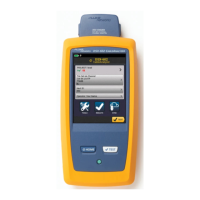
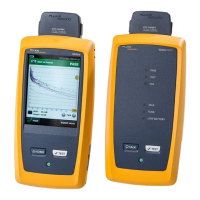
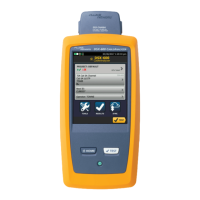
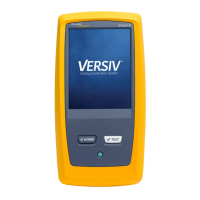
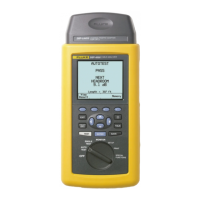
DSP-4000 Series
CableAnalyzer
Users Manual
PN 1580351
July 2000
© 2000 Fluke Networks, Inc. All rights reserved. Printed in USA.
All product names are trademarks of their respective companies.

Table of Contents

Other manuals for Fluke CableAnalyzer DSP-4000 Series

Questions and Answers

  • D
    Donna HurstJul 27, 2025
    What to do if Fluke CableAnalyzer DSP-4000 Measuring Instruments show NEXT or ELFEXT error?
    • T
      tbirdJul 28, 2025
      If you are experiencing NEXT or ELFEXT issues with your Fluke Measuring Instruments, the problem could stem from: * Excessive untwisting of pairs at the connection. * Insufficient quality of connecting hardware. * Damage to the cable (pinches, kinks, etc.). * Damaged connector. * Insufficient cable quality. Inspect the cable for the suggested fault at the location indicated by the diagnostics display.
  • T
    Tyler AllenAug 2, 2025
    Why does my Fluke CableAnalyzer DSP-4000 Measuring Instruments show an impedance anomaly?
    • B
      Barbara JonesAug 2, 2025
      An impedance anomaly detected on your Fluke Measuring Instruments could be due to several factors: * A poor connection between two lengths of cable. * Damage to the cable (pinches, kinks, etc.). * Taps into the wire pair (twisted pair cable should never be tapped). * Excessive loading at the coaxial cable tap. * Mismatch of cable types. * Incorrect terminator value. Inspect the cable for the suggested fault at the location indicated by the diagnostics display.
  • J
    Jared HardingAug 6, 2025
    What causes 'Wire map: short' on Fluke CableAnalyzer DSP-4000 Measuring Instruments?
    • N
      Nathaniel RyanAug 6, 2025
      A 'Wire map: short' error on Fluke Measuring Instruments indicates a short circuit. This can be caused by: * Wires connected to the wrong pins at the connector or punchdown blocks. * Conductive material stuck between pins at a connection. * Damage to cable insulation. Inspect the cable for the suggested fault at the location indicated by the diagnostics display.
  • L
    Levi ZamoraAug 11, 2025
    Why am I getting 'Wire map: crossed pairs' on my Fluke Measuring Instruments?
    • J
      Julian OsborneAug 11, 2025
      If your Fluke Measuring Instruments report 'Wire map: crossed pairs', this can occur due to: * Wires connected to the wrong pins at connectors or punchdown blocks. * Mix of 568A and 568B wiring standards (1, 2 and 3, 6 crossed). * Crossover cables used where not needed (1, 2 and 3, 6 crossed). Inspect the cable for the suggested fault at the location indicated by the diagnostics display.
  • C
    castillocarolineAug 16, 2025
    What does 'Wire map: split pair' mean on Fluke Measuring Instruments?
    • D
      Danielle FosterAug 16, 2025
      A 'Wire map: split pair' error on Fluke Measuring Instruments usually means the wires are connected to the wrong pins at the connector or punchdown blocks. To address this, inspect the cable for the suggested fault at the location indicated by the diagnostics display.
  • G
    Gabriella ThomasAug 21, 2025
    How to troubleshoot 'Wire map: reversed pairs' on Fluke CableAnalyzer DSP-4000?
    • M
      Michael BryantAug 21, 2025
      A 'Wire map: reversed pairs' error on Fluke Measuring Instruments happens when wires are connected to the wrong pins at the connector or punchdown blocks. Inspect the cable for the suggested fault at the location indicated by the diagnostics display.

Summary

Chapter 2 Getting Started

Read First: Safety and Operational Information

Covers essential safety precautions and operational guidelines for using the test tool.

Quick Start

Provides a brief guide for users who want to begin testing immediately.

Configuring the Test Tool

Explains how to configure various settings of the test tool.

Chapter 3 Autotest

Autotest on Twisted Pair Cable

Instructions for performing an Autotest on twisted pair cable.

Autotest on Coaxial Cable

Instructions for performing an Autotest on coaxial cable.

Automatic Diagnostics

Explains how to view and interpret automatic diagnostic displays for test failures.

Saving Autotest Results

Details the procedure for saving Autotest results with or without auto sequence.

Chapter 4 Running Individual Tests

Single Tests for Twisted Pair Cable

Instructions for running individual tests on twisted pair cable.

The HDTDX Analyzer

Explains the HDTDX analyzer for locating crosstalk sources on a cable.

Chapter 5 Viewing and Printing Saved Reports

Chapter 6 Calibrations and Custom Test Standards

Calibrating the Test Tool

Provides instructions for performing self-calibration of the test tool.

Chapter 7 Basic Cable Testing

Troubleshooting Basics

Provides general procedures for finding and fixing cable faults.

Chapter 8 Maintenance and Specifications

Maintenance

Provides safety warnings and basic maintenance guidelines for the test tool.

If the Test Tool Fails

Guides users on troubleshooting common test tool failures.

Specifications

Details the technical specifications of the test tool.

Appendix B Getting Started with CableManager Software

Fluke CableAnalyzer DSP-4000 Series Specifications

General IconGeneral
ModelDSP-4000 Series
ManufacturerFluke Networks
Frequency RangeUp to 350 MHz
Storage Temperature-20°C to 60°C (-4°F to 140°F)
Humidity10% to 90% non-condensing
TypeCable Analyzer
DisplayLCD with backlight
Operating Temperature0°C to 50°C (32°F to 122°F)
Supported Cable TypesUTP, STP, FTP, ScTP
MeasurementsLength, Propagation Delay, Delay Skew, NEXT, Return Loss, Insertion Loss
Data StorageInternal memory
InterfaceRS-232

Related product manuals