The following tips highlight important operation prin-
ciples.
•
For all conditions, use the highest gear that is
still low enough to start the vehicle moving with
the engine at or near idle speed, and without
slipping the clutch excessively.
When operating on-highway, with no load, or
under ideal conditions, use 1st gear when
starting to move the vehicle forward.
When operating off-road, or under adverse
conditions, always use low gear when starting
to move the vehicle forward.
•
Use the clutch brake to stop gear rotation
when shifting into low (or 1st) or reverse when
the vehicle is stationary. The clutch brake is
actuated by depressing the clutch pedal all the
way to the floor.
For normal upshifts and downshifts, only a par-
tial disengagement of the clutch is necessary
to break engine torque.
•
Use double-clutching between all upshifts and
downshifts that require movement of the shift
lever. Splitting of the high range gears does
not require movement of the shift lever.
•
Never move the shift lever into low gear while
in high range.
•
Never move the splitter-control button while in
neutral.
•
Do not preselect with the splitter-control button;
after moving the control button, complete the
shift immediately.
•
Except when downshifting from 5th direct to
4th gear, never push the range-preselection
lever down into low range while operating in
high range—the splitter will become inopera-
tive.
•
Do not shift from high range to low range at
high vehicle speeds.
•
Do not make range shifts with the vehicle mov-
ing in reverse gear.
•
Never attempt to move the range-preselection
lever with the gear-shift lever in neutral, while
the vehicle is moving. Preselection with the
range-preselection lever must be made prior to
moving the shift lever out of gear into neutral.
•
After your shifting ability improves, you may
want to skip some of the ratios. This may be
done only when operating conditions permit,
depending on the load, grade, and road speed.
Upshifting
1.
Position the gear-shift lever in neutral. Start the
engine, and bring the air system pressure up to
100 to 120 psi (689 to 827 kPa).
2.
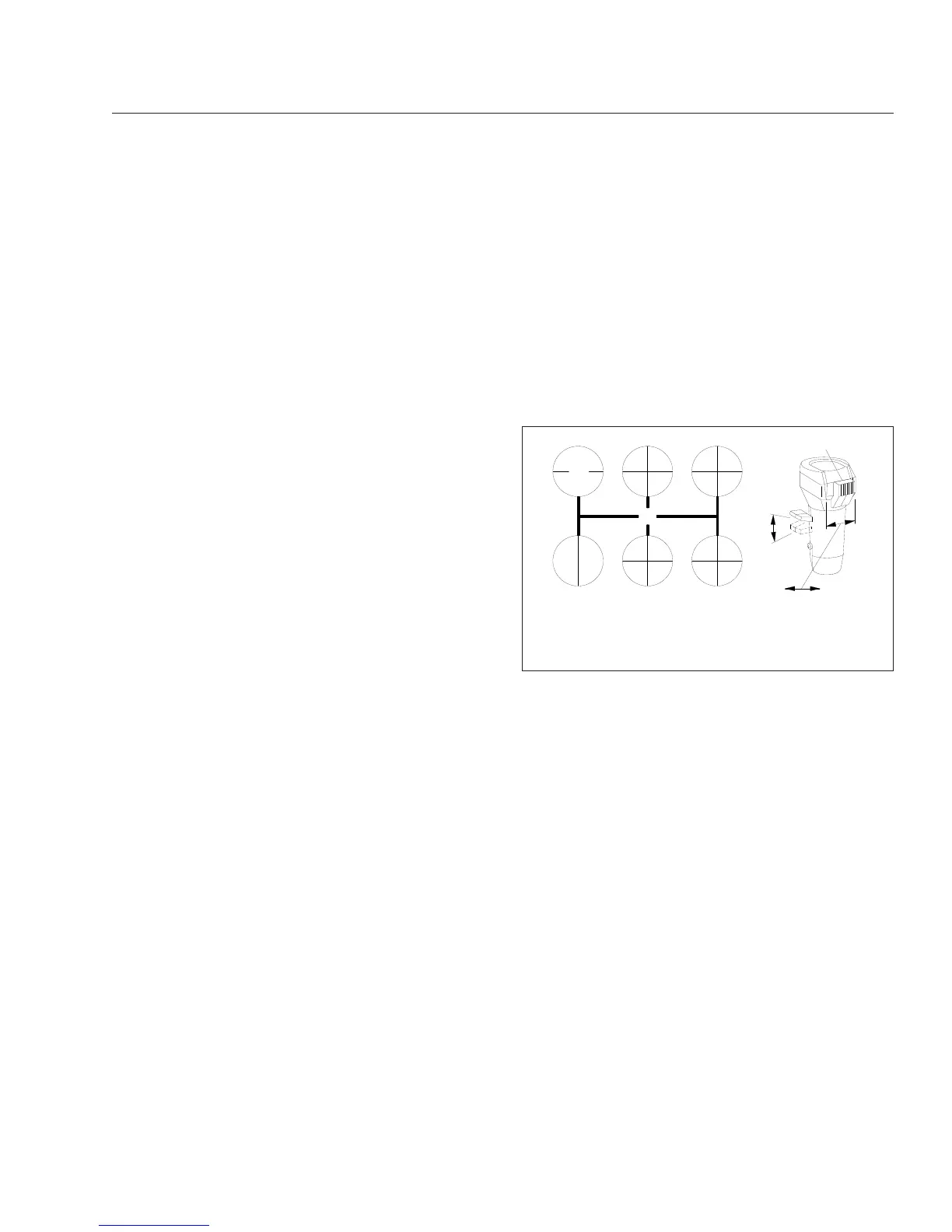
Position the range-preselection lever down, into
low range. See Fig. 13.2.
3.
Make sure the splitter-control button is in the di-
rect (rearward) position. See
Fig. 13.2.
4.
For 13-speed transmissions:
Press the clutch to the floor, shift into low or 1st
gear; then engage the clutch, with the engine at
or near idle speed, to start the vehicle moving.
Accelerate to 80 percent of engine governed
speed.
For 18-speed transmissions:
Press the clutch to the floor, shift into low; then
engage the clutch, with the engine at or near idle
speed, to start the vehicle moving.
To shift from low direct to low overdrive, move
the splitter-control button into the overdrive (for-
ward) position, then immediately release the ac-
celerator. Press and release the clutch pedal.
After releasing the clutch, accelerate again.
5.
For 13-speed transmissions:
N
R
1
Dir
5
Dir
5
OD
1
OD
3
Dir
7
Dir
7
OD
3
OD
2
Dir
6
Dir
6
OD
2
OD
4
Dir
8
Dir
8
OD
4
OD
LOW
Dir
LOW
OD
A
B
CD
1
03/13/96
f260157a
A. High Range
B. Low Range
C. Overdrive (forward)
D. Direct Drive (rearward)
1. Splitter Control Button
Fig. 13.2, Eaton Fuller 18-Speed Transmission Shift
Pattern
Manual Transmissions and Clutch
13.2



 To Next Page