Windshield Wiper/Washer
Dash Controls
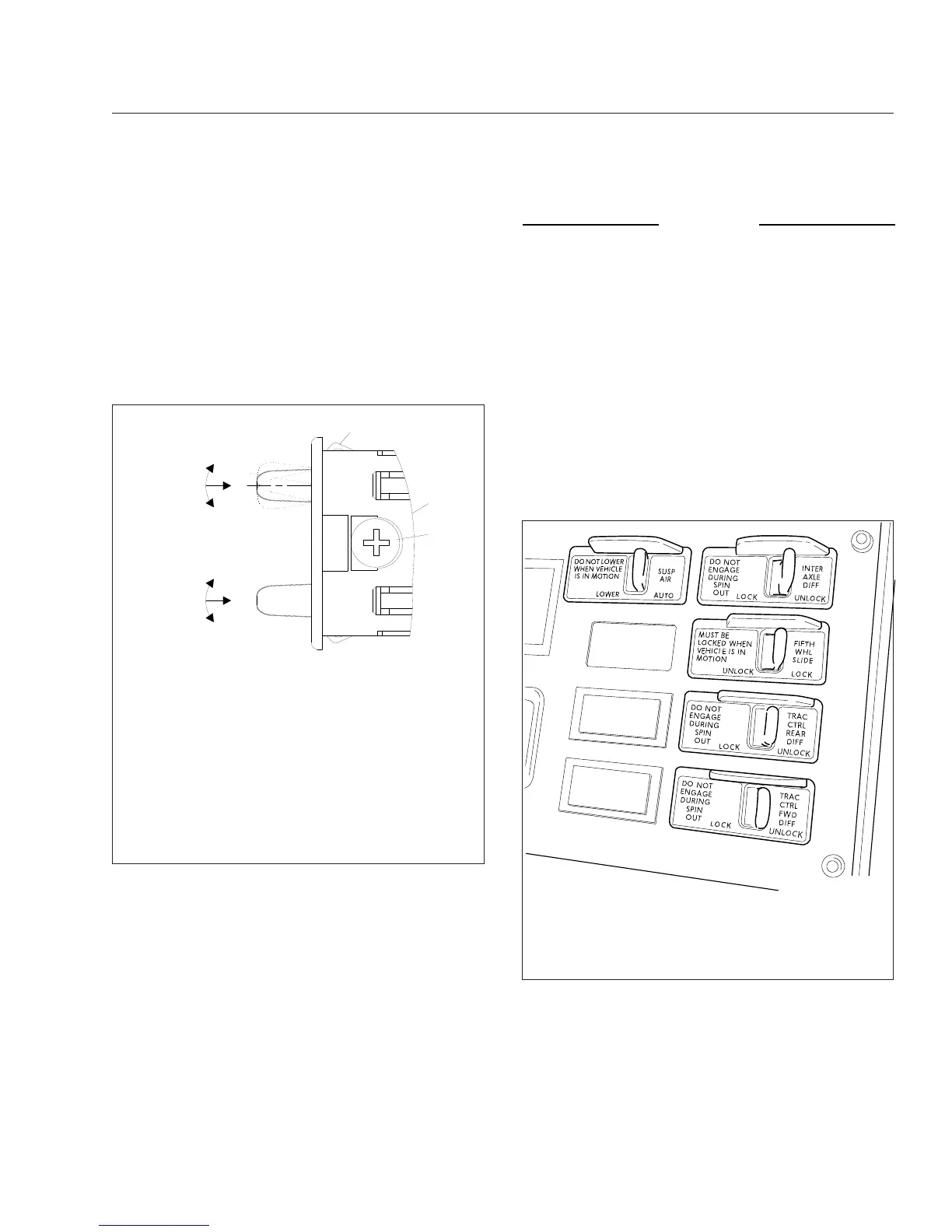
The wipers are operated by a double-paddle WIPER/
WASH switch mounted on the main dash panel. The
top paddle, when pushed in, turns the wipers on (if
they are off) or off (if they are on). When it is pushed
up, the top paddle switches the wipers to high speed;
when it is pushed down, it switches them to low
speed. See
Fig. 5.9.
The bottom paddle, when pushed in, turns the
washers on. When pressed for less than 1/2-second,
the wipers will perform a single, low speed dry wipe
(mist function). When pressed for more than 1/2-
second, the wash cycle begins and continues for
three cycles or until the paddle is released. When the
bottom paddle is pushed up, the wipers operate in
fast delay. When the bottom paddle is pushed down,
the wipers operate in slow delay. With the wipers in
delay mode (fast or slow), push the bottom paddle
up to shorten the delay period or push the paddle
down to lengthen it.
NOTICE
Do not move the wiper arms manually. Wiper
motor damage will occur if the arms are moved.
Windshield Washer Fluid Reservoir
The windshield washer reservoir is located under the
hood, near the firewall on the driver’s side. Remove
the cap from the filler neck to add windshield washer
fluid.
Guarded Switches
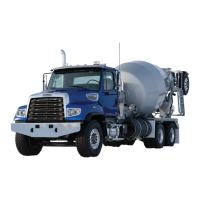
IMPORTANT: The following switches are
guarded to prevent unintentional switch activa-
tion. See
Fig. 5.10.
Air Suspension Dump Control
The air-suspension height switch may be used to aid
in connecting or disconnecting from a trailer. When
the switch is set to LOWER, the air-suspension
A
B
C
D
E
F
1
2
3
10/06/95
f820178
A. Push in to turn wipers on (low speed) or off.
B. Push up for high speed.
C. Push down for low speed.
D. Push in momentarily for mist cycle. Push in and
hold in for wash cycle.
E. Push up for fast delay. If already in delay, push up
for the next faster delay.
F. Push down for slow delay. If already in delay, push
down for the next slower delay.
1. Locking Clip
2. Wiper/Washer Switch
3. Light Bulb Screw
Fig. 5.9, Wiper/Washer Switch Operation
11/24/2009 f611088
1
2
3
4
5
1. Suspension Dump
Control
2. Interaxle Differrential
Lock
3. Fifth Wheel Slide Lock
4. Traction Control, Rear
Differential
5. Traction Control
Forward Differential
Fig. 5.10, Guarded Switches
Driver Controls
5.6




 To Next Page