NOTICE
Never apply the clutch brake when the vehicle is
moving. If the clutch brake is applied when the
vehicle is moving, the clutch brake will try to
stop or decelerate the vehicle, causing rapid
wear of the clutch brake friction discs. Consider-
able heat will be generated, causing damage to
the release bearings and the transmission front
bearings.
Holding the Vehicle on an Incline
Always use the vehicle service brakes to prevent the
vehicle from rolling backwards while stopped on a
hill. Slipping the clutch on a hill to maintain the ve-
hicle position will quickly damage the clutch assem-
bly.
Coasting
Coasting with the clutch pedal depressed and the
transmission in a low gear can cause high driven
disc speed. The clutch speed can be much higher
under these conditions than when the engine is driv-
ing the clutch. This condition creates a hazardous
situation due to the lack of vehicle control and due to
the high clutch disc speed. Engaging the clutch
under these conditions can cause component dam-
age because of the shock loads to the clutch and
drivetrain.
WARNING
Always shift into the gear that is correct for the
traveling speed of the vehicle and engage the
clutch. Coasting with the clutch disengaged can
prevent engagement of the correct transmission
gear which can cause loss of vehicle control,
possibly resulting in personal injury or property
damage.
High clutch disc speeds while coasting can also
cause the clutch facing to be thrown off the disc.
Flying debris from the clutch can cause injury to
persons in the cab.
Clutch Maintenance
Checking the Clutch Adjustment
Reporting erratic clutch operation as soon as pos-
sible gives maintenance personnel a chance to in-
spect, lubricate, and adjust the clutch components.
The driver can be aware of clutch wear by noticing
the gradual decrease in the distance the clutch pedal
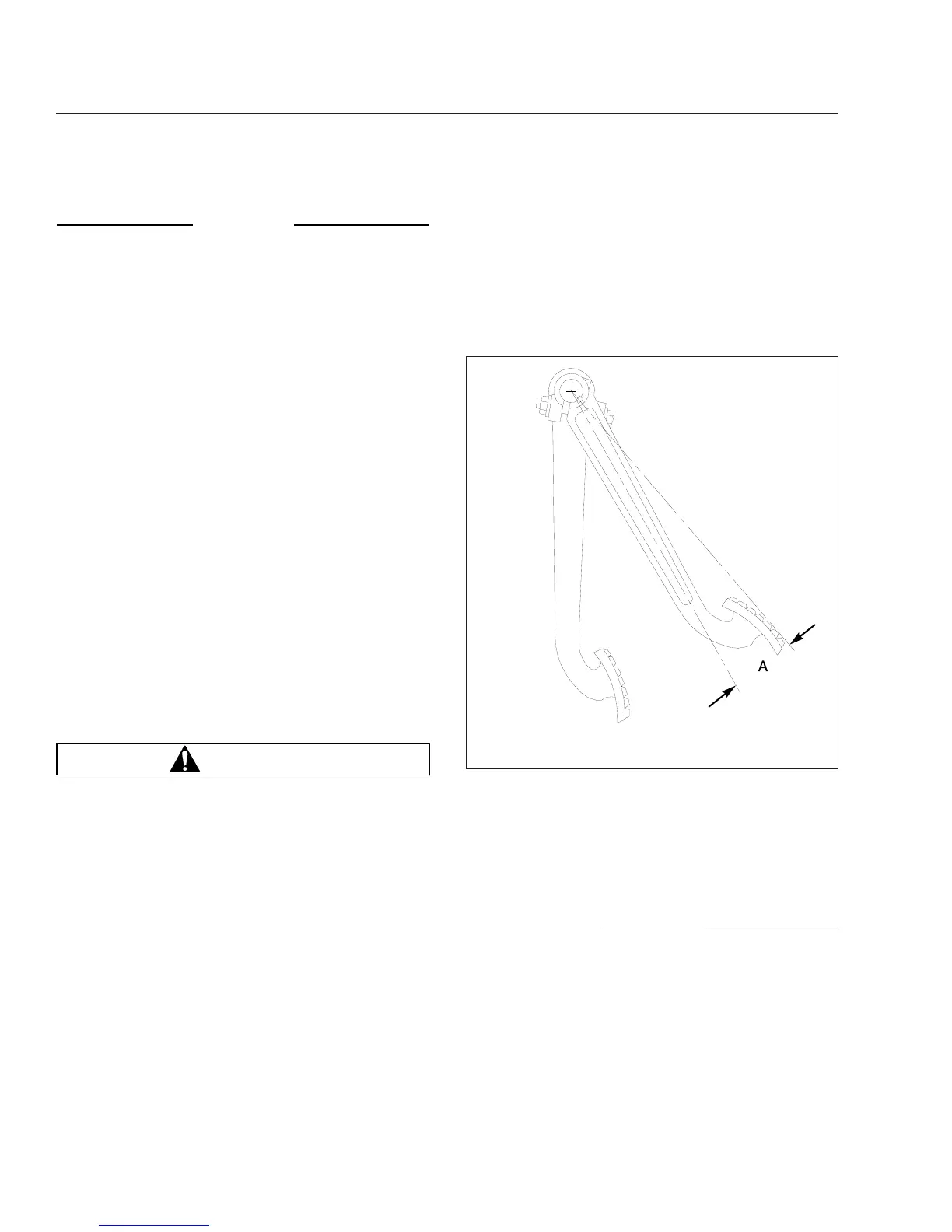
moves before resistance is felt. A correctly adjusted
clutch must have about 3/4 inch (19 mm) of travel at
the top of its stroke before a stronger resistance can
be felt. See
Fig. 13.4. If the free pedal travel is less
than this distance, have the clutch adjusted.
The clutch pedal free travel should be checked and
commented on daily in the driver’s report.
See Group 25 of the 122SD and Coronado Work-
shop Manual for clutch adjustment procedures and
specifications.
NOTICE
Operating the vehicle with incorrect free pedal
could result in clutch damage.
Checking the Clutch Brake Operation
Clutch brake operation can be felt as an increased
resistance as the clutch pedal approaches the bot-
tom of its stroke. If the gears grind when shifting into
first or reverse gear from neutral with the clutch
02/09/96 f250306
A. Free Pedal
Fig. 13.4, Clutch Free Pedal Travel
Manual Transmissions and Clutch
13.7



 To Next Page