Engine Starting
This engine chapter is to serve as a guide for best
practices only. Each make and model engine may
have operating characteristics that are unique to that
particular engine, and will be documented in the en-
gine manufacturer’s literature. Always refer to specific
instructions and reccomendations from the engine
manufacturer.
NOTE: Before starting the engine, read Chap-
ter 4
for detailed information on how to read the
instruments and see
Chapter 5 for detailed in-
formation on how to operate the controls. Read
the operating instructions in the manufacturer’s
engine operation manual before starting the
engine.
WARNING
Never pour fuel or other flammable liquid into the
air inlet opening in the air intake in an attempt to
start the vehicle. This could result in a flash fire
causing serious personal injury or property
damage.
1.
Before engine start-up, complete the engine pre-
trip and post-trip inspections and maintenance
procedures in
Chapter 19 and Chapter 20.
2.
Set the parking brake.
3.
For manual transmissions, place the transmis-
sion in neutral and fully depress the clutch pedal.
For automatic transmissions, put the transmis-
sion in neutral. Do not push the accelerator
pedal.
NOTE: Depending on local jurisdictional emis-
sions regulations, vehicles and/or engines that
are domiciled outside of the U.S. and Canada
may not be equipped with the WAIT TO START
or START BLOCKED lamp.
4.
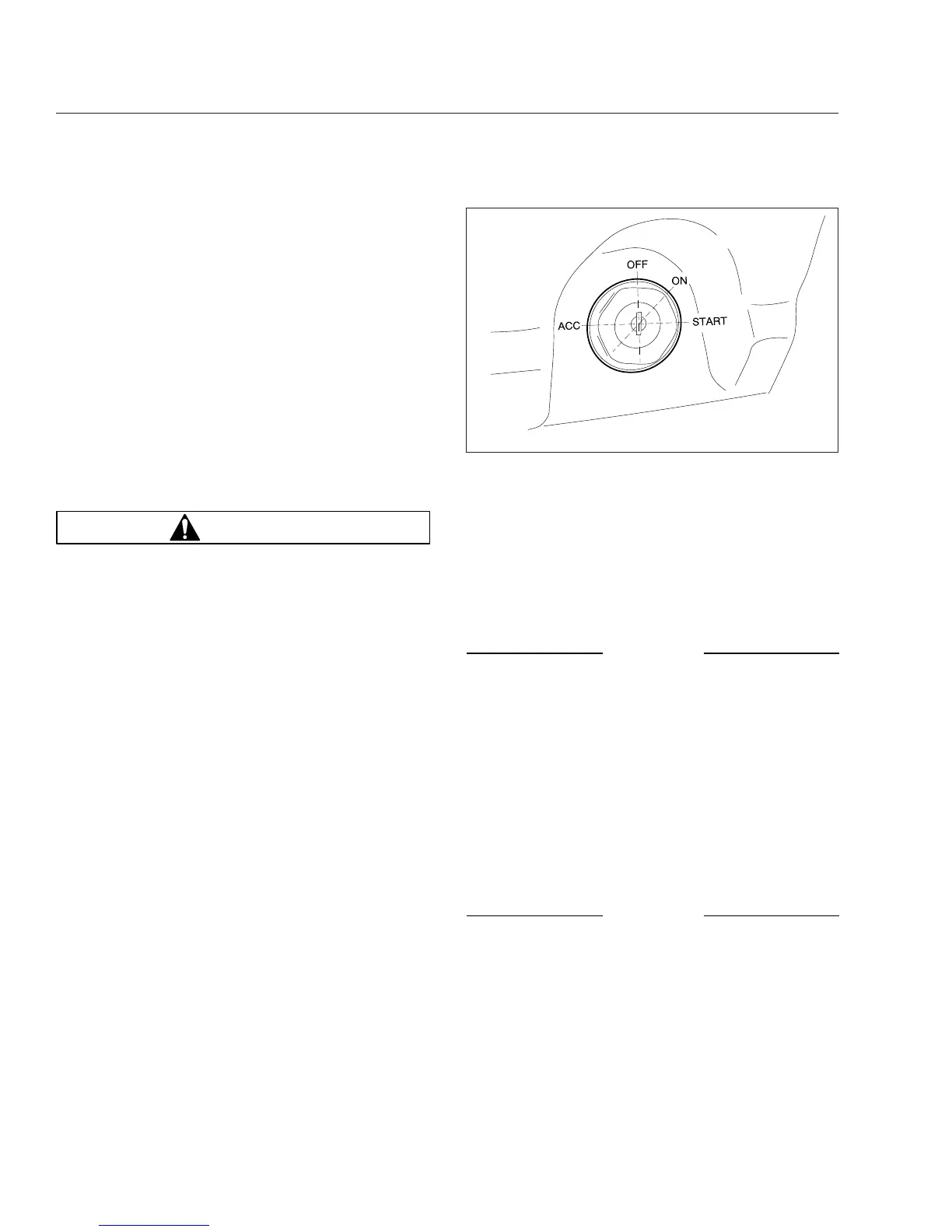
Turn the ignition switch to the ON position and
allow the gauge sweep to complete. See
Fig. 9.1. The audible alert will sound for approxi-
mately four seconds.
During cold conditions, the WAIT TO START
lamp may illuminate. Wait until the lamp goes out
before turning the ignition key to START.
NOTE: The length of time the WAIT TO START
lamp remains illuminated depends on the ambi-
ent temperature. The lower the ambient tem-
perature, the longer the lamp will be illuminated.
5.
Once the gauge sweep has completed, turn the
ignition key to the START position. Release the
key the moment the engine starts.
NOTICE
Do not rev the engine if the oil pressure gauge
indicates no oil pressure. Shut down the engine
if oil pressure does not build within approxi-
mately ten seconds. Check to determine the
cause of the problem. Operating the engine with
no oil pressure will damage the engine.
6.
It is not necessary to idle the engine before en-
gaging or starting the operation, but load should
be applied gradually during the warm-up period
until the oil temperature reaches 140°F (60°C).
7.
Apply load gradually during the warm-up period.
NOTICE
If the oil pressure gauge indicates no oil pres-
sure, shut down the engine within approximately
ten seconds to avoid engine damage.
8.
Check the oil pressure gauge for any drop in lu-
bricating oil pressure or mechanical malfunction
in the lubricating oil system. Minimum oil pres-
sure at idle is 7 psi (50 kPa).
07/19/2006 f610805
Fig. 9.1, Ignition Switch
Engine Starting, Operation, and Shutdown
9.1






 To Next Page