reduce the soot trapped in the DPF to ash. Active
regen happens only when the vehicle is moving
above a certain speed, determined by the engine
manufacturer. See your engine operation manual for
complete details. Both active and passive regen hap-
pen automatically, without driver input.
WARNING
Active regeneration can occur automatically any-
time the vehicle is moving. The exhaust gas tem-
perature could reach 1500°F (800°C), which is hot
enough to cause a fire, heat damage to objects
or materials, or personal injury to persons near
the exhaust outlet. The exhaust temperature can
remain high even after the vehicle has stopped.
When stopping the vehicle shortly after an auto-
matic regen, ensure the exhaust outlets are di-
rected away from structures, trees, vegetation,
flammable materials, and anything else that may
be damaged or injured by exposure to high heat.
See Regen Switches, below, for instructions on
preventing automatic regen if necessary.
When operating conditions do not allow for ATD filter
cleaning by active or passive regen, the vehicle may
require a driver-activated parked regen. When this
occurs, the DPF lamp illuminates, indicating that a
regen is required. The driver must either bring the
vehicle up to highway speed to increase the load
(thus starting an active regen), or park the vehicle
and initiate a parked regen. See Regen Switches,
below, for instructions on initiating a parked regen.
Regen Switches
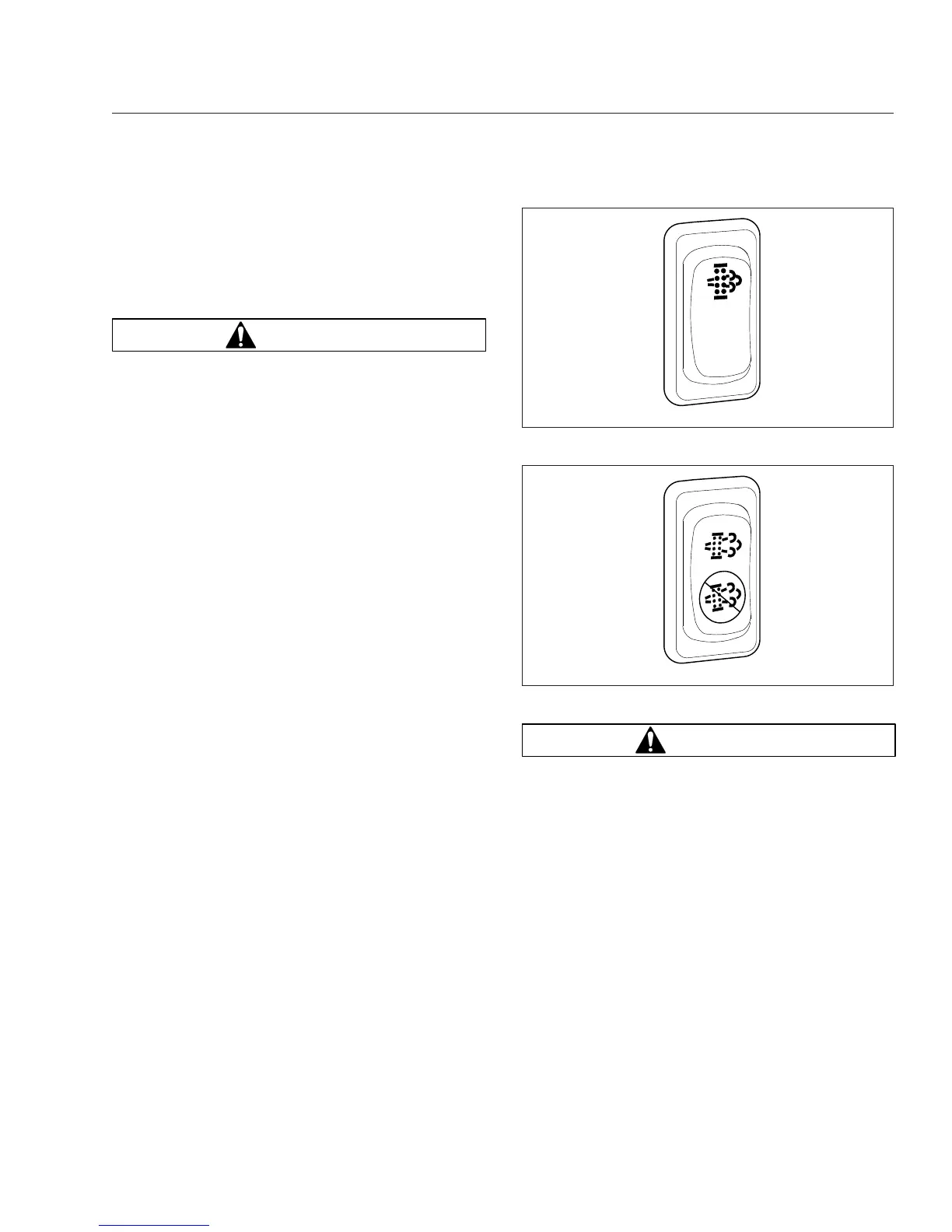
The regen request switch, located on the dash, is
used to initiate a parked regen. See Fig. 11.1.To
access the regen request switch, lift the guard and
press the yellow button.
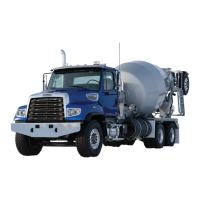
Some vehicles may be equipped with a regen
request/inhibit switch. See
Fig. 11.2. To stop a regen
in progress or prevent the start of a regen, press the
lower half of the switch. Regen is then delayed until
the switch is no longer active.
NOTE: The regen switch can initiate a parked
regen only when the DPF lamp is illuminated.
WARNING
During parked regen, exhaust temperatures are
very high and could cause a fire, heat damage to
objects or materials, or personal injury to per-
sons near the exhaust outlet.
Before initiating a parked regeneration, make cer-
tain the exhaust outlets are directed away from
structures, trees, vegetation, flammable materi-
als, and anything else that may be damaged or
injured by prolonged exposure to high heat.
To initiate a parked regen, perform the following
steps.
1.
Park the vehicle away from all flammable materi-
als, put the transmission in neutral, and set the
parking brake.
2.
Start and warm the engine until the coolant tem-
perature is at least 150°F (66°C).
f610848
03/09/2012
RGEN
Fig. 11.1, Regen Request Switch
f610944
07/30/2009
Fig. 11.2, Regen Request/Inhibit Switch
Emissions and Fuel Efficiency
11.2




 To Next Page