EasyManua.ls Logo

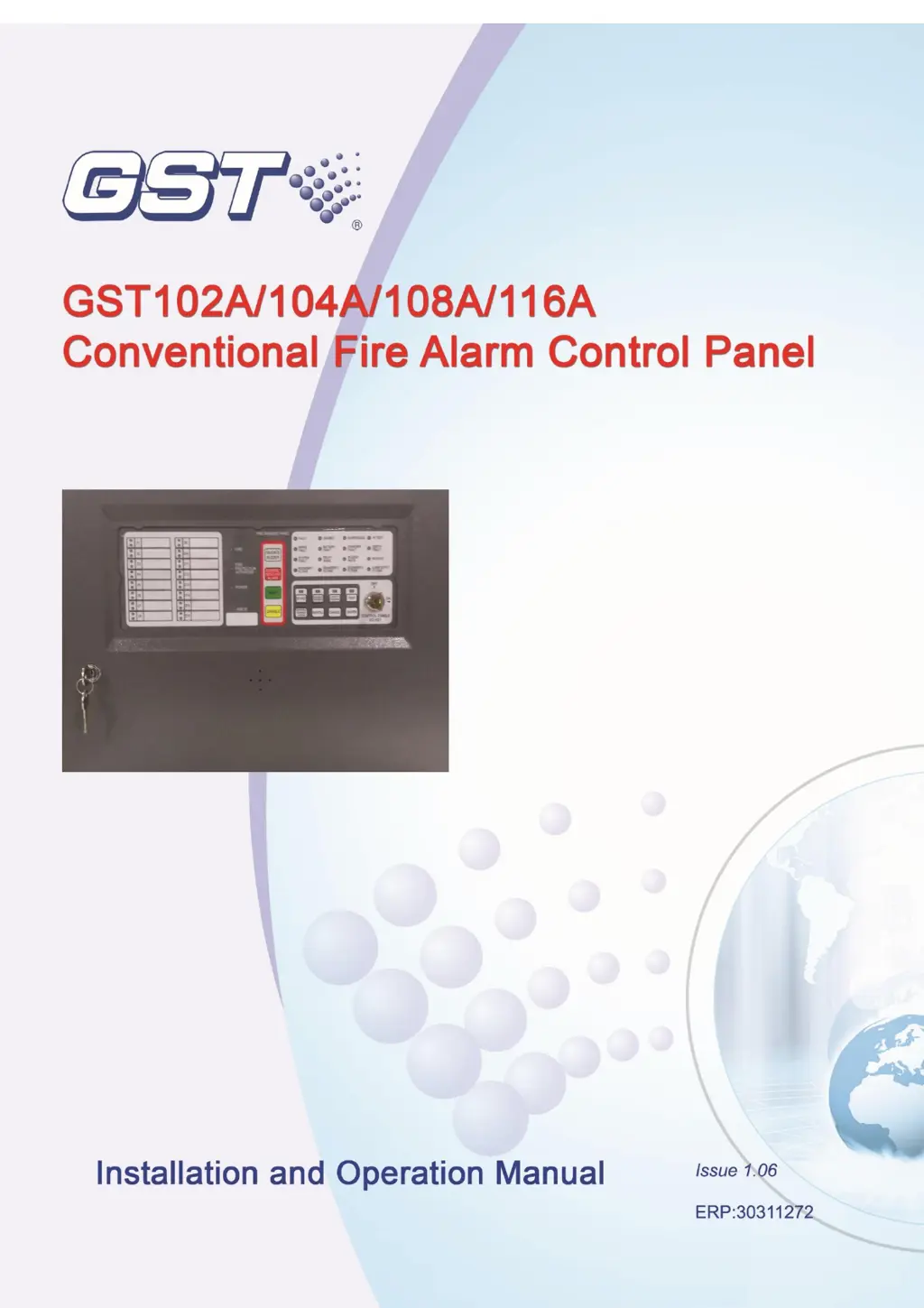
GST GST102A - User Manual

GST GST102A
43 pages
Print Icon
To Next Page IconTo Next Page
Loading...

Table of Contents

Questions and Answers

Summary

Quick Operation Guide

Chapter 1 Product Overview

1.1 Features

Key capabilities and functionalities of the fire alarm control panel.

1.2 Technical Specifications

Detailed technical parameters including voltage, current, and specifications.

1.2.2 Batteries

Information regarding battery type, capacity, and charging specifications.

1.2.3 Load of Power Supply

Details on power supply load in standby and alarm conditions.

1.2.4 Detection Zone

Parameters for detection zones, including voltage and current limits.

1.2.5 Output Interface

Specifications for various output interfaces of the control panel.

1.2.7 Installation and Storage

Guidelines for panel installation environment and storage conditions.

1.3 Controls and Indications

Description of panel controls, buttons, and status indicator LEDs.

1.3.1 Common Status Indicators

Explains the meaning of common status LEDs on the panel.

1.3.2 Zone Status Indicators

Describes the indicators for zone status (fire, fault, disabled).

1.3.3 Operating Indicators and Keys

Details on operational indicators and the functions of various keys.

1.4 Configuration and Functions

Details on panel configuration options and operational functions.

1.4.1 Internal Components

Overview of the internal construction and components of the control panel.

1.4.2 Configuration and Functions of GST-116 A

Specific configuration and functions for the GST-116A model.

1.4.3 Configuration and Functions of GST-108 A

Specific configuration and functions for the GST-108A model.

1.4.4 Configuration and Functions of GST-104 A

Specific configuration and functions for the GST-104A model.

1.4.5 Configuration and Functions of GST-102 A

Specific configuration and functions for the GST-102A model.

1.5 Terminal Description

Explanation of various terminals on the control and extension boards.

1.5.1 Terminals on the Control Board

Description of terminals located on the main control board.

1.5.2 Terminals on Extension Board

Description of terminals located on the extension board.

1.5.3 Terminals on Relay Board of RB116 A

Terminal descriptions for the RB116A relay board.

1.5.4 Terminals on Relay Board of RB108 A

Terminal descriptions for the RB108A relay board.

1.6 Appearance and Dimensions

Physical dimensions and overall appearance of the control panel.

Installation Precautions

Chapter 2 Installation and Wiring

2.1 Installing the Cabinet

Instructions for mounting the fire alarm control panel cabinet.

2.2 Mains Connection

Procedures for connecting the main AC power supply to the panel.

2.3 Battery Connection

Steps for connecting the backup batteries to the control panel.

Chapter 3 System Setup

3.1 Setting Access Levels

Configuration of the three different access levels for panel operation.

3.2 Setup of the Sounder; Alarm Output

Configuration options for sounder and alarm output behavior.

3.3 Disablement of a Zone or Output

Procedures for disabling specific zones or outputs on the panel.

3.3.1 Use of Disablement Function

Explanation of how to use the disablement function for zones and outputs.

3.3.2 Operation Basic Steps for Zone Disablement

Basic steps for individually disabling zones or sounder/alarm outputs.

3.3.3 Quick Disablement Function for Group Actions

Quick method for group disabling of zones or sounder outputs during alarm.

3.4 Setting Test Mode

Steps to configure and perform system tests on the fire alarm panel.

3.4.1 Use of Test Mode

Purpose and general usage of the panel's test mode.

3.4.2 Operation Steps

Detailed steps for operating the panel in test mode.

3.4.3 Test Zone Output Mode

Specific configuration for testing zone output behavior.

3.5 Programming Output Modes

How to program various output modes for alarm and sounder signals.

3.5.1 Setting Zone “With Manual Call Point

Configuration for zones to behave as manual call points.

3.5.2 Setting Associated Sounders to a Zone

Associating specific sounder outputs with detection zones.

3.5.3 Setting Delay Time of Alarm Output

Configuring delay timers for alarm outputs.

3.5.4 Sounder Output Mode

Setting different modes for sounder outputs.

3.6 Supervisory Mode

Configuring zones for supervisory monitoring of device status.

3.6.1 Use of Supervisory Function

Explanation of the supervisory function for monitoring field devices.

3.6.2 Programming a Zone to Supervisory

Steps to define a zone as supervisory.

3.7 Setting Auxiliary Functions

Configuration of auxiliary functions like resound, silence, and delay modes.

3.10 Restore Default Settings

Procedure to reset panel settings to factory defaults.

3.11 Default DIP Switch Settings

Overview of default configurations for DIP switches.

Chapter 4 Operation Instructions

4.1 Working State Description

Detailed description of the panel's operational states and indicators.

4.1.1 State of Detection Zones

Explains the status of detection zones (Normal, Fire, Supervisory, Fault, Disabled).

4.1.2 Alarm Output State

Describes the status of the alarm output.

4.1.3 Sounder Outputs State

Explains the status of sounder outputs.

4.1.4 Safe State Indicators and Behavior

Describes the panel's safe state condition and its indicators.

4.2 Acknowledgement and Silence of Fault

How to acknowledge and silence fault conditions.

4.3 Acknowledgement and Silence of Fire Alarm

How to acknowledge and silence fire alarms.

4.4 Silencing the Sounder Outputs

Procedure for silencing sounder outputs.

4.5 Evacuation

How to activate and deactivate the evacuation function.

4.6 Self-test and Reset

Performing self-tests and resetting the panel.

4.1.5 Buzzer Sound Patterns and Priorities

Explains the sound patterns and priorities of the panel's buzzer.

4.1.6 Additional Operational Notes and Behavior

Additional operational notes, access level behavior, and input types.

Chapter 5 Calculation of Batteries Capacity

Chapter 6 Servicing

6.1 Replacing the Batteries

Instructions for safely replacing the unit's batteries.

6.2 Replacing the Fuses

Steps for replacing internal fuses in the control panel and cable.

6.3 Troubleshooting

Common problems and their solutions for the fire alarm system.

Limited Warranty

Product warnings and disclaimers

Compliance information

WEEE Information

GST GST102A Specifications

General IconGeneral
Rated Current2A
Loop Capacity2 loops
Display TypeLCD
Operating Temperature0°C to +40°C
Input VoltageAC220V ±10%

Related product manuals