31
11.8 Reduction Belt [Motor Reversing Type]:
11.8.1 Inspecting the Belt
Remove the pulley cover and visually inspect the belt.
Durability of the reduction belt is affected significantly by the operating condition, and there is no standard
guideline as to when the belt should be replaced.
Generally, the belt is designed to withstand several millions of flexing loads.
As a practical guideline, replace the reduction belt when any of the conditions listed below are observed:
• The teeth and end faces of the belt have worn significantly.
• The belt has swollen due to deposits of oil, etc.
• Cracks and other damages are found on the teeth or back of the belt.
• The belt has broken.
11.8.2 Applicable Belt
Manufacturer: Bando Chemical Industries
Model: 60S2M184R: 6mm wide, Rubber STS cleanroom type specification (SA5R/SA6R)
150S3M255U: 15mm wide, Polyurethane rubber specification (SA7R)
100S3M219U: 10mm wide, Polyurethane rubber specification (SS7R)
150S3M252U: 15mm wide, Polyurethane rubber specification (SS8R/HS8R)
11.8.3 Adjusting the Belt Tension
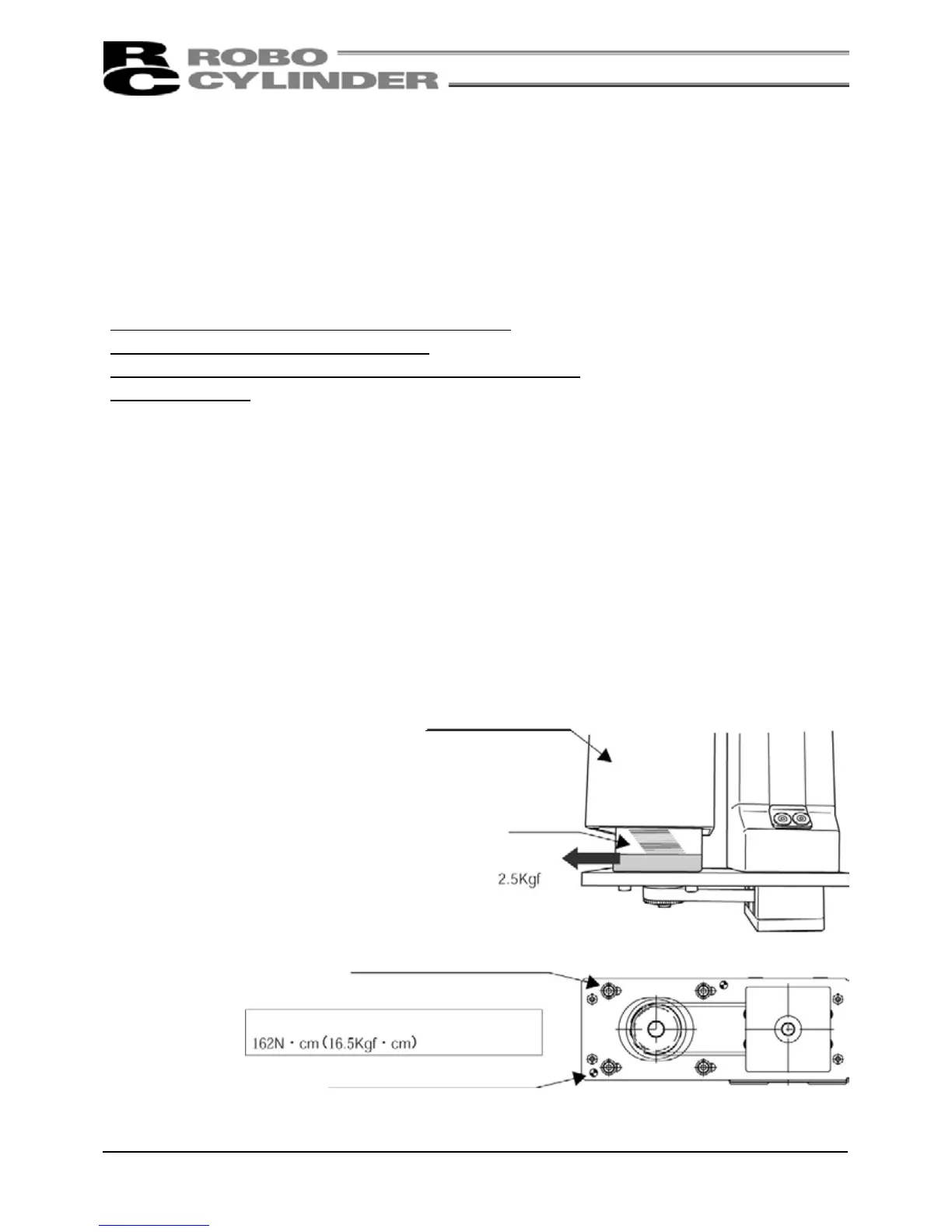
Remove the pulley cover and loosen the four tension adjusting bolts. Apply a tensile load to the belt by moving
the motor to the left and tighten the tension adjusting bolts.
●SA5R, SA6R
SA5R, SA6R, SA7R,
SS7R, SS8R, HS8R
Move the motor cover.
Motor
Tensile load:
Tension adjusting bolts (4 pcs.)
Tension adjusting bolt tightening torque:
Use an Allen wrench of 2.5mm
across flats.
Motor-cover affixing bolts (2 pcs.)



 To Next Page