EasyManua.ls Logo

Icom ID-31A - User Manual

Icom ID-31A
80 pages
Print Icon
To Next Page IconTo Next Page
Loading...
This device complies with Part 15 of the FCC Rules. Operation is
subject to the following two conditions: (1) this device may not cause
harmful interference, and (2) this device must accept any interference
received, including interference that may cause undesired operation.
WARNING: MODIFICATION OF THIS DEVICE TO RECEIVE CEL-
LULAR RADIOTELEPHONE SERVICE SIGNALS IS PROHIBITED
UNDER FCC RULES AND FEDERAL LAW.
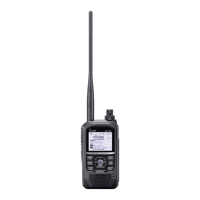
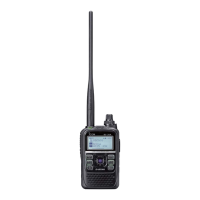
INSTRUCTION MANUAL
New2001
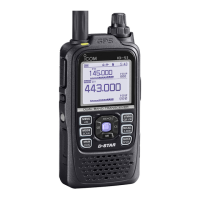
ID-31A
UHF TRANSCEIVER
ID-31E
UHF TRANSCEIVER
The photo shows the
ID-31E version.

Table of Contents

Other manuals for Icom ID-31A

Questions and Answers

  • T
    Troy EllisAug 29, 2025
    What to do if Icom ID-31A repeater replies ‘RPT?’ and call sign of the called repeater after your call?
    • S
      Scott SandersAug 29, 2025
      If the repeater replies ‘RPT?’ and the call sign of the called repeater after your call, the D-STAR cannot connect to the called repeater, or it’s busy. Wait for a while, and try it again.
  • R
    randolphjoshuaAug 28, 2025
    What to do if the Icom Transceiver simplex operation cannot be made in the DR mode?
    • C
      Christopher GarciaAug 28, 2025
      If simplex operation cannot be made in the DR mode, it might be because a call sign is programmed in the “CALL SIGN” of the Repeater list. Delete the Call sign in the “CALL SIGN” setting of the Repeater list. Another possible cause is that Duplex mode (DUP+, DUP–) is set. Select “OFF” in the “DUP” setting of the repeater list. Finally, a repeater frequency might be programmed. Program a simplex frequency instead.
  • J
    John ChavezAug 27, 2025
    What to do if Icom Transceiver repeater replies ‘RX’ or ‘RPT?’ and the call sign of its gateway repeater after your call?
    • C
      Catherine EspinozaAug 27, 2025
      If the repeater replies with ‘RX’ or ‘RPT?’ and the call sign of its gateway repeater after your call, it may be because your MY call sign has not been set. In this case, set the MY call sign. Also, your own call sign might not be registered to the D-STAR Server, or it could be incorrect. Register your own call sign to the D-STAR Server, or confirm the registration of your own call sign. Finally, your calling station call sign might not be registered to the D-STAR Server, or it could be wrong. You should ask the server’s administrator about your calling station’s call sign.
  • J
    Jennifer JonesAug 27, 2025
    What to do if Icom ID-31A repeater does not transmit a reply after my call?
    • W
      William RobertsonAug 27, 2025
      If the repeater does not transmit a reply after your call, it could be due to a wrong repeater setting. Ensure you set the correct repeater. Alternatively, the transceiver might be out of the repeater range, or your transmission isn't reaching the repeater. In this case, correct the repeater frequency, frequency offset, or duplex setting. You might also try accessing another repeater.
  • S
    Sara CruzAug 25, 2025
    How to fix contacting problems with another station on Icom ID-31A?
    • D
      Darlene CamachoAug 26, 2025
      If contacting another station is impossible on the Icom Transceiver, a different tone or code may be used for the tone/DTCS squelch. Check the tone/DTCS by performing a tone scan.
  • W
    wjohnsonAug 25, 2025
    What to do if the frequency cannot be set on Icom ID-31A?
    • L
      lauraconwayAug 25, 2025
      If the frequency cannot be set on your Icom Transceiver, the Key Lock function may be activated. Hold down [LOCK] for 1 second to cancel it. Alternatively, the memory mode, Call channel mode, or DR mode may be selected; push [V/MHz] to select the VFO mode.

Summary

Precautions

Accessory Attachment

Using a microSD Card

Panel Description

Front, Top, and Side Panels Overview

Identifies and describes the function of each button, connector, and indicator on the transceiver's panels.

Battery Charging

Battery Safety Cautions

Highlights hazards of misuse, shorting terminals, unapproved packs, and handling damaged batteries.

Charging Cautions and Recommendations

Warns about charging in extreme temperatures, wet batteries, and charging beyond specified time.

Regular Charging Procedure

Details regular battery charging, including turning off the transceiver and battery icon indicators.

External DC Power Operation

Instructions for operating the transceiver using external DC power sources via optional cables.

Basic Operation

Powering the Transceiver ON;OFF

How to turn the transceiver on/off, including display options for opening messages and voltage.

Setting the Squelch Level

Guides on adjusting squelch level for optimal reception by muting noise.

Mode Selection: VFO and Memory

How to select VFO mode for frequency setting and Memory mode for stored channels.

D-STAR Repeater (DR) Mode

Explains DR mode for D-STAR operation, including selecting repeaters and UR call signs.

Receiving Signals

Guide to receiving signals, covering power, volume, frequency, and squelch settings.

Transmitting Signals

Instructions for transmitting, including frequency setting, PTT usage, and microphone technique.

Scan Function Operation

Utilizes the scan function to automatically search for signals and skip frequencies.

Memory Channel Programming

Detailed steps for programming memory channels with frequencies, modes, and other data.

Repeater Operation Guide

Explains repeater operation, including setting frequencies, duplex direction, and using memory channels for repeater info.

Menu Screen Operation

Navigating Menu Items

Explains the Menu screen's zoomed structure and how to navigate between items and levels.

Menu Items: GPS Set Options

Configures GPS receiver selection, power save, position format, units, and alarm areas.

Resetting

Partial Reset Procedure

Initializes operating conditions without clearing memory, call signs, or repeater lists.

Full System Reset

Resets the CPU for malfunctions, clearing all programming and restoring defaults.

Troubleshooting

Specifications

Options

VOX Function Overview

Explains the VOX function for hands-free operation and required accessories.

Turning VOX Function ON;OFF

Steps to enable/disable the VOX function and adjust microphone gain.

Icom ID-31A Specifications

General IconGeneral
DisplayLCD
GPSYes
D-STARYes
Operating Temperature Range-10°C to +60°C
Antenna Impedance50 Ohms
TypeHandheld
Frequency Range144-148 MHz / 430-450 MHz
ModulationFM, D-STAR
Voltage7.4 V

Related product manuals