EasyManua.ls Logo

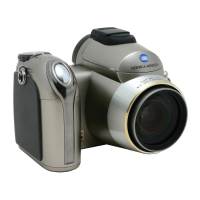
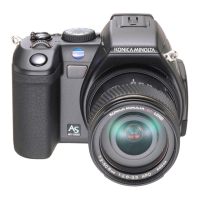
Konica Minolta DiMAGE A200 - User Manual

Konica Minolta DiMAGE A200
172 pages
Print Icon
To Next Page IconTo Next Page
Loading...
INSTRUCTION MANUAL

Table of Contents

Questions and Answers

Konica Minolta DiMAGE A200 Specifications

General IconGeneral
Image ratio w:h4:3
Sensor typeCCD
ISO50, 100, 200, 400, 800
Lens focal length7.2 - 50.8 mm
Optical zoom7.1x
Screen size1.8"
Screen dots134, 000
Max shutter speed1/4000 sec
Min shutter speed30 sec
Dimensions117 x 85 x 114 mm
ViewfinderElectronic
Effective pixels8 million
Sensor size2/3"
Sensor size (mm)8.8 x 6.6 mm
Image ProcessorDiMAGE
Maximum apertureF2.8-3.5
Storage typesCompactFlash (Type I or II)
BatteryLithium-ion

Summary

Color Mode Settings

Natural Color; Adobe RGB

Faithfully reproduces scene colors using sRGB or Adobe RGB.

Vivid Color

Enhances color saturation for more vibrant images.

Black & White Mode

Creates monochrome images, with toning possible via filter.

Before You Begin

Battery Safety and Handling

DANGER Warnings

Critical warnings against misuse like shorting, heat, or water exposure.

WARNING Precautions

Guidelines on battery disposal and charging completion.

General Product Safety

Remote Control Battery Safety

Specific warnings regarding improper use of remote control batteries.

Important Cautions

Names of Parts

Camera Body Controls

Key buttons and access points on the camera body like shutter and mode controls.

Lens Adjustments

Manual focus and zoom controls, plus focal length indicators on the lens.

Camera Operation Interface

Exposure Mode Selection

Dial for selecting shooting modes and exposure settings.

Setting and Navigation Controls

Buttons for accessing functions, menus, and controlling settings.

Camera Features and Ports

Accessory and Mounting Points

Locations for attaching accessories and tripods like the accessory shoe.

Functional Buttons and Access

Buttons for focus modes, settings, and access to internal compartments.

Getting Up and Running

Attaching the Camera Strap

Instructions for securely attaching the camera strap to the body's eyelets.

Removing the Lens Cap

Procedure for safely removing and replacing the lens cap.

Attaching the Lens Hood

Charging the Battery

Installing and Changing the Battery

Battery Condition Indicator

Auto Power Save

Camera feature to conserve battery by turning off monitors and functions.

External Power Supplies

Memory Card Operations

Inserting and Changing Cards

Guide on properly inserting and removing memory cards for storage.

Ejecting and Formatting Cards

Procedure for safely removing a memory card and erasing its data.

Camera Power and Handling

Turning On and Off

Procedure for powering the camera on and off.

Proper Camera Grip

Proper grip and posture for stable camera operation.

Diopter Adjustment

LCD Monitor Setup

Display Mode Button

Setting the Date and Time

Setting the Menu Language

Basic Recording Operation

Framing and Focusing

Using the zoom ring and focus frame to compose the shot.

Focus and Exposure Lock

Locks focus and exposure by pressing the shutter button partway down.

Taking the Picture

Full press of the shutter button to capture the image.

Focus Lock Function

Automatic Monitor Amplification

Focus Signals

Special Focusing Situations

Using the Built-in Flash

Flash Range - Automatic Operation

Camera-Shake Warning

Anti-Shake System

Basic Playback Modes

Viewing Images

How to access and view captured still and movie images.

Single-Frame Playback and Histogram

Viewing Images and Histogram

Deleting Single Images

Rotating Images

Playback Display Control

Index Playback

Enlarged Playback

Advanced Recording Overview

Recording Mode Display

Explains the various indicators shown in the recording mode screen.

Display Information Button

Focus-Mode Button Functions

Single-shot AF

General purpose autofocusing mode for stationary subjects.

Continuous AF

Autofocus for moving subjects, continuously tracking them.

Manual Focus

Allows manual adjustment of focus using the lens ring.

Manual Focus and Magnifier

Changing AF-Area Modes

Wide Focus Area

General purpose focus area covering a broad section of the frame.

Spot AF Areas

Eleven selectable focus areas for precise targeting.

Flex Focus Point

A cross-hair focus point movable anywhere in the image area.

Spot AF Areas Explained

Flex Focus Point Operation

Macro Mode Operation

Macro Shooting Tips

Advice for close-up photography, recommending tripods and focus point usage.

Exposure Lock

Exposure-Mode Dial

Program - P Mode

Program Shift - Ps;Pa

Auto Recording Settings

Aperture Priority - A Mode

Camera Notes on Bright Scenes

Notes on photographing bright objects and sun exposure precautions.

Shutter Priority - S Mode

Shutter Speed and ISO Range

Manual Exposure - M Mode

Bulb Exposures

Digital Subject Programs

Exposure and Flash Compensation

White Balance Settings

Auto and Preset White Balance

Automatic detection or selection of predefined white balance settings.

Custom White Balance

Procedure for calibrating white balance for specific lighting conditions.

Custom White-Balance Calibration

Using the Function Button

Camera Sensitivity - ISO

Flash Range and Sensitivity

Attaching an Accessory Flash Unit

Color Mode Options

Vivid and Natural;Adobe RGB

Vivid enhances saturation; Natural/Adobe RGB reproduce colors faithfully.

Black & White Mode

Creates monochrome images, with toning possible via filter.

About Adobe RGB

Flash Modes

Fill Flash

Used as main or supplementary light to reduce harsh shadows.

Fill-Flash with Red-Eye Reduction

Fires pre-flashes to contract pupils and reduce red-eye.

Slow Shutter Sync. with Red-Eye Reduction

Rear Flash Sync

Metering Modes

Multi-segment Metering

Measures luminance and color across segments for accurate exposure.

Spot Metering

Calculates exposure using a small area for precise measurement.

Filter Effects

Color Saturation Compensation

Contrast Compensation

Drive-Mode Button Functions

Single and Timed Shooting

Captures single shots or delays shutter release for self-portraits.

Advanced Capture Modes

Modes for sequence shooting, exposure variation, or remote operation.

Self-Timer Operation

Recording With Remote Control

Using the Remote Control

Bracketing Modes

Continuous Advance Modes

Recording Menu Navigation

Activating and Navigating Menu

Instructions for moving through menu tabs, options, and selecting settings.

Image Size and Quality Settings

About Raw Image Quality

Spot AE Area Settings

Flash Control Options

AEL Button Configuration

Recording Mode Reset

Sharpness Adjustment

Date Imprinting Function

Instant Playback Settings

Full-Time AF Feature

Direct Manual Focus

Memory - Storing Camera Settings

Memory Recall Function

DSP (Digital Subject Program) Setup

Noise Reduction

Monitor Amplification Settings

Digital Zoom Function

A Short Guide to Photography

Exposure and Flash Compensation

What Is An EV?

Light Sources and Color

Movie Mode Recording

Movie Recording Basics

Instructions for starting, stopping, and managing movie recording.

Navigating the Movie Menu

Movie Image Size and Frame Rate

Movie Mode Selection

Movie Reset Function

Advanced Playback Overview

Viewing Movies

How to play, pause, rewind, fast forward, and adjust volume of movie clips.

Capturing a Movie Frame

Navigating the Playback Menu

Frame-Selection Screen

Deleting Images

Formatting Memory Cards

Viewing Image Folders

Locking Images

Movie Editing Function

Slide Show Function

Magnification Setup

About DPOF

DPOF Setup

Date Imprint Function

Index Print Function

Cancel Print Orders

Copy and E-mail Copy

Remote Control Playback

Changing Remote Battery

Viewing Images on Television

Setup Menu Overview

Opening the Setup Menu

Two methods to access the setup menu directly or via other menus.

Navigating the Setup Menu

Date and Time Setup

LCD Brightness Adjustment

Lens Accessory Specification

Video Output Settings

Transfer Mode Selection

Anti-Shake System Configuration

Delete Confirmation Setting

Language Selection

Shortcut Help Guide

File Number Memory

Folder Name Formats

Select Folder Function

New Folder Creation

Reset Default Settings

Audio Signals Control

Focus Signals Control

Shutter FX Sound

Volume Adjustment

Auto Power Save Settings

Data-Transfer Mode

System Requirements

Lists compatible operating systems and hardware for computer connection.

Connecting the Camera to a Computer

Connecting to Windows 98; 98 Second Edition

Manual Driver Installation (Windows 98)

QuickTime System Requirements

VideoStudio System Requirements

Memory Card Folder Organization

Disconnecting from Computer

Windows Disconnection

Steps for safely removing storage devices in Windows OS.

Macintosh Disconnection

Steps for safely removing storage devices on Macintosh systems.

Changing the Memory Card

Removing the Driver Software - Windows

PictBridge Printing Setup

Selecting Images for Printing

Using controls to display and select images for printing.

Notes on Printing Errors

Navigating the PictBridge Menu

Batch Print Options

Index Print Options

Paper Size Settings

Layout Settings

Print Quality Settings

Data Print Function

DPOF Print Function

Troubleshooting Common Issues

Camera Operation Faults

Solves issues with power, shutdown, and basic operation.

Image Quality Problems

Addresses sharpness, brightness, exposure, and color issues in captured images.

About the Lithium-Ion Battery Charger Cord

About PC Flash Adapter PCT-100

Converters, Closeup Lens, Care and Storage

Camera Care Guidelines

Essential guidelines for protecting the camera from damage and elements.

Cleaning Procedures

Storage Guidelines

Operating Temperatures and Conditions

Memory Card Care and Handling

Battery Care and Maintenance

LCD Monitor Care

Copyright Information

Before Important Events or Journeys

Questions and Service

Technical Specifications

Filter Examples

Related product manuals