4-6 Issue 05, 01/01 Krautkramer DM4E / DM4 / DM4 DL
Basics of operation Switching the instrument on and off
The display does not appear with active 2-point cali-
bration (refer to Page 5-7).
After this, the probe type number is displayed (auto-
matic probe recognition, refer to page 4-8). The instru-
ment is then ready for measurement. With initial op-
eration, the THK mode (thickness measurement)is
displayed, otherwise the last setting which was set.
Non-dialog probes: DA3 mode or AUTO
mode
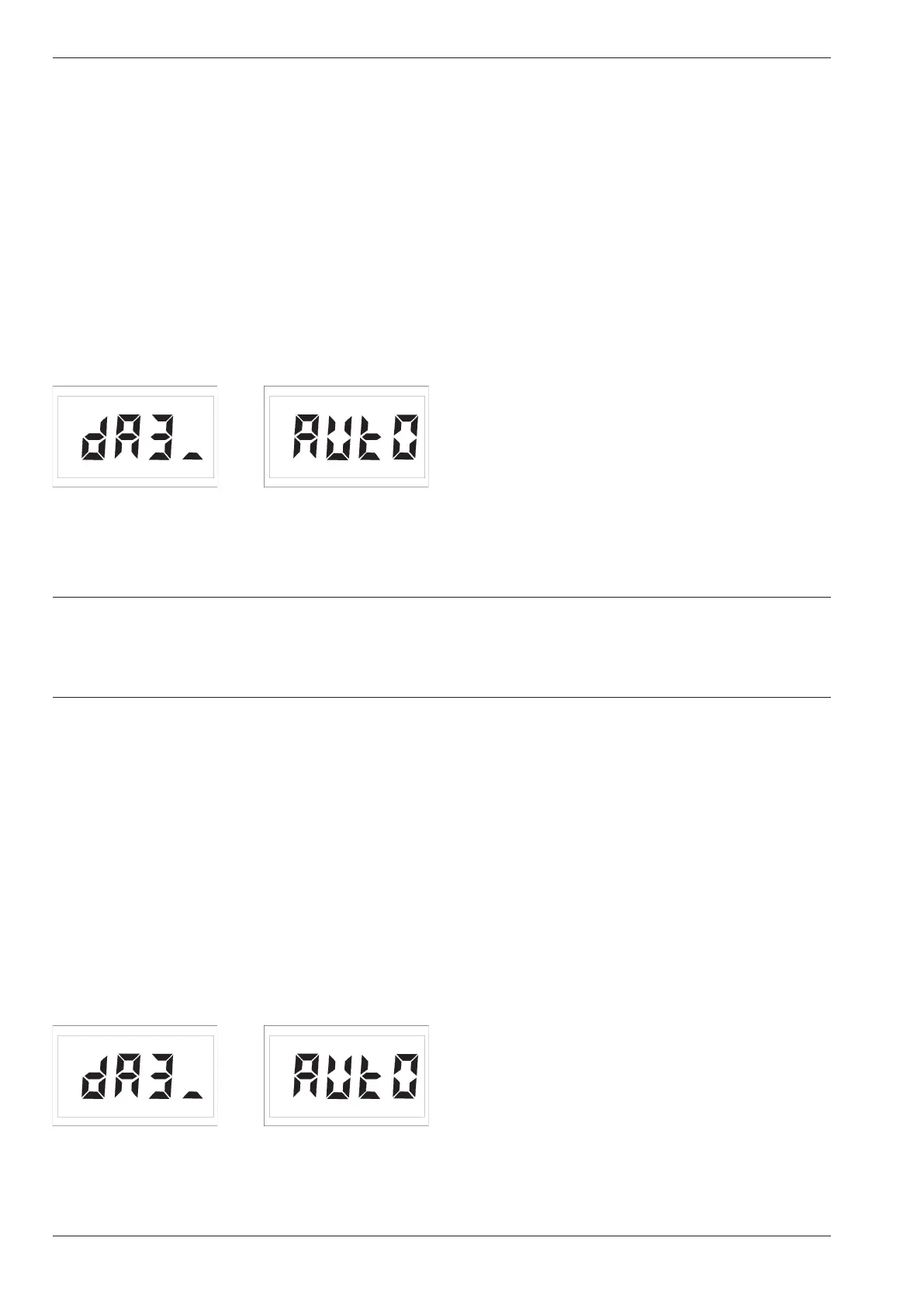
If you are using non-dialog probes, one of the two fol-
lowing displays will appear after the software version
number:
DA3 mode is the default setting; otherwise the setting
that was selected last will appear.
This is a case of two different operating modes that
you can choose from.
DA3 mode
You should preferably use this mode in cases where
there are large variations or differences between the
test object’s surface temperature and the ambient tem-
perature.
The DA3 mode is especially suitable whenever you
are using the probes from the DA3 series.
H Note:
Exception: Please operate the probe DA 0.8G in the
AUTO mode.
The probe DA 312 B16 must be operated in the DA3
mode.
DA3 mode AUTO mode
4-6 Issue 05, 01/01 Krautkramer DM4E / DM4 / DM4 DL
Basics of operation Switching the instrument on and off
The display does not appear with active 2-point cali-
bration (refer to Page 5-7).
After this, the probe type number is displayed (auto-
matic probe recognition, refer to page 4-8). The instru-
ment is then ready for measurement. With initial op-
eration, the THK mode (thickness measurement)is
displayed, otherwise the last setting which was set.
Non-dialog probes: DA3 mode or AUTO
mode
If you are using non-dialog probes, one of the two fol-
lowing displays will appear after the software version
number:
DA3 mode is the default setting; otherwise the setting
that was selected last will appear.
This is a case of two different operating modes that
you can choose from.
DA3 mode
You should preferably use this mode in cases where
there are large variations or differences between the
test object’s surface temperature and the ambient tem-
perature.
The DA3 mode is especially suitable whenever you
are using the probes from the DA3 series.
H Note:
Exception: Please operate the probe DA 0.8G in the
AUTO mode.
The probe DA 312 B16 must be operated in the DA3
mode.
DA3 mode AUTO mode


 To Next Page