26/37
12 Seating System
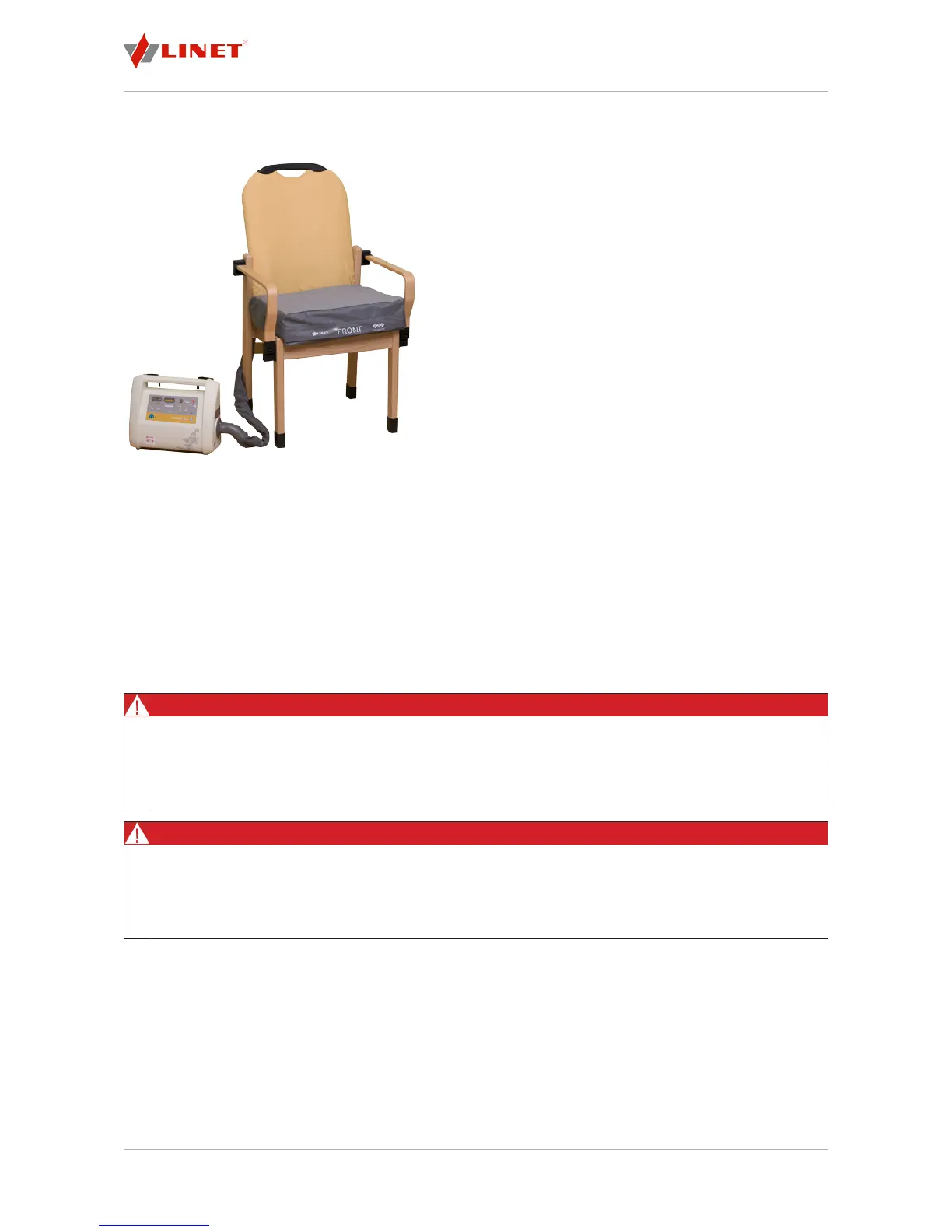
For patients who are not bed-ridden, it is possible to connect a seat
cushion operating in a 2-cell cycle to the SCU instead of the mattress.
The LINET® dynamic seat cushion ts on most standard chairs and
chairs for specialist geriatric care.
The seat cushion consists of three sets of alternating cells on a foam
base with a front support. The cover consists of vapour-permeable,
water-impermeable two-way stretch material.
12.1 Functioning
The seating system provides alternating pressure therapy for patients that are not bed-ridden.
Have seating system used only by or under supervision of trained and qualied nursing personnel.
Seat cushion:
six cells (two sets of three)
cells are inated and deated in 12 minute cycles
12.2 Installation of Seat Cushion
Remove existing seat cushion if possible.
Ensure that chair supports weight of seat cushion.
Place the seat cushion directly on the seat base.
Ensure that there are no protruding parts or sharp objects on the chair to avoid damage to the seat cushion.
Put seat cushion on seat of chair so that umbilical points to the back.
Push seat cushion back as far as it will go.
Connect air pipe (see Connecting Mattress and SCU).
Put SCU on oor next to chair.
Fig. 17 Seating System
WARNING!
Risk of injury due to unsuitable chair!
Ü
Ensure that chair is suitable for seating system.
Ü
Conduct risk evaluation if necessary.
WARNING!
Risk of injury due to exposed cable!
Ü
Ensure that cable is not twisted, crushed or strained.
Ü
Ensure that cable does not present tripping hazard.


 To Next Page