3.15.6 Use of Suspension Mechanism
During the plowing operation, the longitudinal and transverse adjustment of the plow shall be made to
ensure the consistent tillage depth of the front and rear plow-shares.
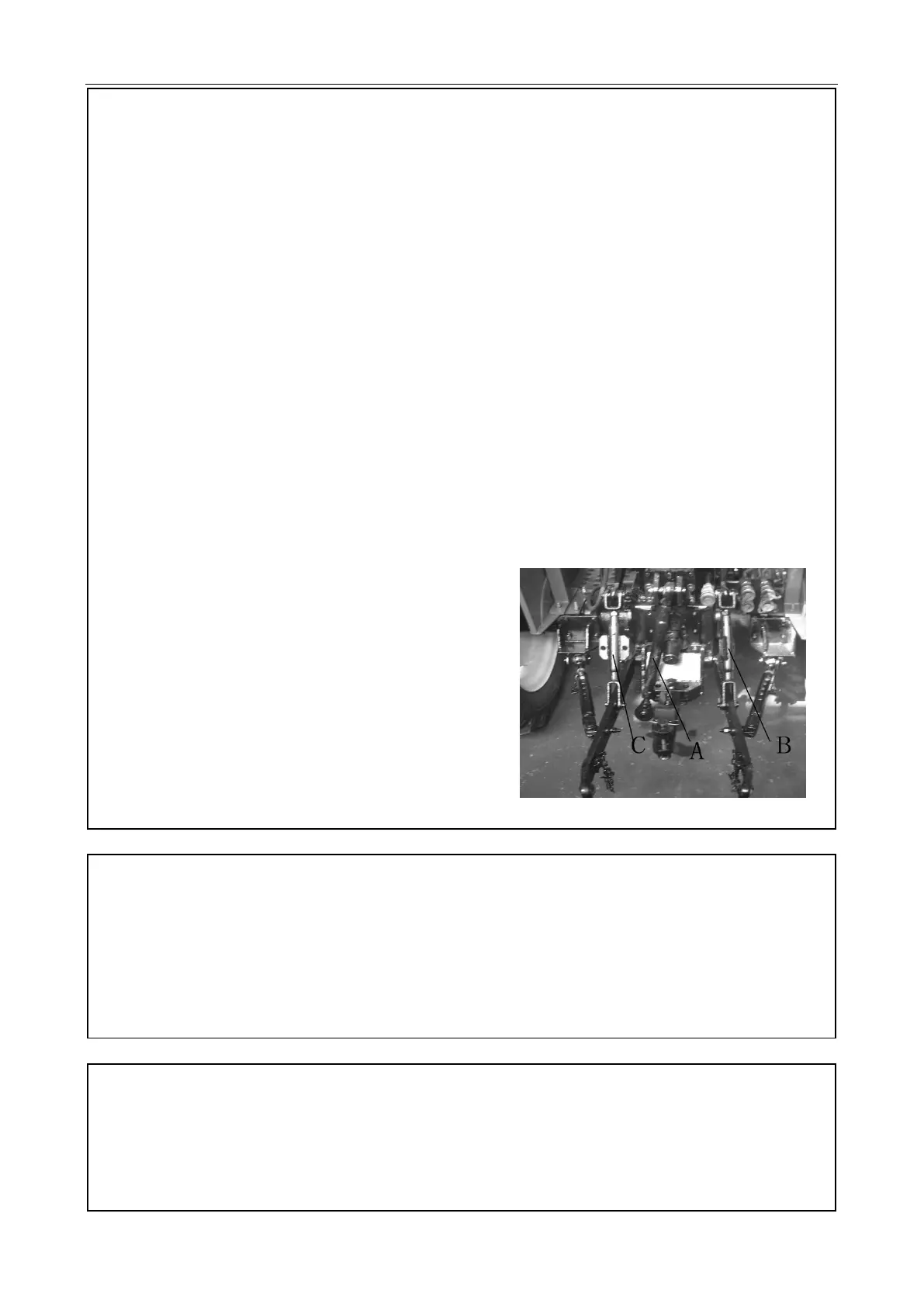
Longitudinal adjustment: Adjust the length of upper pull rod A to keep the plow frame longitudinally
horizontal to achieve the same tillage depth among plow-shares. When the front plow-share makes deeper
tillage depth, the rear plow-share shallower or the plough heel leaves the bottom of the ditch, the upper
pull rod shall be extended; when the front plow-share makes shallower tillage depth, the rear plow-share
deeper or the plough heel compacts the bottom of the ditch, the upper pull rod shall be shortened.
Horizontal adjustment: Adjust the length of the left and right lifting rods to keep the plow frame
horizontal. As the right lifting rod B extends, the tillage depth of the first plow-share increases; As the
right lifting rod shortens, the tillage depth of the first plow-share becomes shallower. Generally, the left
lifting rod C is not adjusted, and the left lifting rod is adjusted only when the right lifting rod is not
adjusted enough to keep tillage depth consistent.
Fig. 3-18 Suspension Mechanism
Important:
1、 During ploughing, adjusting the deflective traction of farm implements by fixing limit rods is strictly
prohibited to avoid damaging the suspension mechanism;
2、 Turning the tractor when the farm implements are unraised during ploughing is strictly prohibited, so as not
to damage the suspension mechanism. The tractor can only be turned after plough-shares are unearthed.
Note: The limit rod is mainly used to prevent the lower pull rod from swinging too much and hitting the rear
wheel of the tractor when the tractor is turning with farm implements being lifted from the ground. When the
farm implement is in the plowing position, the limit rod is in a relaxed state, allowing a certain amount of swing
between the tractor and the farm implements.


 To Next Page