57
Distance (d)
Implement (Standard &
Forklift Truck
N/A 25mm (1”)
35mm (1 3/8”) 70mm (2 ¾”)
85mm (3 3/8”) 120mm (4 ¾”)
130mm (5 1/8”) 165mm (6 ½”)
175mm (6 7/8”) 210mm (8 ¼”)
220mm (8 11/16”) 255mm (10 1/16”)
265mm (10 7/16”) 310mm (12 3/16”)
310mm (12 3/16”) 345mm (13 9/16”)
350mm (13 ¾”) 390mm (15 3/8”)
395mm (15 9/16”) N/A
Table 4.4 – SR820 Cutting Height Adjustment
4.9 Work Site Assessment
4.9.1 Foreign Debris Hazards
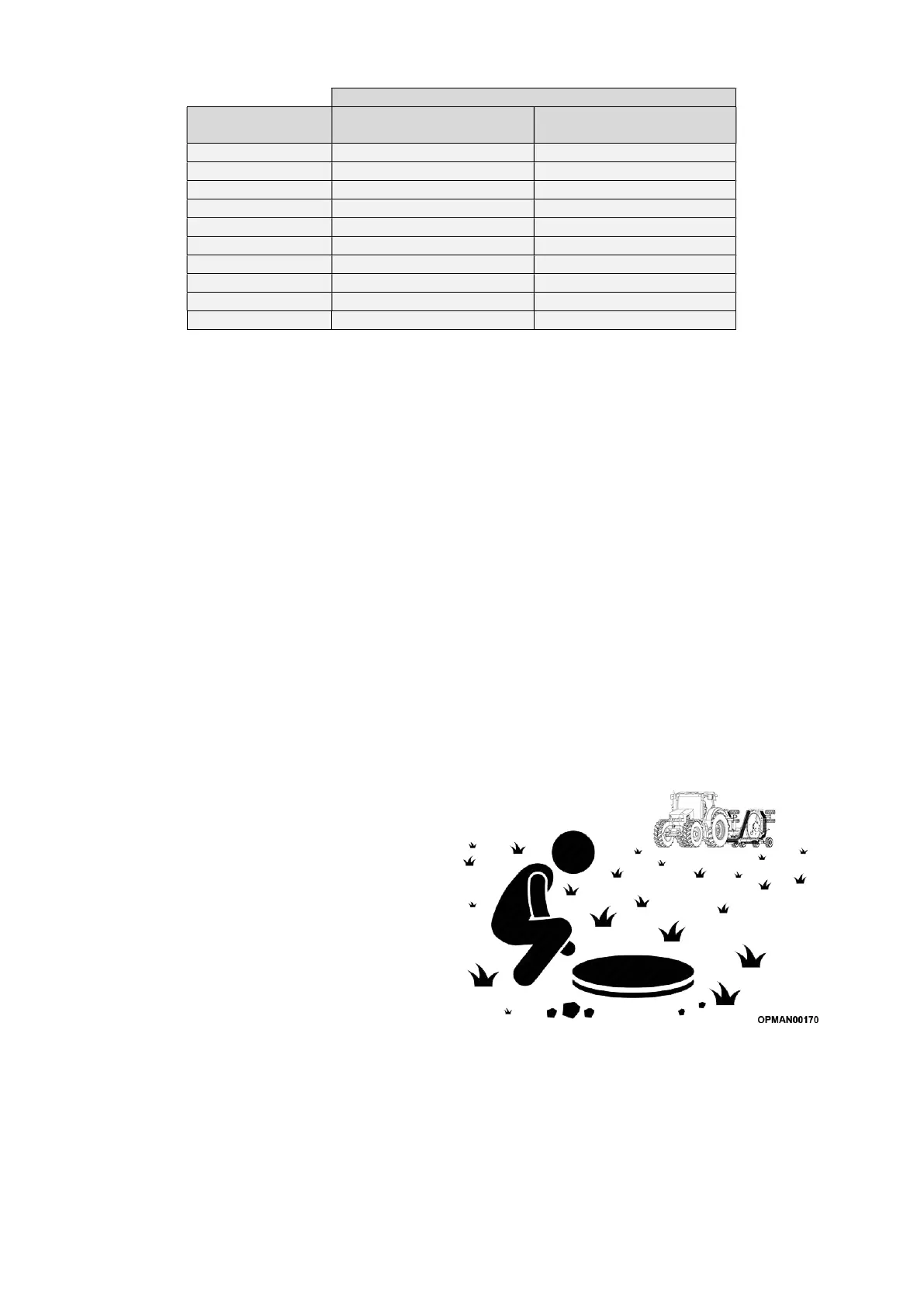
The destined work site to use the machine should be thoroughly checked and familiarised following the guidance
given in Section 2.3.4 to assess the working area for hazards; removable and fixed.
Items should be assessed, removed or clearly marked (e.g. if too heavy to move) before mowing:
Items and ground characteristics which could cause a reduction in the tractors stability and traction and
operator safety and ease of control in operation
Insufficient lighting
Foreign objects which could be picked up and then flung by the machine damaging and causing risk to
bystanders, operator, tractor or the nearby environment. Items seen on the surface and buried deeply in
the material. For example rocks, tree stumps and manhole covers
Foreign objects which could be picked up and then damage the machine; for example wire.
Low level objects which could come into collision with the tractor and/or machine
Items which could create a fire risk
In overgrown areas which could potentially hide debris that could be struck by the blades, the area should be:
inspected and large debris removed, mowed at an intermediate height and then re-inspected closely with any
remaining debris being removed. Then mow at the
desired final height. This will also bring benefits to
operations with reduced power requirements to mow,
reduce wear and tear on the machine drivetrain,
spread cut material better, reduce windrowing, and
give a better overall finish.
Always wear your seat belt securely fastened and
only operate the tractor and mower with the Roll-over
Protection Structure (ROPS) in the raised position. If
the tractor or mower hits a tree stump, rock, or bump,
a sudden movement could throw you off of the seat
and under the tractor and/or mower. The seat belt is
your best protection from falling off the tractor and the
ROPS provides protection from being crushed during
a tractor roll-over.
Figure 4.29 – Inspect the Work Site
It is important to inspect the machine to ensure all mandatory fixed and removable guarding is in position and in
correct working order before proceeding to use the machine. For guidance on the various guarding found on the
machines; see Section 2.6.


 To Next Page