31
TECHNICAL DATA
6.1.3.3 PartsAccessibletotheInput/OutputSignals
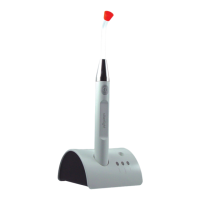
compactpiezoLEDisdesignedtooperateintheelectromagneticenvironmentspeciedbelow.
The customer or user of compact piezo LED should always make sure that it is used only in such
an environment.
Phenomenon
BasicEMC
standardortest
method
Immunitytestlevels
Electromagnetic
environment-Guidance
Electrostatic
discharges
(ESD)
e)
IEC61000-4-2
±8 kV on contact
±2 kV, ±4 kV, ±8 kV,
±15 kV in air
Theoormustbemadeof
wood, concrete or ceramic
tiles.Iftheooriscovered
with synthetic material, the
relative humidity should be at
leastequalto30%.
Electrical fast
transients/
bursts
b) f)
IEC61000-4-4
±1 kV on contact
100 KHz repetition
frequency
The quality of the power
supply should be that of a
typical commercial or hospital
environment.
Surges Line-
to-ground
a)
IEC61000-4-5 ± 2kV
The quality of the power
supply should be that of a
typical commercial or hospital
environment.
Conducted
disturbances
inducedbyRF
elds
b) d) g)
IEC61000-4-6
3 V
h)
0,15 MHz - 80 MHz
6V
h)
in ISM bands
between 0,15 MHz and
80 MHz
i)
80%AMat1KHz
c)
PortableandmobileRF
communication devices
should not be used near any
part of the product, including
cables, except when they
respect the recommended
distances, calculated from the
equation applicable at the
frequency of the transmitter.
a) This test applies only to output lines intended to
connect directly to outdoor cables.
b) SIP/SOPSwhosemaximumcablelengthislessthan3
m in length are excluded.
c) Testing may be performed at other modulation
frequenciesidentiedbytheRISKMANAGEMENT
PROCESS.
d) Calibration for current injection clamps shall be
performedina150Ωsystem.
e) Connectors shall be tested per 8.3.2 and Table 4 of
IEC61000-4-2:2008.Forinsulatedconnectorshells,
perform air discharge testing to the connector shell
andthepinsusingtheroundedtipngeroftheESD
generator, with the exception that the only connector
pins that are tested are those that can be contacted or
touched, under conditions of INTENDED USE, by the
standardtestngershowninFigure6ofthegeneral
standard, applied in a bent or straight position.
f) Capacitive coupling shall be used.
g) If the frequency stepping skips over an ISM or
amateur radio band, as applicable, an additional test
frequency shall be used in the ISM or amateur radio
band. This applies to each ISM and amateur radio
bandwithinthespeciedfrequencyrange.
h) R.M.S., before modulation is applied.
i) TheISM(Industrial,ScienticandMedical)bands
between150kHzand80MHzare6,765MHzto
6,795MHz;13,553MHzto13,567MHz;26,957MHz
to27,283MHz;and40,66MHzto40,70MHz.The
amateur radio bands between 0, 15 MHz and 80 MHz
are 1,8 MHz to 2,0 MHz, 3,5 MHz to 4,0 MHz, 5,3 MHz
to5,4MHz,7MHzto7,3MHz,10,1MHzto10,15
MHz,14MHzto14,2MHz,18,07MHzto18,17MHz,
21,0 MHz to 21,4 MHz, 24,89 MHz to 24,99 MHz, 28,0
MHzto29,7MHzand50,0MHzto54,0MHz.


 To Next Page