Using Automatic Link Establishment (ALE)
49
Notes
• If the name of the station you are linked to is not in your directory, this
function will not be available.
• The LQA (F3) key is displayed only if you established the link in the ALE mode
(in the Channel mode, this function is not available, because the call is
received/transmitted on the current channel).
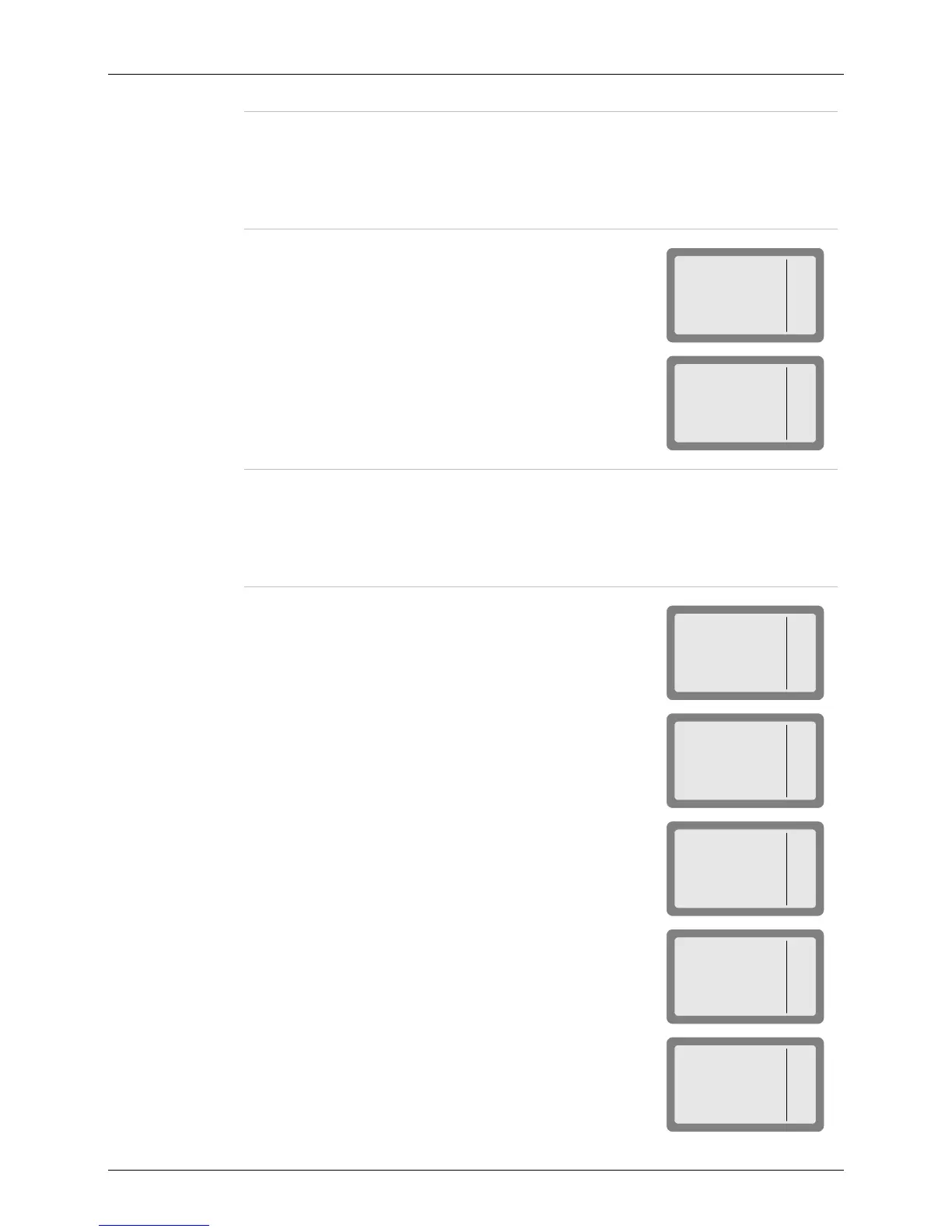
MON (F4) turns on and off monitoring by means of the speaker.
MICOM-3
CALL
LQA
MON
ALE
MONITOR ON
RPL (MORE, F1) replaces the currently-used channel with a
channel with a better LQA score. The radio disconnects the link,
replaces the channel being used, and initiates the call once again.
MICOM-3
RPL
BAND
SQ
DSP
LINK
REPLACE
Notes
• The RPL function is available only for individual calls, and only for the call
initiator.
• The RPL (F1) key is displayed only if you established the link in the ALE mode
(in the Channel mode this function is not available, because the call is
received/transmitted on the current channel).
BAND (MORE, F2) – toggles between upper sideband (USB) and
lower sideband (LSB).
The sideband change takes places only after the current call is
ended.
MICOM-3
BAND
SQ
DSP
LINK
BAND USB
USB
I
SQ
SQ (MORE, F3) – toggles the squelch on/off.
MICOM-3
BAND
SQ
DSP
LINK
SQUELCH ON
USB
I
SQ
DSP (MORE, F4) – accesses the Digital Signal Processing menu,
which includes the following options:
MICOM-3
CLAR
NF
CLIP
NB
LINK
DSP PARAM
USB
I
SQ
• CLAR (F1) – controls the clarifier (off/lower frequency/higher
frequency).
MICOM-3
<--
-->
LINK
CLAR OFF
USB
SQ
• NF (F2) – controls the notch filter (off/lower frequency/higher
frequency).
MICOM-3
-->
LINK
NF OFF
USB
SQ


 To Next Page