Adaptive frequency hopping, Lazy Acknowledgement, 24-bit CRC,
32-bit Message Integrity Check Data
Sends data packets once per 60 ms. Includes 3 control bytes that
allows the host to detect if packets are missing and the device to
retransmit.
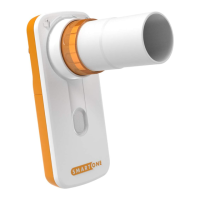
This device uses Bluetooth Smart technology for wireless
communications, which allows for reliable communications in
electrically noisy environments and transmits packets once per 60
ms.
It includes 3 control bytes that allows the host to detect if packets
are missing and the device to re-transmit. If the connection is lost,
the App changes the connected status from connected to
disconnected and become available for a connection immediately.
The Bluetooth® word mark and logo are registered trademarks owned by Bluetooth SIG, Inc.
14.1 Radio frequency (rf) communication
This device complies with the United States Federal Communications Commission (FCC) and
international standards for electromagnetic compatibility. The following information is provided in
accordance with Federal Communications Commission (FCC) regulations.
This device complies with Part 15 of the FCC Rules. Operation is subject to the following two
conditions: (1) This device may not cause harmful interference, and (2) this device must accept
any interference received, including interference that may cause undesirable operation.
This device does not interfere with any radio frequency signals transmitted from outside sources.
These FCC standards are designed to provide reasonable protection against excessive radio
frequency interference and prevent undesirable operation of the device from unwanted
electromagnetic interference.
14.2 Radio frequency (rf) interference from other wireless devices
Common consumer electronic devices that transmit in the same frequency bands used by the
Smartone may prevent the uploader or mobile device from receiving data.


 To Next Page