Operating Instructions
Operating Instructions
Overview
Overview
Handling
The CT100 is designed to meet the rigors associated with normal instrument use both in the
field and on the benchtop. Care should be taken to protect it from excessive mechanical
shock, vibration, static electrical charges, and water hazards.
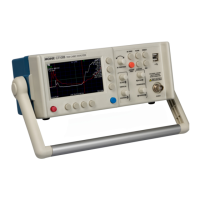
The CT100 front panel is protected from impact by a snap-on front cover, in which an optional
small-format version of the Operator's Manual can be stored. The carrying handle rotates 360°
and can be used to support the instrument for bench-top use.
The CT100 is not watertight and must be protected against water spray. If the unit is subjected
to water spray, first turn off the unit with the battery-disconnect power switch on the rear panel
and then drain all of the excess water from the case and allow it to dry completely.
As noted in the Safety Summary and elsewhere, the CT100 and CT100HF are sensitive to
damage introduced by electrostatic discharge. Always properly ground the center conductor of
a cable before attaching it, either directly or indirectly, to the front panel BNC or SMA
connector. Failure to do so could damage the sampling electronics and void the Warranty.
The CT100 can be stored in temperatures of between -20°C to +60°C with or without a battery
installed and can be operated from 0°C to +50°C.
Powering the CT100
The CT100 can be powered through the included 120/240 VAC (RMS) to 24 VDC external
power adapter. This adapter has sufficient capacity to charge the internal battery from a dead
battery state while the unit is under operation. The internal battery will allow the unit to operate
using power conservation techniques for periods of at least 6 hours under typical use.
Automatic power-down occurs after a variable amount of time of inactivity, selectable in
software by the user. The screen also can be set to turn off after a set amount of inactivity. A
heavily discharged battery will require 2.5 hours to reach full charge.
There is an option to use external, hot-swappable 14.4 VDC NiMH battery packs to power the
CT100. These battery packs plug into the back panel external battery connector and can be
charged while the CT100 is run on AC power. When connected, the device automatically
powers off of the external battery pack until it is discharged. By default, the CT100 charges
the internal battery until full before charging the external battery.
Mohr CT100 / CT100HF Operator's Manual 9



 To Next Page