PAGE 60 — GENERATOR SERVICE AND TROUBLESHOOTING MANUAL — REV. #0 (08/29/23)
GROUND FAULT CIRCUIT INTERRUPTER
(
GFCI
)
GFCI
A ground fault circuit interrupter (GFCI) is a device that
compares the amount of current owing through a circuit. If
there is a difference of more than 5 milliamps (0.005 amps),
the GFCI will open the circuit as leakage is present within
the circuit.
The GFCI is designed to protect people from severe or
fatal electric shocks but because a GFCI detects ground
faults, it can also prevent some electrical res and reduce
the severity of other res by interrupting the ow of electric
current.
What Are The Limitations Of A GFCI?
The GFCI module should never be used as a circuit
tester. The GFCI does not have the capability to do
circuit testing or analysis. Multimeters or similar devices
should be used for circuit analysis or troubleshooting,
not a GFCI. The GFCI makes an excellent life protection
device.
GFCIs do not prevent shocks, they reduce the severity
of the shock. The GFCI is only operated when a ground
fault occurs. Someone using the equipment might
receive a shock, but it will be of a very short duration
(1/30 of a second). if the GFCI is working as designed.
Severe electrocution will normally be prevented because
of the short duration.
GFCIs do not prevent all electrocutions. The GFCI reacts
to electric current owing from the power line to ground.
It does not react to current ow between power lines. In
other words, the GFCI will react to someone standing in
water and coming in contact with one of the power lines.
It will not protect someone who is holding the neutral
power line in one hand and hot wire with the other.
GFCIs are not intended to replace fuses or circuit
breakers. Fuses and circuit breakers are designed to
protect equipment by reacting to excessive current ow,
normally in the order of 15 to 20 amps.
GFCIs are designed to protect people by reacting to
leakage currents to ground on the order of 5 mA (0.005
amps). Except in the case of GFCI/circuit breaker
combinations sold to be installed in building installations,
they are separate devices performing separate functions.
Is The Ground Wire Still Required?
The GFCI will work and perform its function with or without
the tool being grounded. For applications, always consult
the National Electric Code for proper grounding conditions
and requirements.
How Can We Be Sure The GFCI Is Working?
There are two methods of testing GFCIs. All GFCIs are
provided with a test button and reset button.
GFCI Method 1 Testing
1. Start the generator as outlined in the start-up procedure
in this manual.
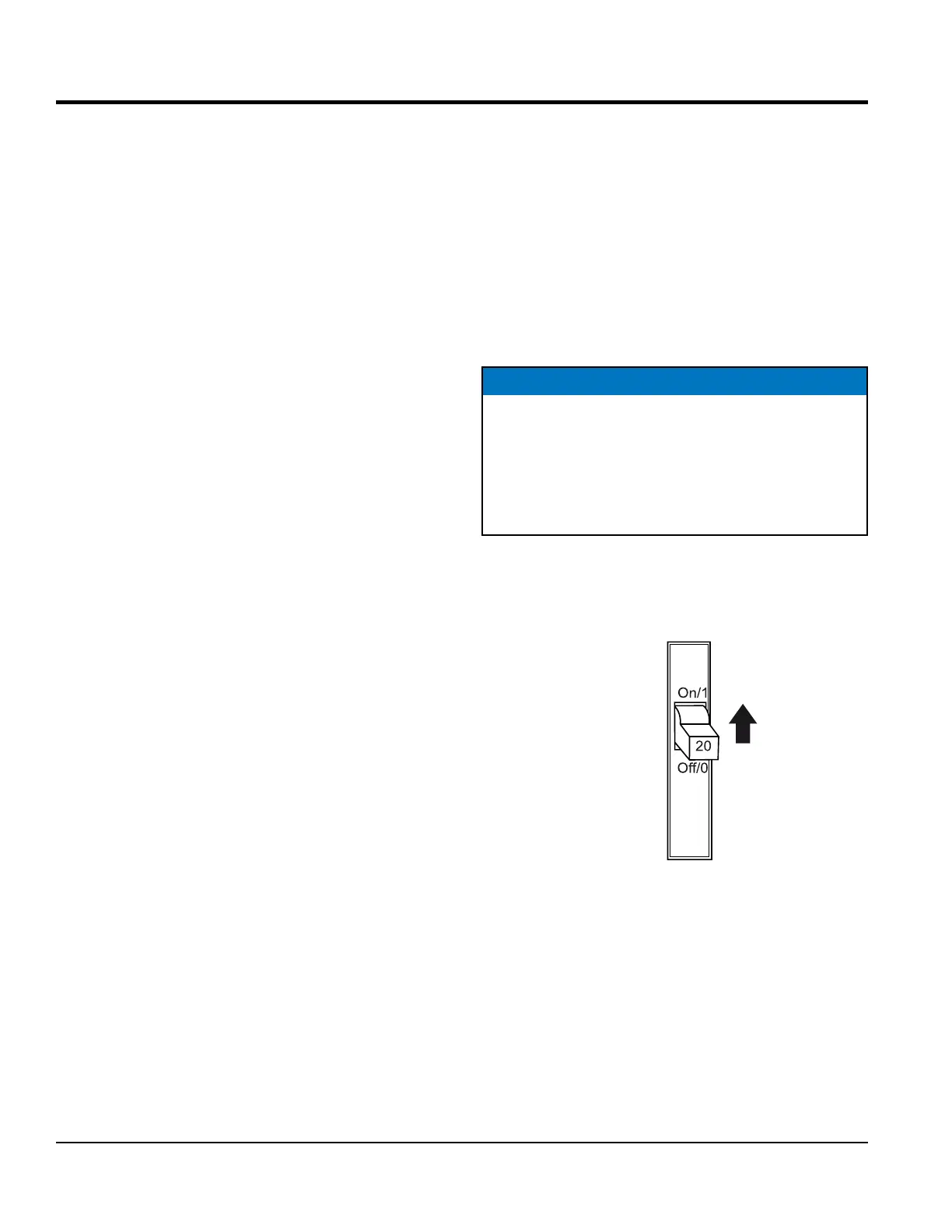
2. Place a GFCI circuit breaker (Figure 63) in the ON
position.
Figure 63. GFCI Circuit Breaker
3. Verify that the status LED on the corresponding GFCI
receptacle (Figure 63) is ON (GREEN).
NOTICE
The GFCI receptacle is designed to interrupt power
when a ground fault exists to prevent injuries and shock
hazards. DO NOT use the GFCI receptacle if the test
below fails. Consult a qualied electrician for repair or
replacement of the GFCI receptacle. Test the GFCI
receptacle at least once a month.








 To Next Page