
 Need help?
Do you have a question about the NEURON THC and is the answer not in the manual?
Safety precautions and warnings for operating the Neuron.THC system.
Overview of the major components that make up the Neuron.THC system.
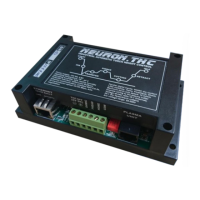
Details on the microcontroller and I/O interface unit of the control module.
Specifies the necessary power input and PSU recommendations for the system.
Explains the fundamental principles of plasma as a state of matter and its use in cutting.
Describes the HF start method, its advantages, and disadvantages.
Explains the blowback start method and its benefits for CNC systems.
Discusses the unique challenges of plasma cutting on CNC machines.
Describes the function and use of float switches for height sensing.
Explains the ohmic sensing technique for accurate material surface detection.
Addresses issues with cornering and speed changes affecting torch height.
Covers safety features related to kerf detection and potential crashes.
Outlines best practices for grounding and shielding to prevent noise.
Overview and explanation of the primary operating parameters for the Neuron THC.
Explanation of how Automatic Voltage Control functions in the Neuron THC.
Details on the Sample and Hold mode for arc voltage measurement.
Defines the maximum acceptable difference in arc voltage measurements.
How to set the target arc voltage for height control.
Specifies the desired torch height during cutting.
Defines the torch height during the piercing phase.
Sets the duration for the pierce delay before cutting begins.
Adjusts the gain for closed-loop arc voltage control.
Feature to prevent torch diving during specific cutting events.
Sets the threshold for the LockHeadDown feature.
Detects voids or gaps in the material to prevent crashes.
Sensitivity setting for the Kerf Detect feature.
Height at which IHS transitions to slower speed.
Skips IHS if the next start point is close to the previous cut.
Torch height after IHS before arc transfer.
Number of attempts to restart plasma after transfer failure.
Wait time before attempting a transfer retry.
Height to clear dross puddles after piercing.
Hold time at Puddle Jump Height to clear dross.
Time for plasma and torch to stabilize before AVC activation.
Option for partial torch retraction at the end of a cut.
Specifies the height the torch retracts to after a cut.
Configuration for displaying error messages to the operator.
Defines the value based on torch movement counts per mm.
Speed used for automatic rapid moves like retract or approach.
Speed for manual torch movement controlled by buttons.
Slow speed for final approach during IHS operations.
Acceleration settings for automatic, manual, and IHS moves.
Acceleration used for moves during arc voltage closed-loop operation.
Defines the lifter's usable travel range (Soft Limit).
Travel distance from Home where fast jog is allowed.
Distance for expecting Ohmic or Float head clear plate signal.
Time constant for the plugin's main loop.
Time constant for filtering input signals.
Arc voltage interval where no AVC occurs.
Enables advanced jog mode for lifter movement.
Option to reverse the torch movement direction.
Automatically raises torch to zero position after 60 seconds of idle time.
Safety feature to automatically adjust torch height to prevent crashes.
Enables/disables preflow in IHS when using ohmic sensor on a water table.
Procedure to tune measured arc voltage for accurate control.
Allows setting an offset for the float head switch.
Mode for marking operations, like small corners on holes.
Performs automatic homing after a set number of pierces.
Controls fume extractor motor and post flow time.
Sets delay between ArcLost issue and stopping the cutting process.
Feature not present in the Neuron Lite controller.
Initiates a hardware restart for the Neuron controller.
Enables plotting of cut parameters for analysis.
State when the plasma system is OFF and motor is holding position.
State where the lifter moves the torch up to the Upper Limit Switch.
State when the actual position reaches the programmed Slide Length.
Torch moves down at Automatic Speed to Start IHS Height.
Lifter moves down at IHS Speed until Tip Sense input signal.
Lifter senses Ohmic or float head contact, records position.
Lifter moves up at Automatic Speed to Transfer Height.
Torch holds at Transfer position, waits for plasma start signal.
Torch moves to Pierce Height, Pierce Time timer initiated.
Lifter holds torch at Pierce Height for Pierce Delay interval.
Lifter moves torch to Puddle Jump Height, waits for delay.
Lifter moves torch to Cut Height, sends Motion signal.
Controller receives new Arc Voltage sample, modifies set point.
Torch height controlled by arc voltage feedback (AVC ON).
Lifter jogs up and begins continuous motion at programmed speed.
Lifter jogs down and begins continuous motion at programmed speed.
Lifter moves torch up to Retract Height.
General advice for table and torch setup for better cut quality.
Guidance on plasma setup procedures for optimal performance.
Strategies to extend the lifespan of consumable parts.
Other factors influencing the quality of plasma cuts.
Discusses acceptable cut angles and how to identify issues.
Defines dross and factors contributing to its formation.
Definition and explanation of molten metal adhering to the part.
Cause and solution for dross formed at high cutting speeds.
Cause and solution for dross formed at low cutting speeds.
Explains dross formation in corners due to speed reduction.
Cause and solution for light dross accumulation on the top of the part.
Further suggestions for improving cut quality.
Factors and considerations for optimal plasma piercing.
 General
| Brand | NEURON |
|---|---|
| Model | THC |
| Category | Controller |
| Language | English |

 To Next Page