© 2020 Pierce Manufacturing Inc. All Rights Reserved. Driving the Vehicle / 5-51
OPERATION
5-28.5 Oshkosh® TAK-4® Rear Axles
5-28.5a TAK-4 T3 Rear Steering Operation
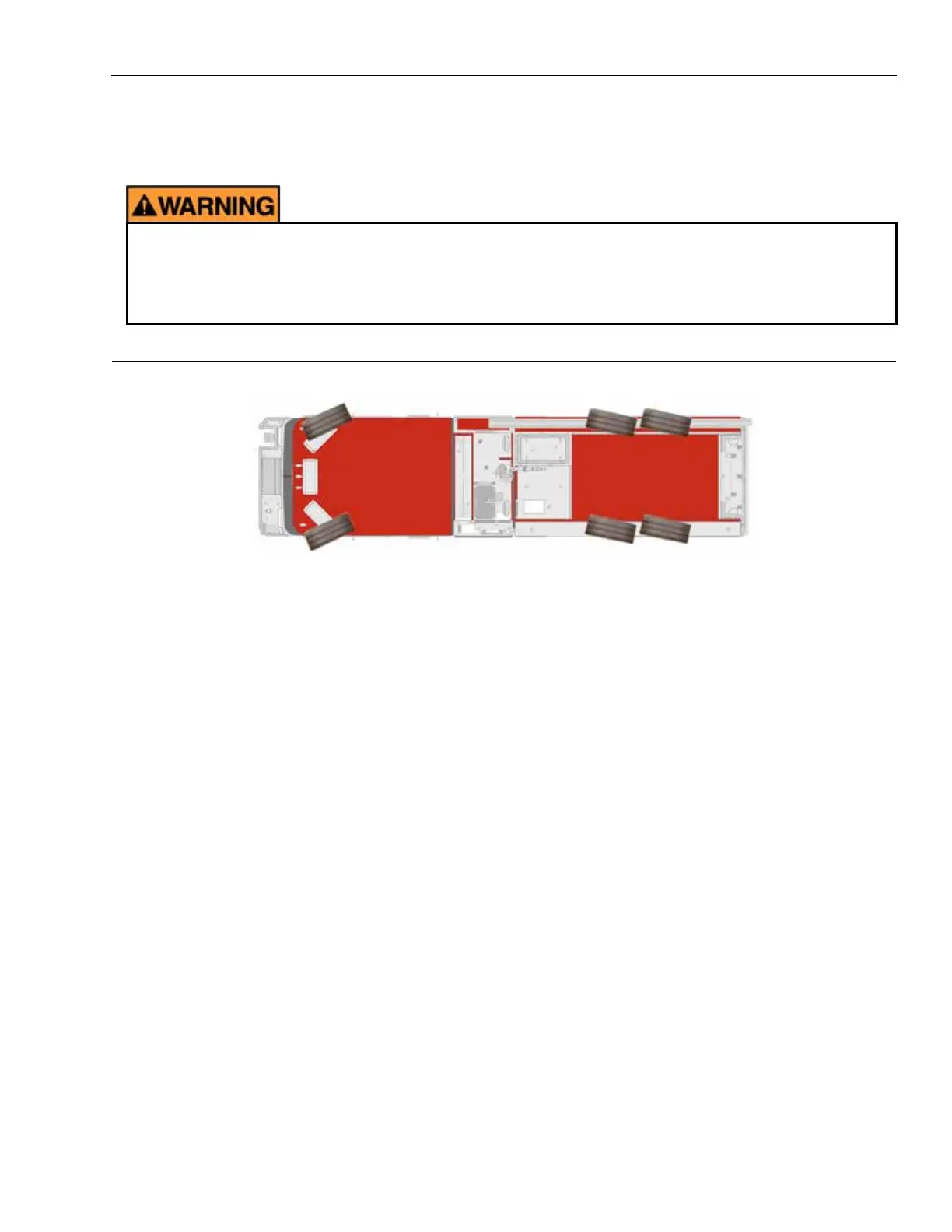
Figure 5-3: TAK-4 T3 Steering
1590
The Oshkosh TAK-4® rear axles equipped with (optional) T3 (Total Turning Technology) rear-steering system are
designed to more closely follow the path of the front axle when compared to a non-steering rear axle(s). This is
accomplished by the rear axle(s) steering in a coordinated mode, or opposite the front axle. This allows the vehicle
to make a tighter turning radius overall. However, this will also cause the rear of the vehicle to swing out farther than
one equipped with conventional rear axle(s).
The rear axle(s) follow the steering angle of the front axle, although to a lesser degree. Therefore, making a wider
conventional turn with a greater steering angle will result in the rear axle(s) steering with a greater angle and
swinging out farther than the operator may intend.
• Left and right turns should be taken tighter than conventional apparatus.
• Set up for the turn slightly to the inside of the center of the lane, and follow through the turn closer to the inside
than with a conventional apparatus.
• When turning, drive the vehicle judging that the rear axle(s) will follow. This can prevent the rear of the vehicle
from running over the curb or into oncoming lanes or obstacles.
Oshkosh TAK-4® T3 rear steering axles do not track the same way as standard or conventional axles.
Wide, conventional turns may cause the rear end to swing beyond a “normal” or standard turning
radius. Operators must know and understand the differences in driving technique prior to operating
vehicles equipped with TAK-4 T3 axles.
TAK-4 T3 REAR-STEERING AXLE STEERS COORDINATED, OR OPPOSITE OF FRONT AXLE
REAR OF VEHICLE SWINGS SLIGHTLY TO ACCOMPLISH
OVERALL TIGHTER TURNING RADIUS



 To Next Page