© 2020 Pierce Manufacturing Inc. All Rights Reserved. Cab / 6-5
MAINTENANCE
6-5. Safety Restraints and Devices
6-5.1 Seat Belts
The unique conditions of a fire service application put stress and strain on seat belt assemblies not normally seen
in typical automotive applications. Webbing can be abraded by interference with door hardware, bunker gear
attachments, SCBA harnesses, etc. It is important to inspect and maintain seat belt webbing to ensure that it will
function properly in a crash.
To ensure occupant safety, regularly inspect the seat belts. At a minimum, the seat belts should be inspected and
replaced following the criteria listed in this section. Pierce further recommends considering replacement of the belts
at 5-year intervals, to reduce the potential failure of the seat belts caused by unapparent damage such as belt
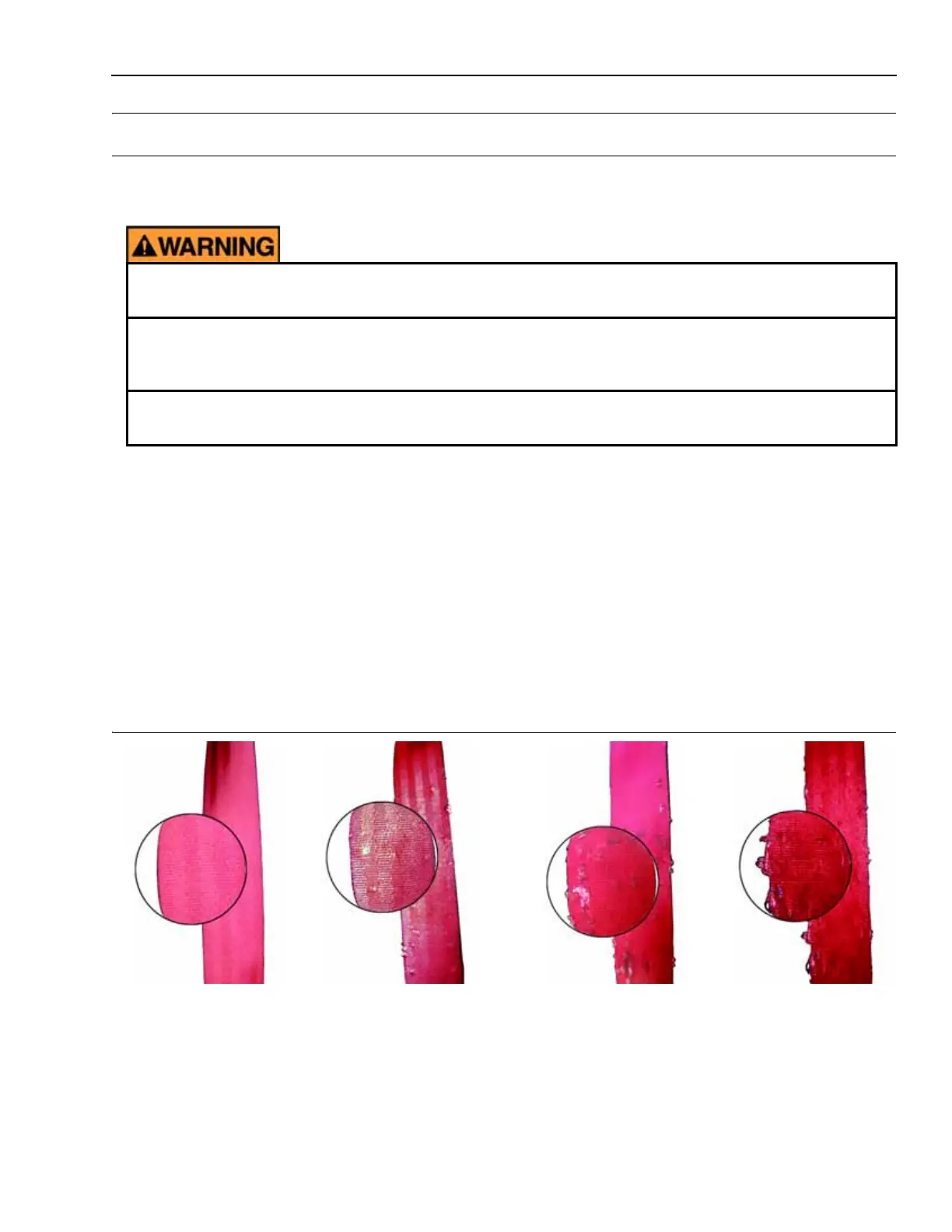
exposure to chemicals or UV radiation. The following photos illustrate various levels of belt damage that can occur
if care is not taken.
IMPORTANT: Seat belt webbing should be inspected and replaced if anything beyond slight damage is
noticed.
Figure 6-2: Examples of Seat Belt Webbing Damage
1245A-1248A
Do not bleach or dye seat belt webbing. Bleaching or dying may cause a severe loss of belt strength.
This loss of strength could allow the seat belt to break under stress, thus resulting in personal injury.
The entire seat belt assembly should be inspected for corrosion, wear, fraying, or weak spots. The
retractor, latch and buckle should be checked for proper function, and all seat belt mounting bolts
should be tight at all times.
Any seat belt severely strained in a collision should be replaced before the vehicle is placed back in
service.
NO DAMAGE
SLIGHT DAMAGE
MODERATE DAMAGE
SEVERE DAMAGE
LIKE NEW, NO SIGNS
OF WEAR
BEGINNING SIGNS OF MINOR
WEAR, THINNING, ABRASION,
FRAYING OR CUTS
SIGNS OF CUTS,
SIGNIFICANT ABRASION
OR FRAYING
MAJOR / SEVERE DAMAGE,
CUTS, RIPS, ABRASION,
OR FRAYING



 To Next Page