SAFETY
2-10 / Safety and Responsibility
© 2020 Pierce Manufacturing Inc. All Rights Reserved.
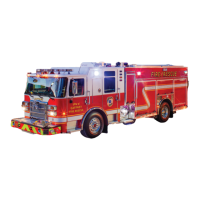
Tanker drivers may not be fully aware that tanker trucks are more difficult to control than passenger vehicles. A
tanker truck requires a much greater distance to stop. Tankers weigh substantially more, and their air brake systems
take more time to activate than the hydraulic/mechanical brake systems on smaller passenger cars. The effect is
influenced by the amount of water the tanker is hauling and whether the tanker is baffled.
2-6.2 Recommendations for Prevention
To reduce the risk of tanker truck rollovers, the National Institute for Occupational Safety and Health (NIOSH)
recommends that fire departments take the following precautions:
• Develop, implement, and enforce standard operating procedures (SOPs) for emergency vehicles - particularly
with regard to the use of seat belts.
• Ensure that drivers have necessary driving skills and experience and provide them with periodic refresher
training.
• Consider terrain, weather, and bridge and road conditions when purchasing a mobile water supply vehicle.
• Adhere to the requirements of NFPA 1915 for keeping a vehicle on a maintenance schedule and documenting
the performance of the maintenance [NFPA 2001].
• Inspect the complete vehicle at least once per year to comply with Federal and State motor vehicle regulations.
• Adhere to the requirements of NFPA 1901 for an approved mobile supply vehicle [NFPA 2001].
• Equip all vehicles with seat belts.
• Ensure that water tank capacity is adequate and has proper tank mounting and sufficient front and rear weight
distribution.
• Ensure that the weight of the fully loaded vehicle does not exceed the gross axle weight rating of any axle and
the gross vehicle weight rating of the chassis.
• Ensure that the center of gravity of the vehicle does not exceed the chassis manufacturer’s specified center of
gravity.
• Provide proper baffles to control water movement for all vehicles equipped with water tanks.
• Verify that vehicles are of proper design and have adequate suspension, steering and braking ability.
2-6.2a All Drivers Should Do the Following
• Recognize that they are responsible for the safe and prudent operation of the vehicle under all conditions.
• Wear a seat belt when operating a vehicle.
• Take training to meet the job performance requirements stated in NFPA 1102 before driving and operating the
vehicle [NFPA 2001].
• Take refresher driver training at least twice per year.
• Understand the vehicle characteristics, capabilities, and limitations.
• Be aware of the potential for unpredictable driving by the public (excessive speed, failure to yield to emergency
vehicles, inattentiveness, etc.).
• Adjust speed when driving on wet or icy roads, in darkness or fog, or under any other conditions that make
emergency vehicle operation especially hazardous.



 To Next Page