P36E-10 Zero Clearance Direct Vent Gas Fireplace | 53
53
|
operating instructions
During the rst few res, a white lm
may develop on the glass front as part
of the curing process. The glass should
be cleaned or the lm will bake on and
become very dicult to remove. Use a
non-abrasive cleaner and NEVER clean
the glass while it is hot.
AERATION
ADJUSTMENT
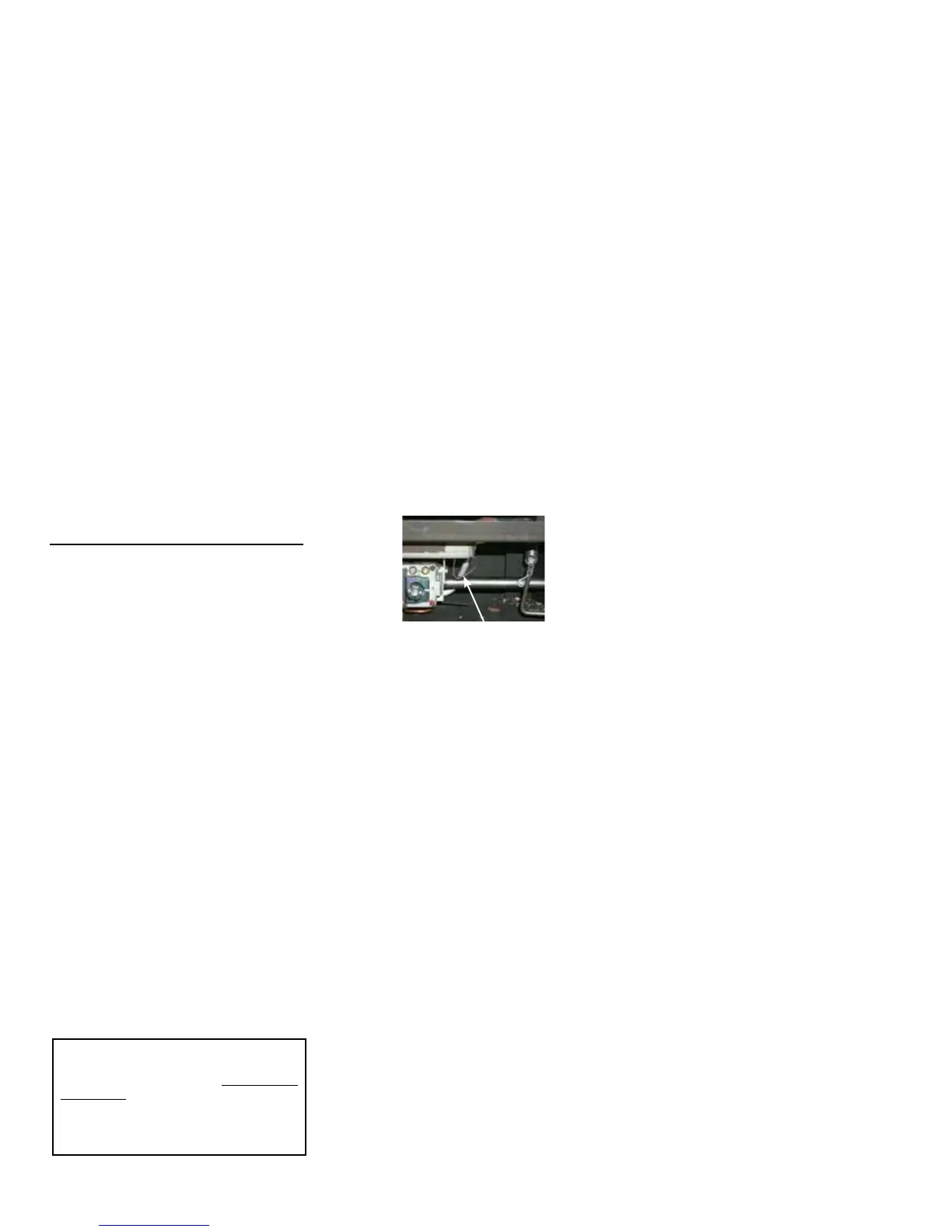
The air shutter can be adjusted by moving the
adjusting wire up or down. The wire is accessed
through the bottom opening. Open the air
shutter for a blue ame or close for a yellower
ame. The burner aeration is factory set but
may need adjusting due to either the local gas
supply or altitude.
Minimum Air Shutter Opening:
3/16" Natural Gas
1/2" Propane
CAUTION: Carbon will be produced if air shutter
is closed too much.
Note: Any damage due to carboning resulting
from improperly setting the aeration
controls is NOT covered under warranty.
Note: Aeration Adjustment should only be
performed by an authorized Regency
Installer at the time of installation or
service.
FIRST FIRE
The rst re in your replace is part of the
paint curing process. To ensure that the paint
is properly cured, it is recommended that you
burn your replace for at least four (4) hours the
rst time you use it with the fan on.
When rst operated, the unit will release an odour
caused by the curing of the paint, the burning
o of any oils remaining from manufacturing.
Smoke detectors in the house may go o at
this time. Open a few windows to ventilate the
room for a couple of hours.
The glass panel may require cleaning after the
unit has cooled down.
DO NOT ATTEMPT TO CLEAN THE
GLASS WHILE IT IS HOT.
Note: When the glass is cold and the
appliance is lit, it may cause
condensation and fog the glass.
This condensation is normal and will
disappear in a few minutes as the glass
heats up.
DO NOT BURN THE APPLIANCE
WITHOUT THE GLASS FRONT IN
PLACE.
OPERATING
INSTRUCTIONS
1) Read and understand these instructions
before operating this appliance.
2) Check to see that all wiring is correct and
enclosed to prevent possible shock.
3) Check to ensure there are no gas leaks.
4) Make sure the glass in the door frame is
properly positioned. Never operate the
appliance with the glass removed.
5) Verify that the venting and cap are
unobstructed.
6) Ensure that the brick panels are installed.
7) Verify log placement. If the pilot cannot be
seen when lighting the unit, the logs have
been incorrectly positioned.
8) The unit should never be turned off, and on
again without a minimum of a 60 second
wait.
Adjustment wire: Push to close or
pull to open aeration cap.
Closed - Tall yellow
Open - Short Blue
NORMAL OPERATING
SOUNDS OF GAS
APPLIANCES
It is possible that you will hear some sounds from
your gas appliance. This is perfectly normal due
to the fact that there are various gauges and types
of steel used within your appliance. Listed below
are some examples. All are normal operating
sounds and should not be considered as defects
in your appliance.
Blower:
Regency gas appliances use high tech blowers
to push heated air farther into the room. It is not
unusual for the fan to make a "whirring" sound
when ON. This sound will increase or decrease
in volume depending on the speed setting of your
fan speed control.
Burner Tray:
The burner tray is positioned directly under the
burner tube(s) and logs and is made of a dierent
gauge material from the rest of the rebox and
body. Therefore, the varying thicknesses of
steel will expand and contract at slightly dierent
rates which can cause "ticking" and "cracking"
sounds. You should also be aware that as there
are temperature changes within the unit these
sounds will likely re-occur. Again, this is normal
for steel reboxes.
Blower Thermodisc:
When this thermally activated switch turns ON
it will create a small "clicking" sound. This is the
switch contacts closing and is normal.
Pilot Flame:
While the pilot ame is on it can make a very slight
"whisper" sound.
Gas Control Valve:
As the gas control valve turns ON and OFF, a
dull clicking sound may be audible, this is normal
operation of a gas regulator or valve.
Unit Body/Firebox:
Dierent types and thicknesses of steel will expand
and contract at dierent rates resulting in some
"cracking" and "ticking" sounds will be heard
throughout the cycling process.


 To Next Page