4. OPERATION REM - GRAINVAC VR12
4.8. G
RAIN VACUUM OPERATION PROCEDURE
40 9000-00-0042 R3
8. The grain is conveyed into the GrainVac in a stream of air. As a consequence, it is
necessary to allow some air to enter at the intake. This can be done by not
completely filling or covering the end of the hose with grain. Try different techniques
until you are satisfied that the machine is operating at maximum capacity.
Note: During operation, if the GrainVac body is showing grain buildup (seen through inspection
window), adjust the air throttle. Refer to the steps below for air throttle adjustment
instructions.
Important: During operation, if the GrainVac becomes plugged, see Section 8. Troubleshooting on
page 91.
Shut down and lock out all power before maintaining, adjusting, or
unplugging the equipment.
9. Although the GrainVac is a precision piece of equipment, it is relatively sensitive to
dirt and other foreign particles. Keep dirt and foreign particles to a minimum.
10. Any dust from moving grain inside the bin is drawn into the intake. This mode of
grain handling provides the operator with a virtually dust-free environment inside the
bin, in contrast to bin sweeps. Dust is expelled from the GrainVac either through the
exhaust or from the optional dust collector.
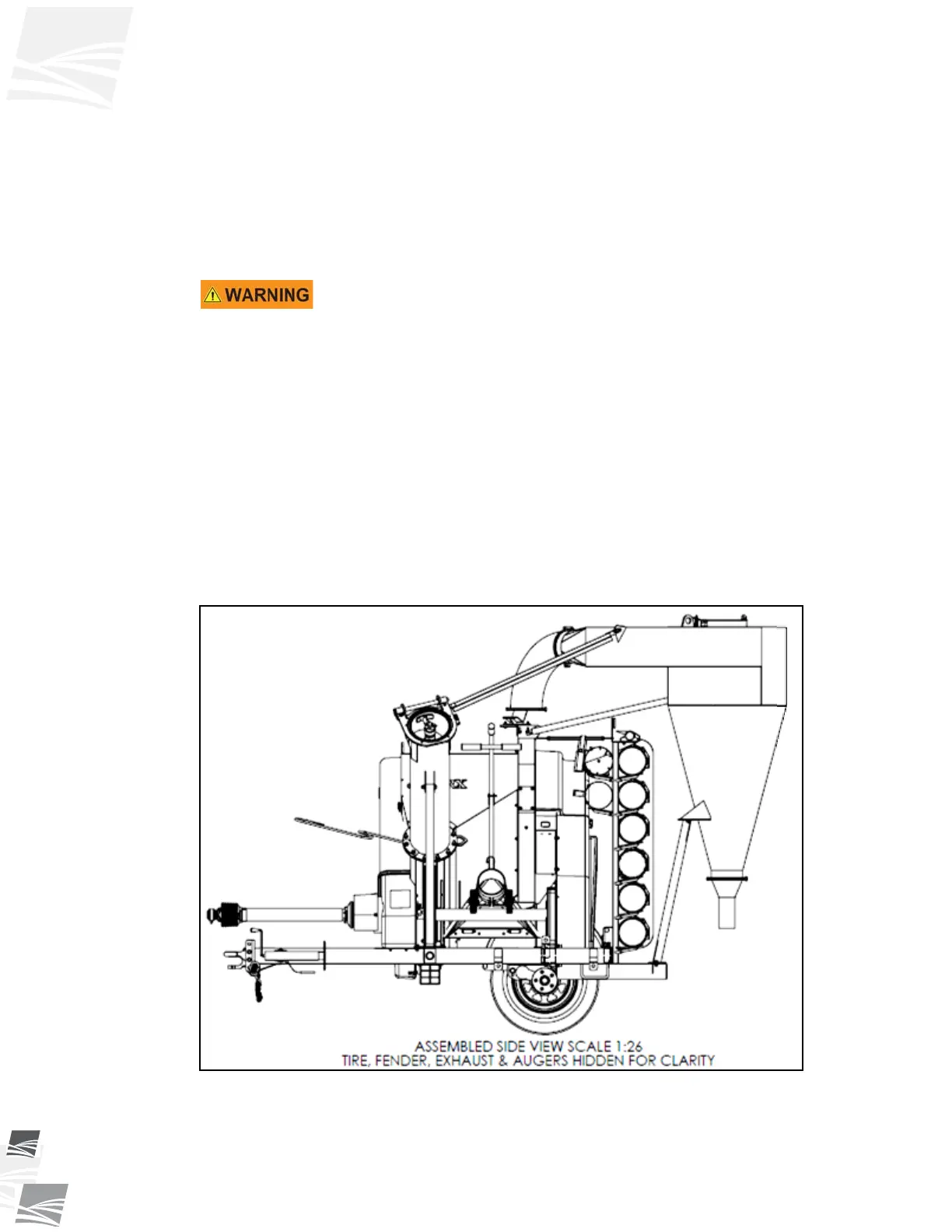
a. Optional Dust Collector (see Figure 4.9): Dust and air enter the cyclone and while
clean air is expelled from the top, dust is expelled from the bottom. A pail must be
placed beneath the dust collector and emptied once it becomes full. This option
provides the operator with a virtually dust-free environment outside the bin while
loading.
Note: The dust collector may reduce GrainVac capacity by up to 10%.
Figure 4.9 Optional Dust Collector on GrainVac
11. Damp or wet grain is more difficult to move than dry grain due to increased weight
and friction between the kernels and the machine. Always allow more air than grain
to enter the intake in these conditions to prevent plugging.


 To Next Page