7
4. Operation
4.1. Preparation for use
O
pen the cover on the bottom panel of the analyzer. Install three fully charged 1.2V
Ni-MH (or three 1.5V alkaline) batteries, watching the polarity.
Important: do not use excess force inserting batteries in the analyzer. Remove
batteries from the analyzer carefully: do not use instruments, such as a screwdriver,
to prevent damage to the battery compartment.
Do not: mix new and old batteries; use batteries of different types at the same time;
overheat or disassemble batteries; short-circuit batteries; try to re-charge alkaline
batteries.
To charge Ni-MH batteries, use charging adapters for this type of batteries. For
longer battery life, it is recommended to use an adapter which charges each battery
separately.
Any leaks of electrolyte from the batteries may seriously damage the analyzer.
Remove batteries if the analyzer is not being used for a long period of time. Store
batteries in a dry cool place.
4.2. Turning the analyzer on or off
T
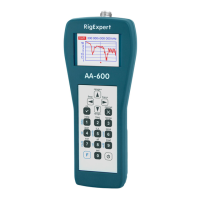
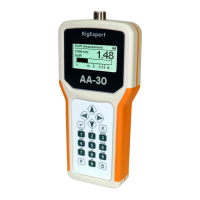
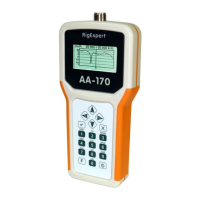
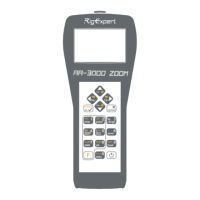
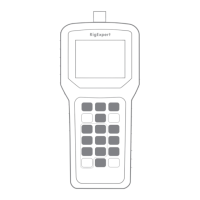
o turn the analyzer on or off, use the (power) button located in the bottom right
corner of the keypad. When this button is pressed, firmware version number as well
as battery voltage are displayed on the LCD.
The on-screen menu system of RigExpert antenna analyzers provides a simple but
effective way to control the entire device.
The analyzer may stay turned on when you connect a cable to its antenna connector (or
when you disconnect a cable). Plug the cable into the antenna connector, and then
tighten the rotating sleeve. The rest of the connector, as well as the cable, should
remain stationary.
Important: If you twist other parts of the connector when tightening or loosening,
damage may easily occur. Twisting is not allowed by design of the N-connector.



 To Next Page