Section 3 --Operation and Adjustments 3- 8
© 2008, Satake USA Inc.
(ALL RIGHTS RESERVED)
3.2.11 ADJUSTING THE SIZE CONTROL
The SPOT SIZE buttons on the SETUP1 SCREEN control the minimum size defect that
will be classified as a reject. If it is desirable for all off color defects (regardless of
size) to be rejected, the Light and Dark switches should be set to 1.
The LIGHT SIZE button is only active when the SORT MODE is LIGHT or BOTH. To
have small light defects of unacceptable color not be classified as rejects, set the
LIGHT SIZE button to a higher number. Larger light defects of unacceptable color
will still be classified as reject (See Section 2.5.1.2).
The DARK SIZE button is only active when the SORT MODE is DARK or BOTH. To
have small dark defects of unacceptable color not be classified as rejects, set the
DARK SIZE button to a higher number. Larger dark defects of unacceptable color
will still be classified as reject (See Section 2.5.1.2).
3.3 EVALUATION OF SORTING RESULTS
Now that your ScanMasterII is running, take samples of incoming, accepted and
rejected product. Ideally, you should take concurrent timed samples. This will
provide not only visual evaluation of defect levels, but also relative flow rates.
For a ScanMasterII with resort, also take samples of accepted and rejected product
for the resort channels. It is especially important to be able to evaluate the primary
rejects, which are the input to the resort channels. Since this is an intermediate
flow rather than an output of the system, it is sometimes overlooked. This is an
important control point in the operation of your ScanMasterII.
As you evaluate the samples, keep in mind that you have control of a number of
adjustments on the sorter. These adjustments have been discussed in earlier
sections of this manual, but they are summarized here to encourage you to think
about their relationships to each other and to help you to optimize overall sorter
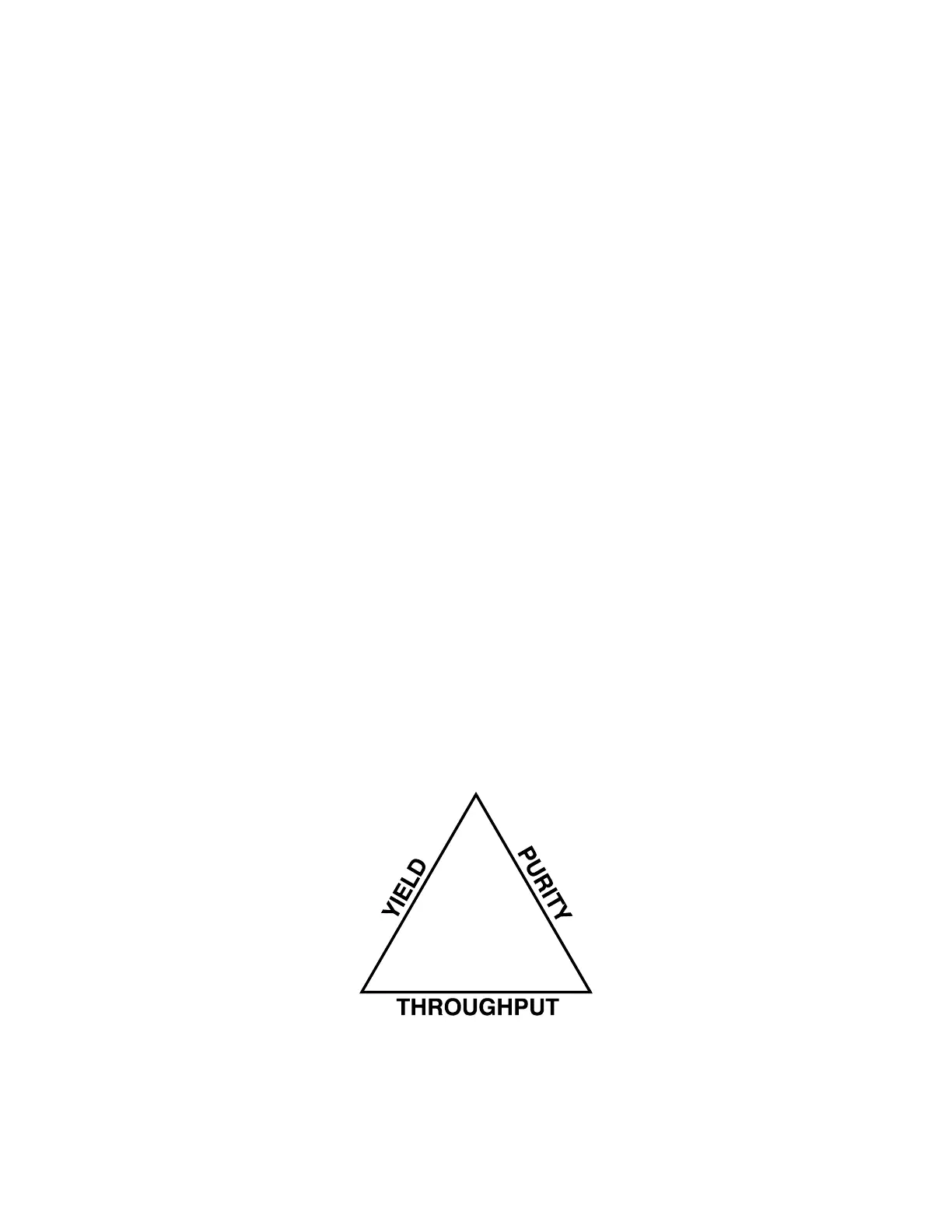
performance. During your evaluation of the samples, keep in mind the trade-offs in
sorting. This model is referred to as “The Sorting Triangle:”
This model recognizes the relationship between these three performance measures.
In an optimized system, a change to one side of the triangle will have an impact on
one or both of the other sides of the triangle. For example, if you increase the



 To Next Page