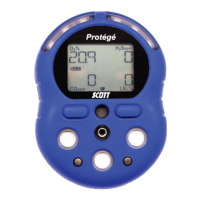
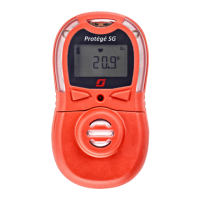
Operation Page: 32 LCD Alerts and Displays Explains various alerts and display indicators on the Protégé's LCD screen, including gas warnings, low battery, and sensor failures.
Low Battery Describes the low battery warning indicators and the recommended actions for users when the battery level is low.
Over-Range Conditions Explains the indicators for over-range gas concentrations and the required actions, including bump testing and potential calibration.
Low Flow Pump Warning Describes the warning for diminished airflow from the pump and the actions required to reset the pump.
Sensor Failures Explains how sensor failures are indicated and the steps for recalibration or contacting service.
Zero Calibration Provides step-by-step instructions for performing a zero calibration, ensuring baseline readings are accurate in clean air.
Span Calibration Details the procedure for span calibration, including required equipment and steps to ensure sensors respond to target gases accurately.
Bump Testing Explains the process of bump testing the Protégé to verify alarm functionality and sensor response to known gas concentrations.
Optional Pump Operation Covers the operation of the optional sample draw pump, including its power source and recommended usage guidelines.
Gas Interferences Discusses known gas interferences that can affect sensor readings and provides a table of toxic gas interference data.
Gas Monitor Software Usage Provides guidance on using the Scott Gas Monitor software for connecting the Protégé to a PC and managing its functions.
Connecting Protégé to a PC Step-by-step instructions for establishing a connection between the Protégé gas monitor and a personal computer.
Software Description Describes the four main tabs (Home, Settings, Set Clock, View Log) of the Gas Monitor software and their functionalities.
Changing Alarm Settings Explains how to access and modify alarm set points, passwords, and other configurable options via the software's Settings tab.
Setting Date and Time Details how to set or synchronize the internal clock of the Protégé unit with a PC using the software's Set Clock tab.
View Data Log Describes how to view, read, clear, open, and save downloaded data logs from the Protégé using the software's View Log tab.
Software Settings Provides a table of available and default software settings for various parameters, including alarms, password, and timers.
Operation Page: 32 LCD Alerts and Displays Explains various alerts and display indicators on the Protégé's LCD screen, including gas warnings, low battery, and sensor failures.
Low Battery Describes the low battery warning indicators and the recommended actions for users when the battery level is low.
Over-Range Conditions Explains the indicators for over-range gas concentrations and the required actions, including bump testing and potential calibration.
Low Flow Pump Warning Describes the warning for diminished airflow from the pump and the actions required to reset the pump.
Sensor Failures Explains how sensor failures are indicated and the steps for recalibration or contacting service.
Zero Calibration Provides step-by-step instructions for performing a zero calibration, ensuring baseline readings are accurate in clean air.
Span Calibration Details the procedure for span calibration, including required equipment and steps to ensure sensors respond to target gases accurately.
Bump Testing Explains the process of bump testing the Protégé to verify alarm functionality and sensor response to known gas concentrations.
Optional Pump Operation Covers the operation of the optional sample draw pump, including its power source and recommended usage guidelines.
Gas Interferences Discusses known gas interferences that can affect sensor readings and provides a table of toxic gas interference data.
Gas Monitor Software Usage Provides guidance on using the Scott Gas Monitor software for connecting the Protégé to a PC and managing its functions.
Connecting Protégé to a PC Step-by-step instructions for establishing a connection between the Protégé gas monitor and a personal computer.
Software Description Describes the four main tabs (Home, Settings, Set Clock, View Log) of the Gas Monitor software and their functionalities.
Changing Alarm Settings Explains how to access and modify alarm set points, passwords, and other configurable options via the software's Settings tab.
Setting Date and Time Details how to set or synchronize the internal clock of the Protégé unit with a PC using the software's Set Clock tab.
View Data Log Describes how to view, read, clear, open, and save downloaded data logs from the Protégé using the software's View Log tab.
Software Settings Provides a table of available and default software settings for various parameters, including alarms, password, and timers.