24
Zigzag stitches are often used for applique and decorative sewing.
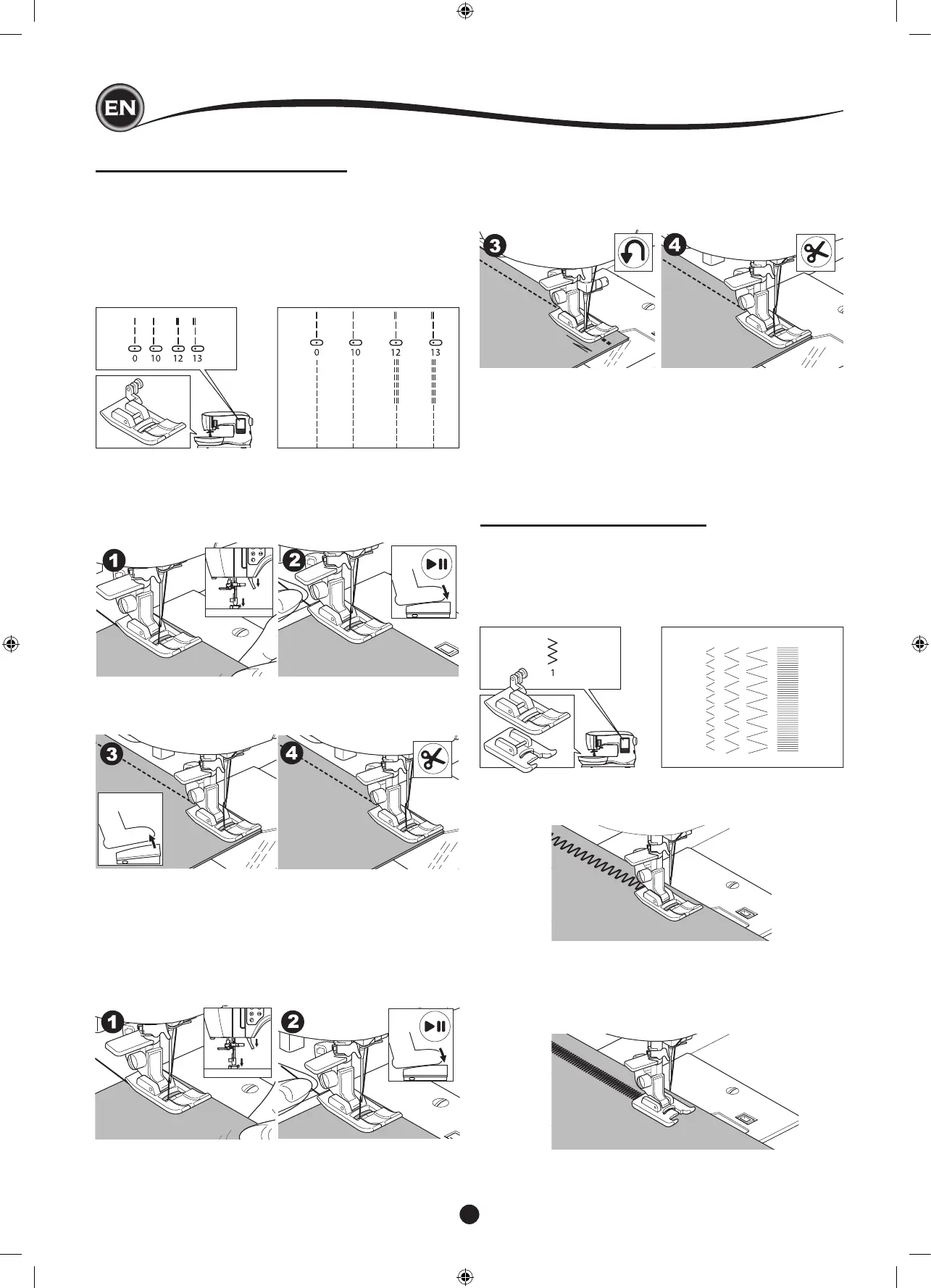
STRAIGHT STITCH SEWING
Straight stitch patterns should be selected to suit the type of fabric
being sewn. Left needle position (No.10, 13) is most suited for sewing
light weight fabrics.
No. 0. Center needle position
No. 10. Left needle position
No. 12. Center needle with built-in reverse stitch
No. 13. Left needle with built-in reverse stitch
All-Purpose Foot (A)
ZIGZAG STITCH SEWING
Your machine can sew zigzag stitches of various widths and lengths by
changing the settings of the stitch width and stitch length.
No. 1 Zigzag Stitch
All-Purpose Foot or Satin Foot (A, B)
1. Position the fabric under the presser foot and lower it.
2. Hold the upper thread loosely and start sewing.
Place hand lightly on the fabric while sewing.
3. When you reach the end of seam, stop sewing.
4. Press the Thread Cutter button.
StraIght StItch wIth auto-lock StItch
(pattern no. 12, 13)
1. Position the fabric under the presser foot and lower it.
2. Hold the upper thread loosely and start sewing.
Machine will sew 4-5 stitches forward and sew 4-5 stitches
backward and continue sewing forward.
3. When you reach the end of seam, press the Reverse button.
Machine will sew a few stitches backward and sew a few stitches
forward and stop automatically.
4. Press and release the Thread Cutter button.
To sew a satin stitch, shorten the stitch length and attach the Satin
Foot. (B)
Refer to next page for using the zig-zag to overcast.



 To Next Page