PRE-OPERATION INSPECTION
1323RD&1623RD Operation Manual 5-5 © Mar. 2022
NOTICE
• The diesel has been drained off basically before
delivery, so the customer should add diesel of
appropriate grade to suit the operating ambient
temperature and the governing emission
regulations.
• Do not add mixed diesel of different grades.
• The light fuel may affect the fuel economy or
damage the combustion components.
• It is recommended to use the diesel with sulphur
content less than 5000ppm.
• It is recommended to use the diesel with min.
cetane number of 45 at operating temperatures
below 0℃ and min. cetane number of 40 at
operating temperatures over 0℃. When the
cetane number of the diesel in use is less than the
recommended number, it may lead to startup
failure, instable running or large amount of white
smoke.
• The max cloud point and pour point of the diesel
must be 6℃ less than the lowest operating
ambient temperature.
EXPLOSION AND FIRE HAZARD
• Do not mix the diesel with
gasoline, alcohol or their mixture.
• Do not add diesel when the
engine is running.
DAMAGED MACHINE HAZARD
Due to the extremely accurate
tolerance match of the diesel
injection system, it is critical to keep
the fuel clean and free of dirts or
water. The dirts or water entering the
combustion system can cause
severe damage to the fuel pump and
injectors.
INSPECTING COOLANT
LEVEL (WATER-COOLED
ENGINE)
The appropriate coolant level is vital to maintaining the
engine performance and extending its service life,
otherwise it will damage the engine parts. Through the
daily check the inspector can know about the changes
on coolant level which may indicate a system distress
with the engine.
HIGH TEMPERATURE AND HIGH
PRESSURE HAZARDS
Before inspecting the coolant level,
allow the coolant to cool down to room
temperature, and slowly open the cover
to release the pressure.
NOTICE
Turn off the engine before inspection.
1. Turn off the engine, and remove the engine cover
after the engine cools down.
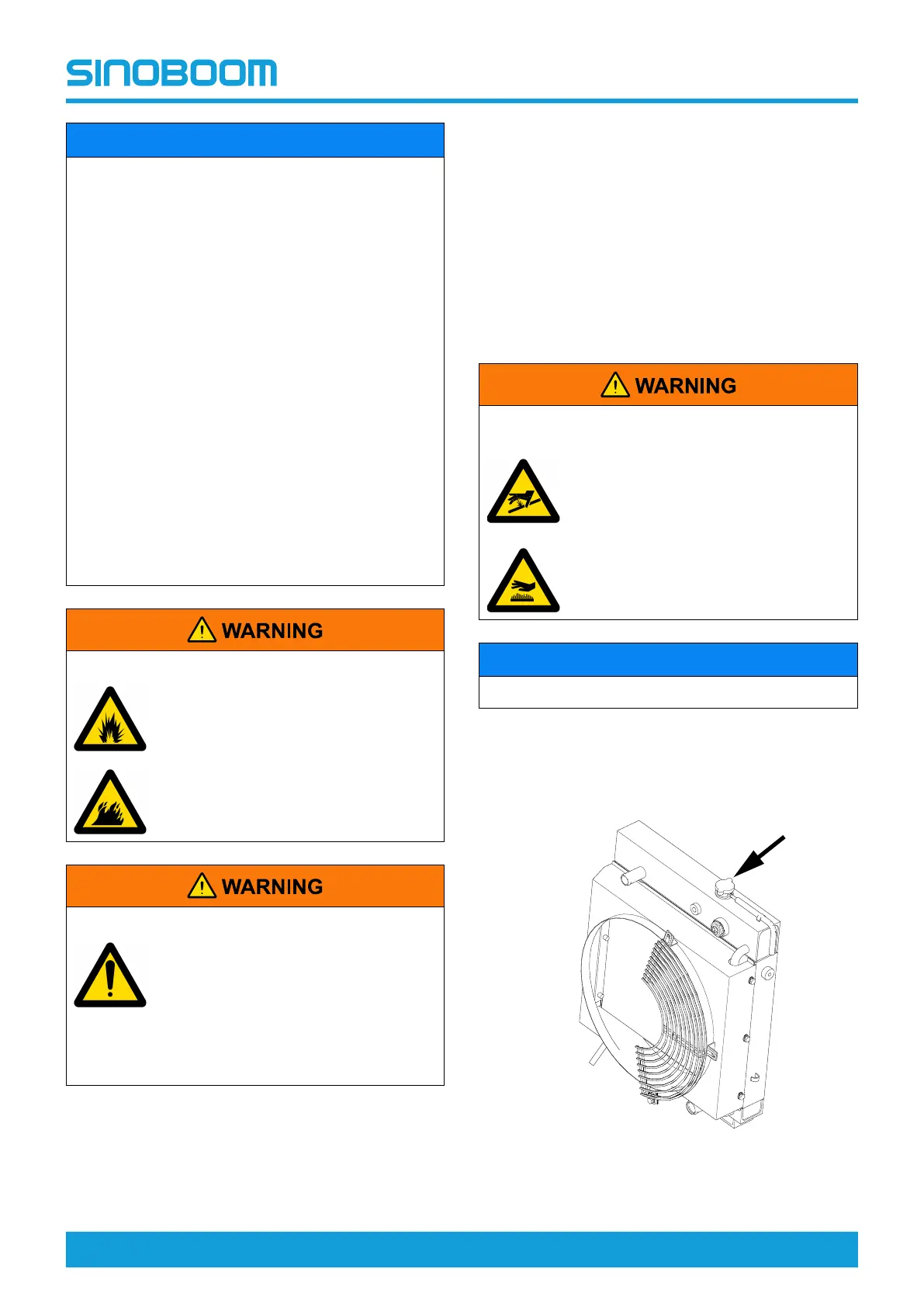
2. Open the cover of coolant box over the radiator to
inspect the coolant level.
Figure 5-3





 To Next Page