11-43
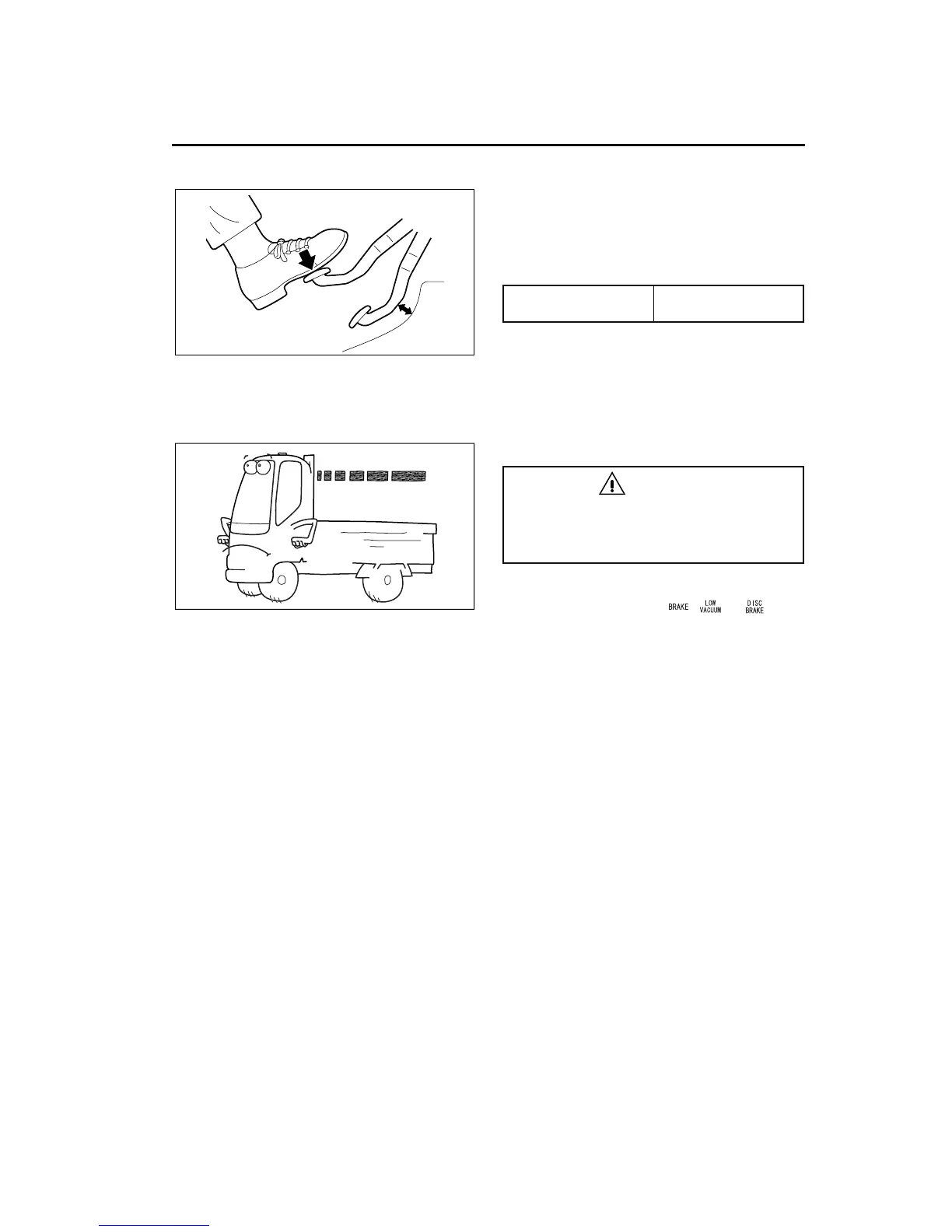
2 Brake pedal stroke
•
Start the engine and run it at normal idle.
• Press the brake pedal down as far as it will go.
Check that the distance between the fully
depressed pedal and the floor is within these
limits.
• If the pedal-to-floor clearance is too small, or the
pedal has a spongy feel when depressed, there
may be air in the brake system or brake fluid
leakage.
If necessary, have the brake system inspected
by an authorized Sterling service facility.
3 Service brake performance
Perform braking tests in a safe place with good visi-
bility all around. Check the , or warn-
ings. If they do not illuminate, drive the vehicle at
low speed to make sure that the brakes work effec-
tively and evenly on all four wheels. If there is any
problem, do not continue to operate the vehicle.
Contact an authorized Sterling service facility for a
more thorough inspection.
4 Hydraulic brake booster performance
<COE 50 only>
1. With the engine shut down, depress the brake
pedal.
2. Check that the brake system auxiliary electric
pump operates.
3. If the pump does not operate, have an autho-
rized Sterling service facility perform the neces-
sary inspection.
Brake pedal stroke
(pedal fully depressed)
0.79 in (20 mm) or
more
WARNING
During a braking test, be attentive to road
conditions. Driving a vehicle with a braking
problem could cause an injury accident or
loss of life.
Z11612
Z11178


 To Next Page