7-15
1 Do not overload the vehicle.
•
Do not exceed the vehicle weight limits. They
represent the maximum physical load the vehi-
cle can safely carry.
• In addition to these rules, be aware of and abide
by all state, local, and provincial loading require-
ments.
• The service brakes are not designed to stop an
overloaded vehicle.
• Overloading the vehicle places excessive stress
on vehicle components and shortens their serv-
ice life.
• The vehicle is designed to perform best when
loaded within its Gross Vehicle Weight Rating
(GVWR) and within its front and rear Gross Axle
Weight Ratings (GAWR).
• To find the vehicle’s GVWR, front GAWR, and
rear GAWR, look on the vehicle identification
plate located inside the driver’s door, as shown.
NOTE:
If the vehicle is loaded to a weight almost equal to a
total of the front and rear GAWRs, it may exceed
the GVWR. If either weight limit is exceeded, the
vehicle is overloaded.
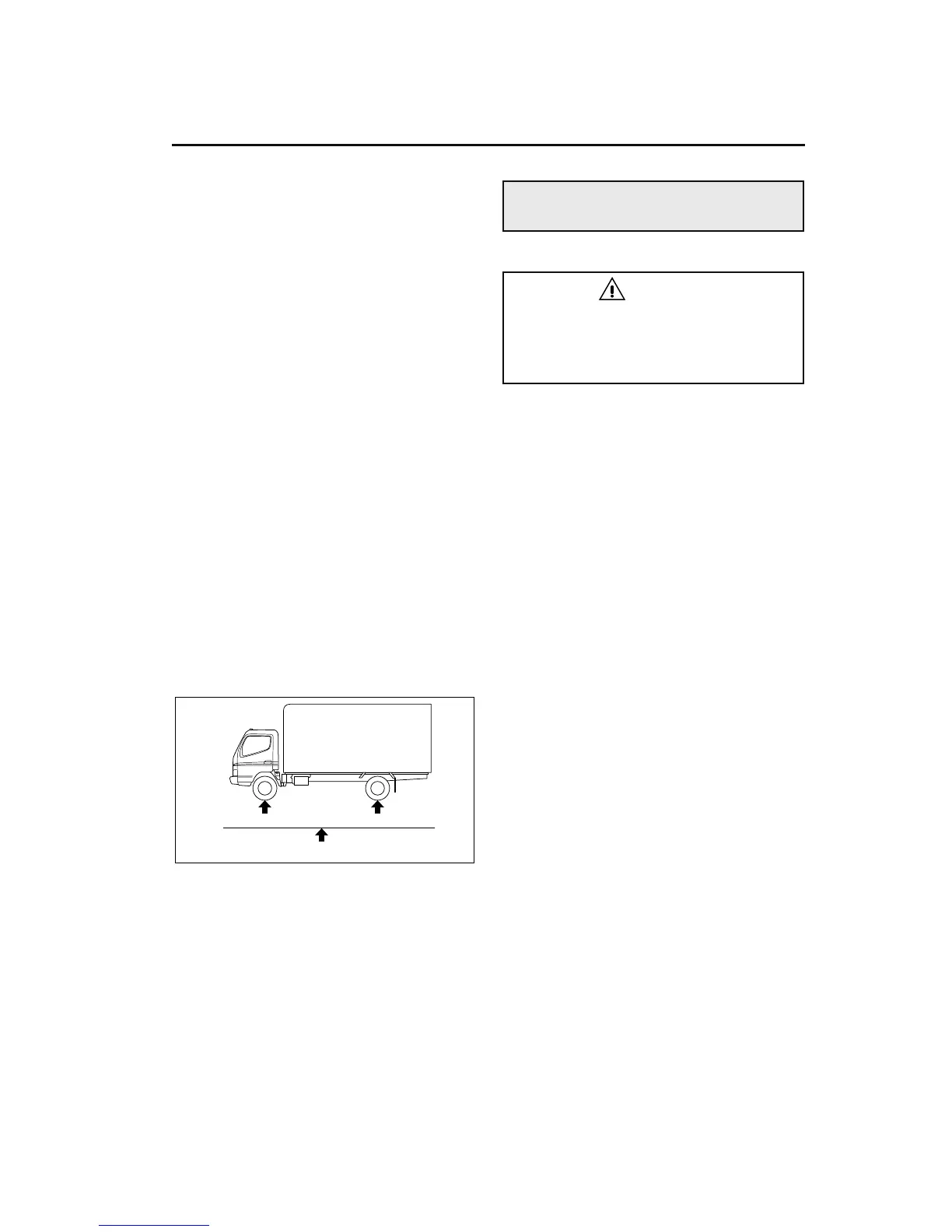
Example: a vehicle has a GVWR of 12,000 lb
(5,445 kg), and also has a front GAWR of 4,850 lb
(2,200 kg), and a rear GAWR of 8,600 lb (3,900 kg).
Added together, the two GAWRs total 13,450 lbs.
(6,100 kg), which exceeds the GVWR.
Loading cargo
WARNING
• Overloading the vehicle can cause an
injury accident or loss of life.
• Do not carry passengers in the cargo area
while the vehicle is in motion. This can
cause an injury.
Z11958
4,850 lbs.
12,000 lbs.
8,600 lbs.


 To Next Page