18 www.stryker.com
EN 0702-002-700 Rev-J
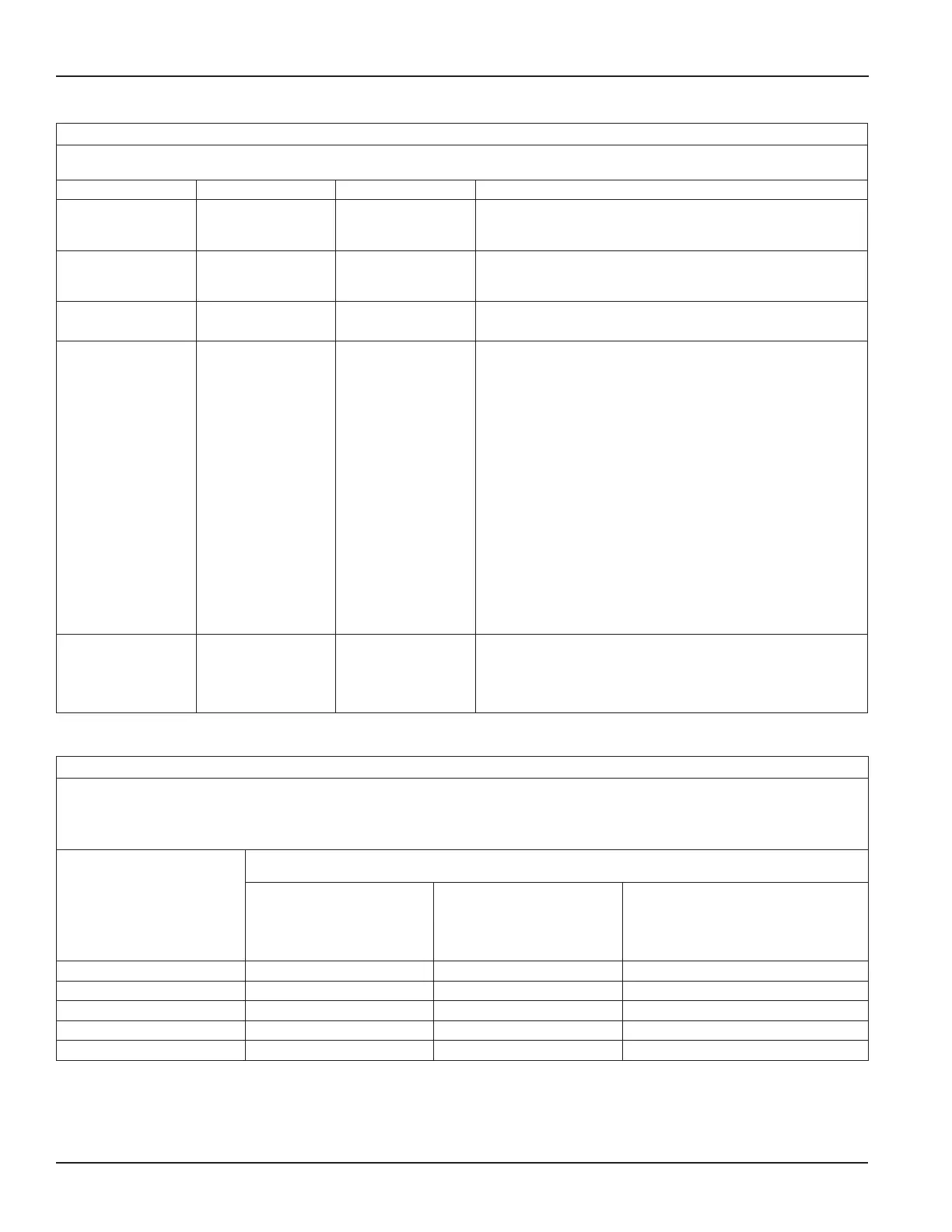
Recommended separation distances between portable and mobile RF communications equipment and the Neptune 2 ULTRA Rover
The Neptune 2 ULTRA Rovers, REF 0702-001-000 and REF 0702-002-000, are intended for use in the electromagnetic environment in which radiated
RF disturbances are controlled. The customer or the user of the Neptune 2 ULTRA Rover can help prevent electromagnetic interference by
maintaining a minimum distance between portable and mobile RF communications equipment (transmitters) and the Neptune 2 ULTRA Rover as
recommended below, according to the maximum output power of the communications equipment.
Rated maximum output power of
transmitter
W
Separation distance according to frequency of transmitter
m
150 kHz to 80 MHz
d=1.67√P
80 MHz to 800 MHz
d=1.67√P
800 MHz to 2.5 GHz
d=2.33√P
0.01 0.12 0.12 0.23
0.1 0.37 0.37 0.74
1 1. 2 1. 2 2.3
10 3.7 3.7 7.4
100 12 12 23
For transmitters rated at a maximum output power not listed above, the recommended separation distance d in meters (m) can be estimated using the equation
applicable to the frequency of the transmitter, where P is the maximum output power rating of the transmitter in watts (W) according to the transmitter manufacturer.
NOTE 1: At 80 MHz and 800 MHz, the separation distance for the higher frequency range applies.
NOTE 2: These guidelines may not apply in all situations. Electromagnetic propagation is affected by absorption and reflection from structures, objects and people.
Specifications
Guidance and manufacturer's declaration - electromagnetic immunity
The Neptune 2 ULTRA Rovers, REF 0702-001-000 and REF 0702-002-000, are intended for use in the electromagnetic environment specified below. The
customer or the user of the Neptune 2 ULTRA Rover should assure that it is used in such an environment.
Immunity test IEC 60601 test level Compliance level Electromagnetic environment - guidance
Electrostatic discharge
(ESD)
IEC 61000-4-2
±6 kV contact
±8 kV air
±2, 4, 6 kV contact
±2, 4, 8 kV air
Floors should be wood, concrete or ceramic tile. If floors are covered with
synthetic material, the relative humidity should be at least 30%.
Electrical fast transient/
burst
IEC 61000-4-4
±2 kV for power supply
lines
±1kV for input/output lines
±2 kV for power supply
lines
±1 kV for input/output lines
Mains power quality should be that of a typical commercial or hospital
environment.
Surge
IEC 61000-4-5
±1 kV differential mode
±2 kV common mode
±1 kV differential mode
±2 kV common mode
Mains power quality should be that of a typical commercial or hospital
environment.
Voltage dips, short
interruptions and voltage
variations on power supply
input lines
IEC 61000-4-11
<5% U
T
(>95% dip in U
T
)
for 0.5 cycle
40% U
T
(60% dip in U
T
)
for 5 cycles
70% U
T
(30% dip in U
T
)
for 25 cycles
<5% U
T
(>95% dip in U
T
)
for 5 sec
95% Reduction (10 ms)
60% Reduction (100 ms)
30% Reduction (500 ms)
95% Reduction (5 s)
Mains power quality should be that of a typical commercial or hospital
environment. If the user of the Neptune 2 ULTRA Rover requires continued
operation during power mains interruptions, it is recommended that the Neptune
2 ULTRA Rover be powered from an uninterruptible power supply or a battery.
Power frequency
(50/60 Hz)
magnetic field
IEC 61000-4-8
3 A/m 3 A/m
@ 50 Hz
CRT 1 A/m
Power frequency magnetic fields should be at levels characteristics of a typical
location in a typical commercial or hospital environment.
NOTE: U
T
is the a.c. mains voltage prior to application of the test level.


 To Next Page
 Loading...