50 OCH0006F08/13/2024
CEILAIR
®
CW & DX IOM
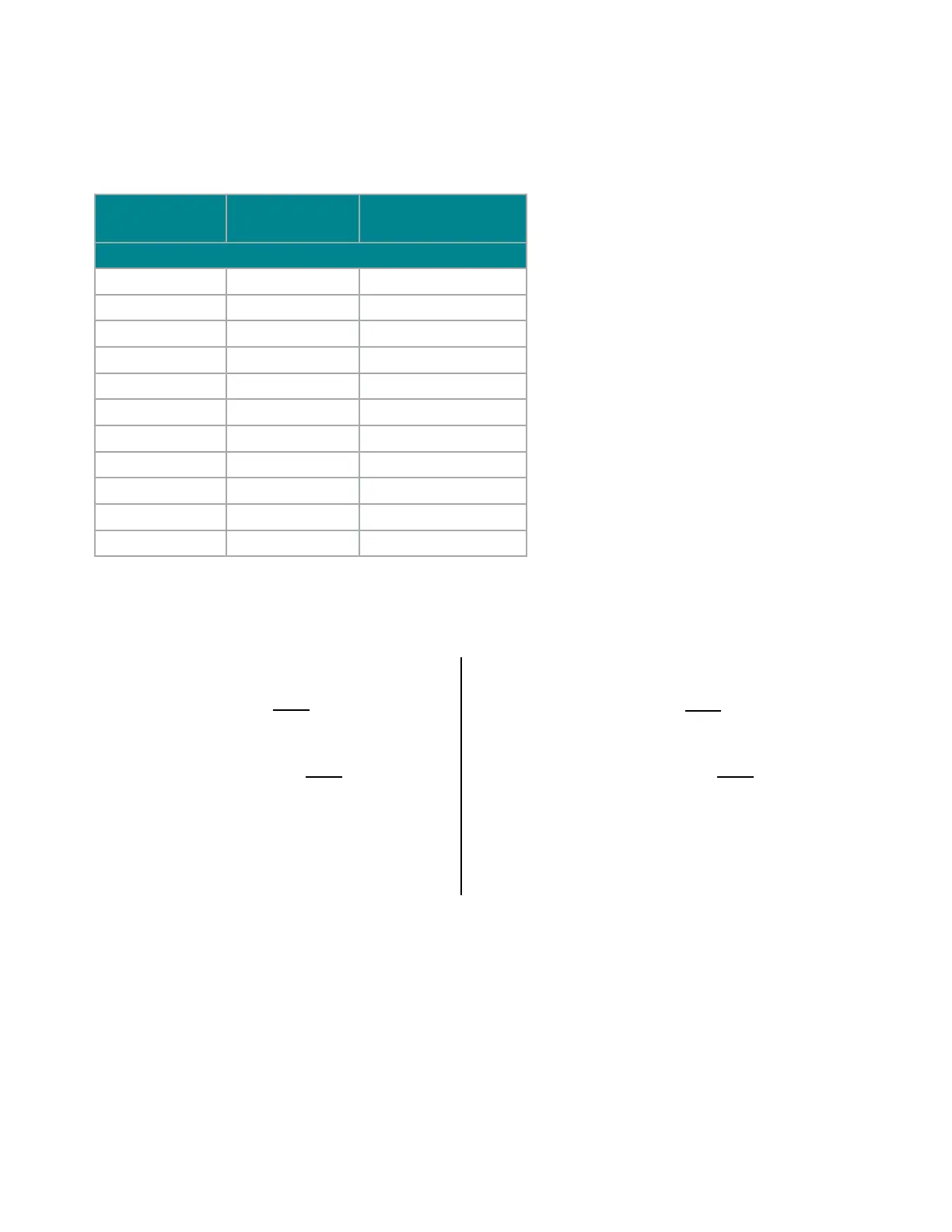
2.8.6 PREPARING SYSTEM FOR CHARGING
OHS Model
Number
Base Charge
(Per Circuit)
Flooded HP Control
Charge Adder
Approximate R410A Charge, lb (kg)
-012AR 0.9 (0.41) 7.3 (3.32)
-018AR 0.9 (0.41) 7.3 (3.32)
-024AR 0.9 (0.41) 7.3 (3.32)
-032AR 1.9 (0.86) 8.9 (4.05)
-040AR 1.9 (0.86) 8.9 (4.05)
-048AR 3.0 (1.36) 13.9 (6.32)
-048DAR 0.7 (0.32) 8.9 (4.05)
-060AR 3.0 (1.36) 13.9 (6.32)
-072DAR 2.0 (0.91) 8.9 (4.05)
-084DAR 2.0 (0.91) 8.9 (4.05)
-120DAR 3.0 (1.36) 13.9 (6.32)
Example Calculation. Estimate the amount of refrigerant required in a system using R407C refrigerant
consisting of a 5 ton (OHS060AR) A/C unit with flooded head pressure control connected with a 1/2 in x
30 ft liquid line and a 7/8 in x 30 ft discharge line to a STULZ model SCS096SAA condenser:
Condenser = 3.6 lb
+1/2” Liquid Line: 30.0 × 6.37 = 1.911 lb
100
+ 7/8” Discharge Line: 30.0 × 4.35 = 1.305 lb
100
+ A/C Unit: (3.6 + 15.3) = 18.9 lb
Estimated Refrigerant Charge = 25.715 lb
Round off to nearest lb = 26 lb
2.8.6 Preparing System for Charging
1. With all the system piping connections made, perform a dry nitrogen leak detection test on the system.
Using dry nitrogen only, pressurize the system to 150 psig. Ensure all service and solenoid valves are
energized open and that no part of the system is isolated from the pressurized nitrogen (liquid, suction, or
discharge lines, and reheat coil).
2. Since there is no refrigerant in the system to detect at this point, leaks may be detected by observing if
there has been a change in the standing pressure after 12 hours. A significant drop in pressure, >10 psig
(68.9 kPa), indicates a leak in the system that needs to be repaired. After the system is determined to be
free of leaks, you may evacuate the system.
Condenser = 1.64 kg
+1/2” Liquid Line: 30.0 × 2.90 = 0.87 kg
100
+ 7/8” Discharge Line: 30.0 × 1.98 = 0.594 kg
100
+ A/C Unit: (1.64 + 6.95) = 8.59 kg
Estimated Refrigerant Charge = 11.69 kg
Round off to nearest kg = 12 kg
Table 11. Weight of Refrigerant by OHS Model, Continued



 To Next Page