1-20 Publication: 0028607
SAFETY
1
VACUUM RELIEF VALVE SAFETY — CONTINUED
Testing the T-Type Vacuum Relief
Valve
The following test should be done every time the
vacuum relief valve is assembled into the vacuum
inlet line or every two hours of during operation,
whichever is more frequent.
1. Visually inspect the vacuum relief valve, pull cord,
and safety belt. Repair or replace as needed.
2. With the vacuum pump shut down and the truck’s
engine turned off, assemble the vacuum relief valve
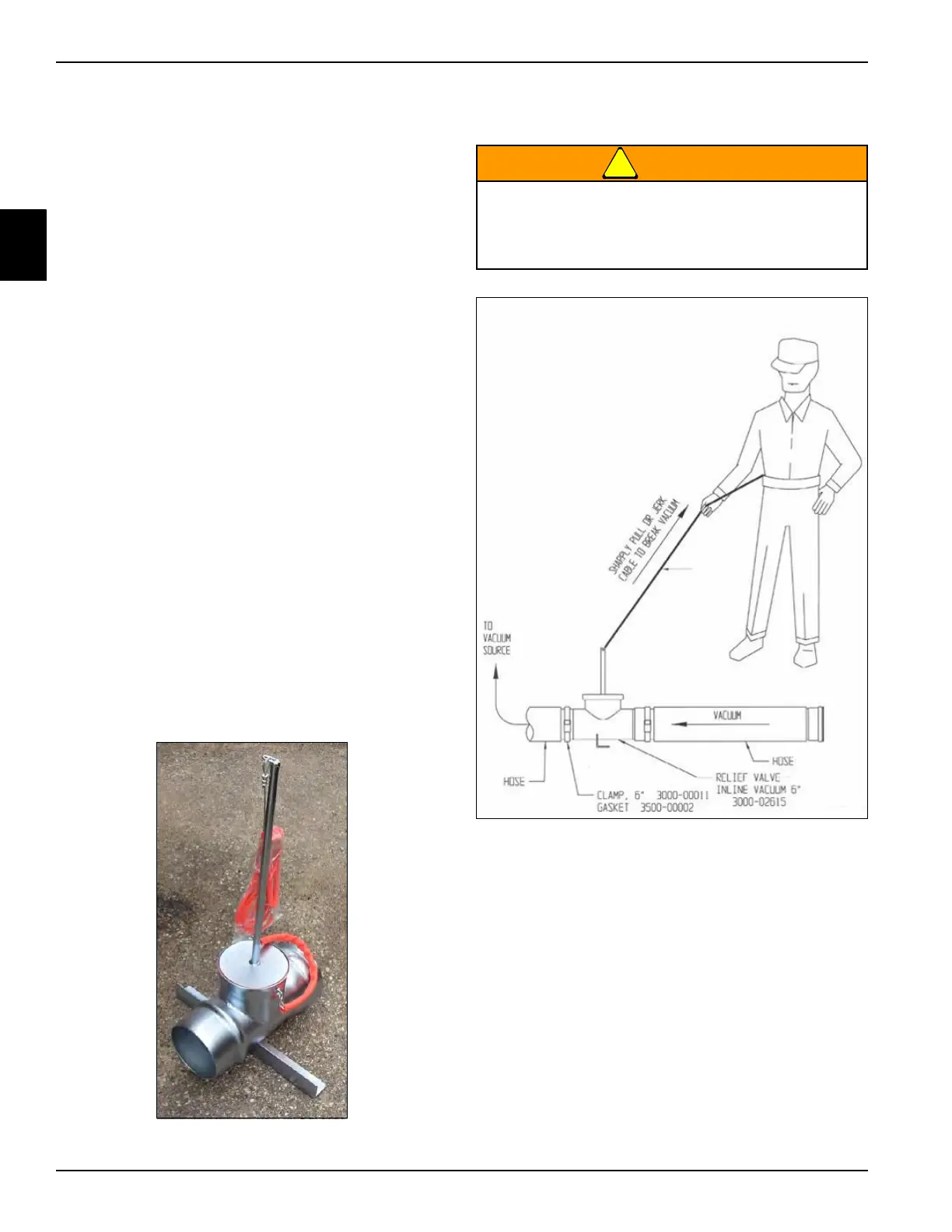
in the vacuum inlet line as shown in Figure 1-20.
Attach the pull cord to the vacuum relief valve.
3. Insert the male plug into the end of the vacuum relief
valve or vacuum inlet hose, whichever is at the inlet
point.
4. With the vacuum relief valve closed, start up the
vacuum pump and pull full vacuum.
5. At full vacuum, pull the cord to open the vacuum
relief valve.
6. After the test, shut down the vacuum pump per
operating procedure.
7. Open the vent door to make sure all vacuum is
relieved before removing the plug from the end of the
vacuum inlet hose.
8. Reset the vacuum relief valve. Remove and store the
vacuum relief valve if it is not going to be used.
Figure 1-19
Figure 1-20
If the vacuum relief valve is not working properly,
personnel should not be allowed to work at the
end of the vacuum inlet hose due to possible
injury or death.


 To Next Page