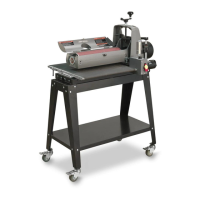
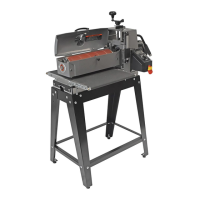
TROUBLESHOOTING YOUR SUPERBRUSH 13
TROUBLESHOOTING YOUR SUPERBRUSH
TROUBLESHOOTING GUIDE: MOTORS
Problem Possible Cause Solution
Motors do not start. 1. Main power cord Plug in primary power
unplugged from receptacle. cord.
2. Brush motor cord Plug in brush motor
unplugged from receptacle cord at receptacle on
near power-feed motor. machine if so equipped (Fig. 4).
3. Circuit fuse blown or circuit Replace fuse or retrip
breaker tripped. breaker (after determining cause).
4. Brush motor thermal Reset after allowing to cool;
overload protector tripped check circuit and/or reduce load
(Single phase motor only). or slow feed rate (Fig. 4)
5. Conveyor motor fuse blown. Replace 3/4 amp fuse (page 24).
Brush motor overloads. 1. Inadequate circuit. Check electrical requirements
(page 6).
2. Machine overloaded. Use slower feed rate; slower brush
RPM; reduce depth of cut.
Conveyor 1. Motor not properly Loosen housing bolts,
motor oscillates. aligned. run motor, retighten bolts.
2. Shaft collar or bushing worn. Replace shaft collar or bushing
(page 5).
3. Drive roller bent. Replace drive roller (page 20).
Brush motor or conveyor 1. Excessive depth of cut. Reduce depth of cut; decrease
gear motor stalls. brush speed; reduce feed rate.
Any operating problems with the SUPERBRUSH
will likely occur most often during the period that
you are becoming familiar with its components
and their adjustments. If you are experiencing a
problem affecting the machine’s brushing
performance, check the following listings for
potential causes and solutions; it may also pay to
review the previous sections in this manual on
setting up and operating your machine.


 To Next Page