is put to work, there may be an uneven distribution of leads to the strands; a condition that
will significantly shorten the life of the rope.
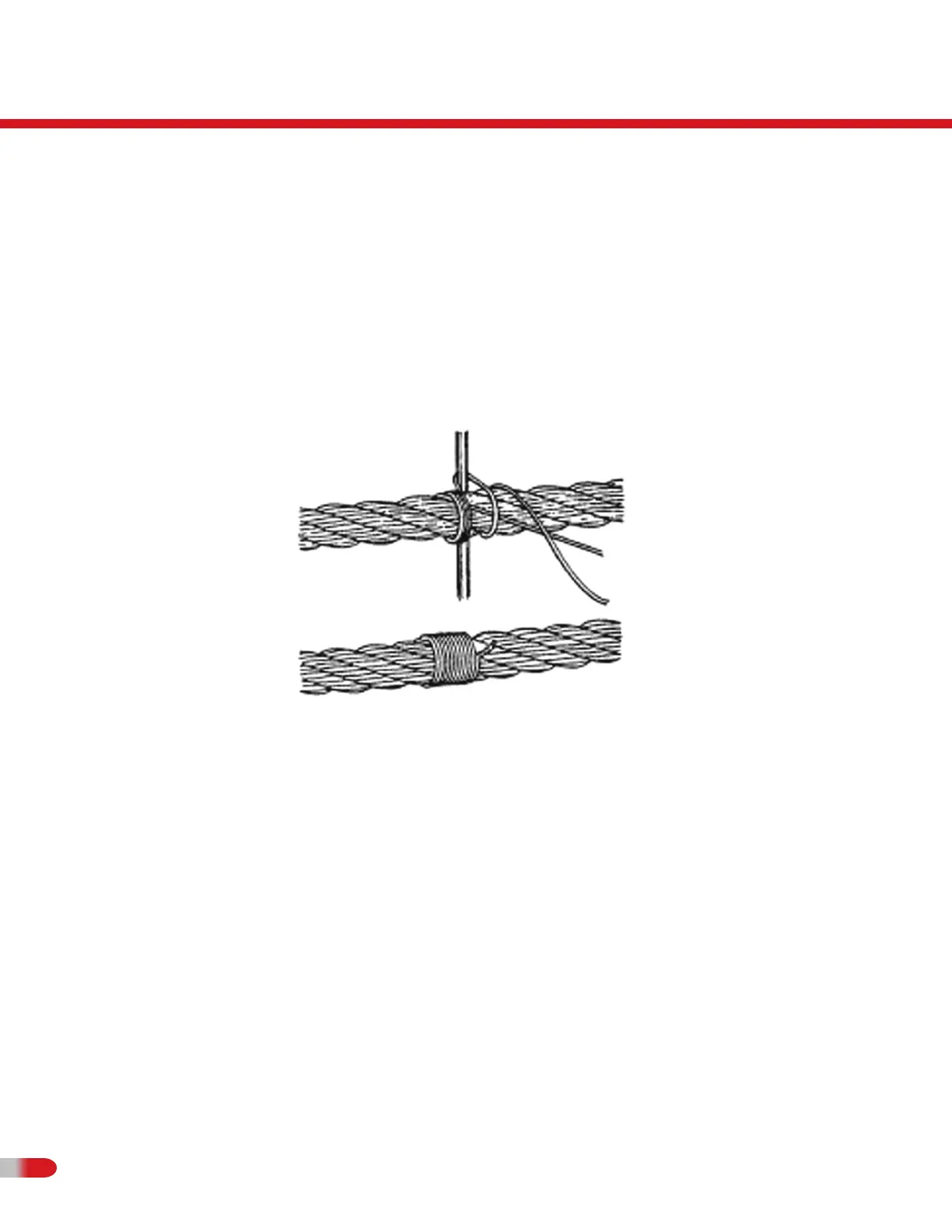
There are two widely accepted methods of applying seizing (Figure 19). The seizing itself
should be a soft, or anncaled wire or strand. The seizing wire diameter and the length of the
seizing should never be less than the diameter of the rope being seized. For preformed
ropes, one seizing on each side of the cut is normally sufficient. But for those that are not
preformed, a minimum of two seizings is recommended (Fig 20). Seizings should be
spaced 6 rope diameters apart.
Table 4 list seizing lengths and seizing wire diameters suggested for use with some
commonly use wire ropes.
METHOD A; Lay one end of the siezing wire in the groove between two strands; wrap the
other end tightly in a close helix over a position of the groove using a seizing ire (a round
bar 1/2" to 5/8" diam. x 18" long) as shown above. Both ends of the seizing wire widths
should not be less than the rope diameter.
RT500
Applicable Standards / Regulations
298 REVISED:


 To Next Page