VEHICLE SAFETY
21
3
THOR MOTOR COACH | MADE TO FIT
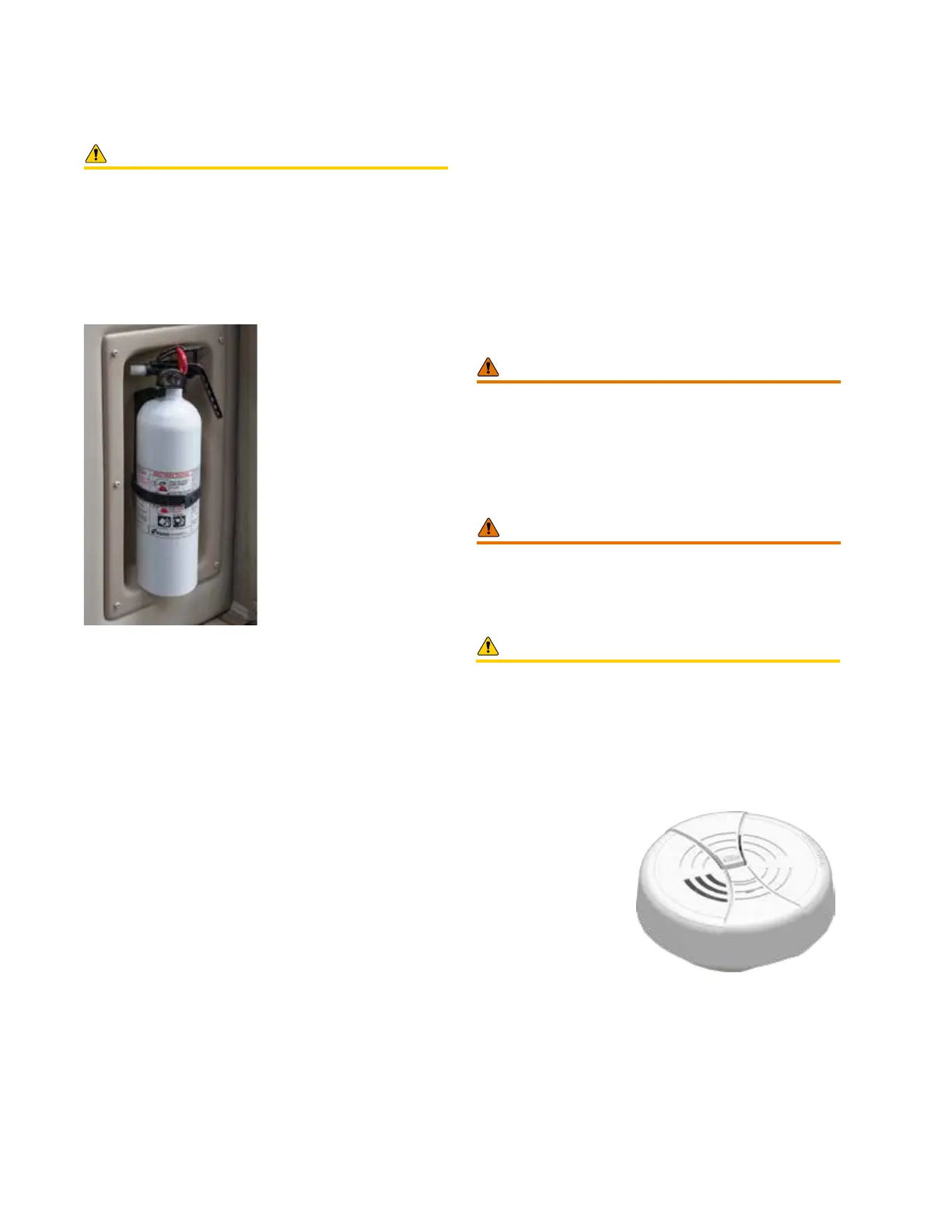
Fire Extinguisher
Typical Class B-C fire
extinguisher
Fire extinguishers are classified and rated by fire type; A,
B, and C. ese classications identify the kinds of res or
burning materials they are designed to extinguish:
• Class A: Solid materials such as wood, paper, cloth,
rubber, and some plastics.
• Class B: Liquids such as grease, cooking oils, gasoline,
kerosene, or other ammable liquids.
• Class C: Electrical such as electrical wires or other live
electrical equipment.
A dry-chemical re extinguisher has been installed by the
entrance door. It is suitable for extinguishing small res of
the Class B or C type only.
Operation:
For information on how to use the installed re extinguisher,
refer to the re extinguisher manufacturer’s owner's manual
or the label axed to the side of the re extinguisher.
Inspection:
Inspect the extinguisher at least once a week (more frequently if
it is exposed to weather or possible tampering). is should also
be done before beginning a vacation or during an extended trip.
Typical RV smoke alarm
This smoke alarm may not alert the hearing impaired.
Special alarms with flashing strobe lights are
recommended for the hearing impaired.
WARNING
Test smoke alarm operation after vehicle has been in
storage, before each trip, and at least once per week
during use.
Failure to do so can result in an undetected faulty smoke
alarm, which could lead to death or severe injury.
WARNING
Always replace the re extinguisher with a similar Class
B-C type.
• Fire extinguishers must be replaced after any use,
even if used briey.
• Fire extinguishers have an effective service life.
Replace expired re extinguishers.
CAUTION
Ensure the smoke detector and alarm is always kept
in good working order. Test this device regularly and
immediately replace if it is not functioning properly.
The smoke detector operates on an internal battery.
Immediately replace battery when needed and/or on an
annual schedule.
CAUTION
Replacement:
e re extinguisher must be replaced following the re
extinguisher manufacturer’s owner's manual instructions,
and/or expiration date listed on the label axed to the side
of the re extinguisher.
NOTE: Know the location of the fire extinguisher installed
in your motorhome and become familiar with its opera-
tion.
Smoke Alarm
e smoke alarm installed in the motorhome is listed for use
in recreation vehicles. Smoke alarms only work as intended if
they are maintained in operational condition. Smoke alarms
have a limited life and over time, will cease to function.
Immediately replace the smoke alarm if it is not working
properly, if it displays any type of problem, or as passed its




 To Next Page