VEHICLE SAFETY
30
3
CUSTOMER CARE | 877.855.2867
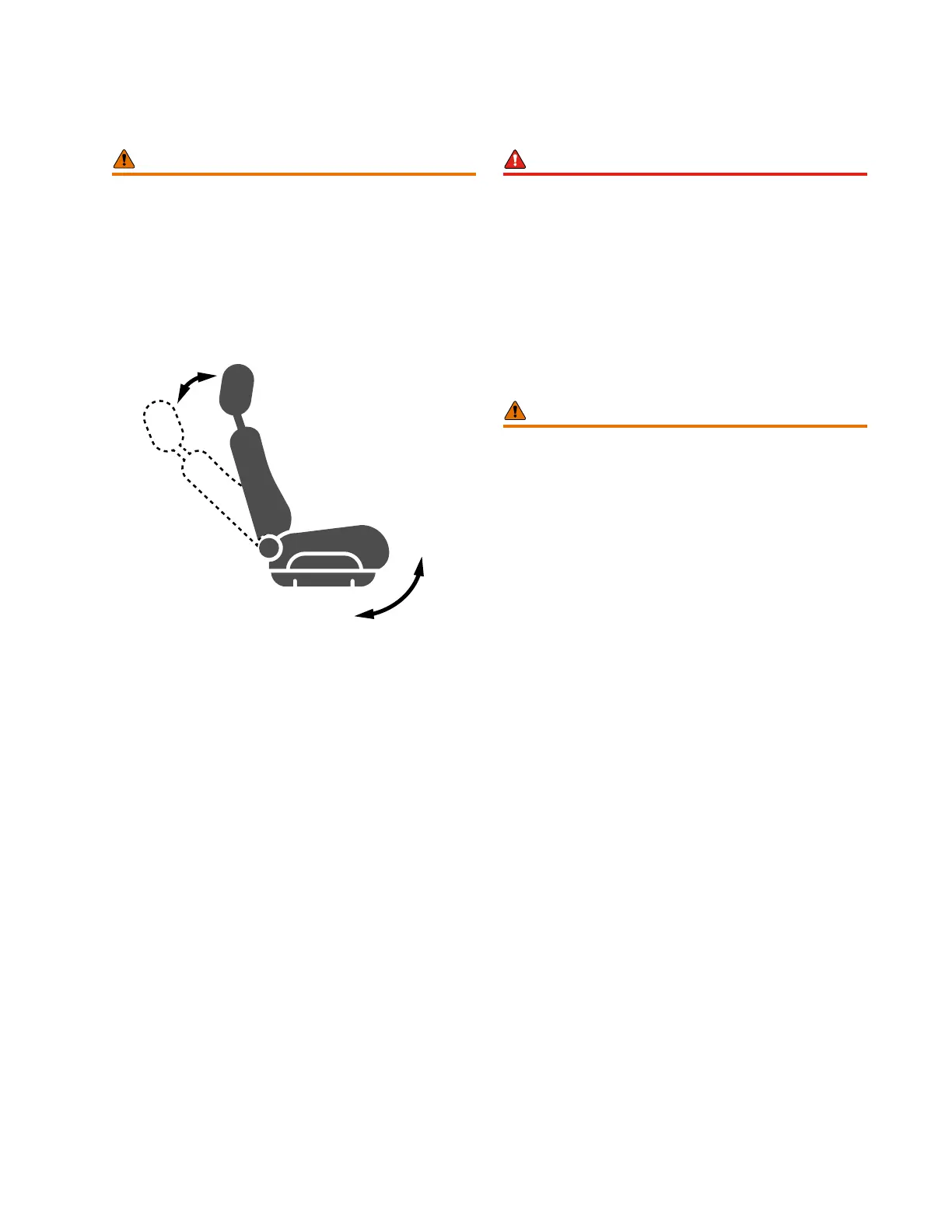
Illustration of cab reclining and
swivel seats
Driver and Front Passenger Seats Child Safety Restraint System
For comfort and convenience, the motorhome may be
equipped with tilt and swivel seats in the cockpit area. ese
features are designed to only be used when the motorhome
is parked. Before travel or moving the motorhome, ensure
all front seat backs are returned to an up-right position,
swiveled, and locked in their forward-facing position.
Select TMC motorhomes include tilt and swivel seating in
the coach area (sometimes referred to as barrel chairs). Any
adjustable seat that is equipped with seatbelts and intended
for passenger occupation while the vehicle is in motion,
must be returned to an up-right and swivel-locked position
before travel.
When transporting a child that requires the use of a
child safety restraint system (seat), TMC recommends
installing the child safety seat in the forward-facing booth
dinette position. If the motorhome is not equipped with a
forward-facing booth dinette seat equipped with seatbelts
and a child safety seat anchor, small children that require a
child safety seat should not be transported in the motorhome.
For rear-facing child seats and infant carriers, the dinette
table can be placed in the DOWN position to allow adequate
room for the rear-facing child seat.
Never allow a passenger to hold a child on his or her
lap while the motorhome is in motion. United States and
Canadian trafc laws require the use of safety restraints
for children while the vehicle is in motion.
If small children, generally children who are four years
old or younger and weigh 40 lbs. (18 kg. or less), ride in
the motorhome, they must be put in properly installed
safety seats made especially for children.
Rear-facing child seats or infant carriers should never be
installed and used in the front seats of the motorhome.
DANGER
All swivel seats located in the cab of the vehicle (driver
and front passenger) must be in the locked, upright and
forward-facing position while the vehicle is in motion
and seats are occupied.
Driver, front passenger, and all occupants must always
wear seatbelts while the vehicle is in motion.
Failure to do so can result in death or severe injury
WARNING
• Improper installation or failure to properly secure a
child restraint can lead to failure of the restraint. The
child could be severely injured or killed.
• Follow the child restraint manufacturer’s directions
exactly when installing an infant or child restraint.
• Never place a child safety restraint in front of an
airbag. A deploying passenger front airbag can cause
death or severe injury to a child 12 years or younger,
including a child in a rear-facing child restraint.
• Never install a child safety restraint in the front
seat of a vehicle. Only use child safety restraints in
the rear seats. If the vehicle does not have a rear
seat that includes a safety restraint belt or anchor
that enables securing a child safety seat, do not
transport children requiring child safety restraints
in that vehicle.
• To ensure proper safety belt t, always use booster
seats for children who are size and age appropriate.
Refer to the vehicle manufacturer’s safety
information
or governmental safety regulations for child sizing
charts.
• Always follow the vehicle manufacturer’s safety
instructions, along with state and federal regulations
regarding transporting children and small adults.
WARNING



 To Next Page