FUEL SYSTEM
46
4
CUSTOMER CARE | 877.855.2867
Freightliner Exhaust Emissions
Systems
Diesel-powered Freightliner chassis' are equipped with an
exhaust emissions reduction system, known as Selective
Catalytic Reduction, or SCR. This system adds a Diesel
Exhaust Fluid (DEF) into the exhaust gas and lters it through
a catalyst to convert NOx into nitrogen and water, which is
then released to the atmosphere. is system complies with
current EPA emissions standards.
DEF is used at a 2-3% ratio to diesel fuel. So, on average,
every 100 gallons of diesel fuel will require 3 gallons of DEF.
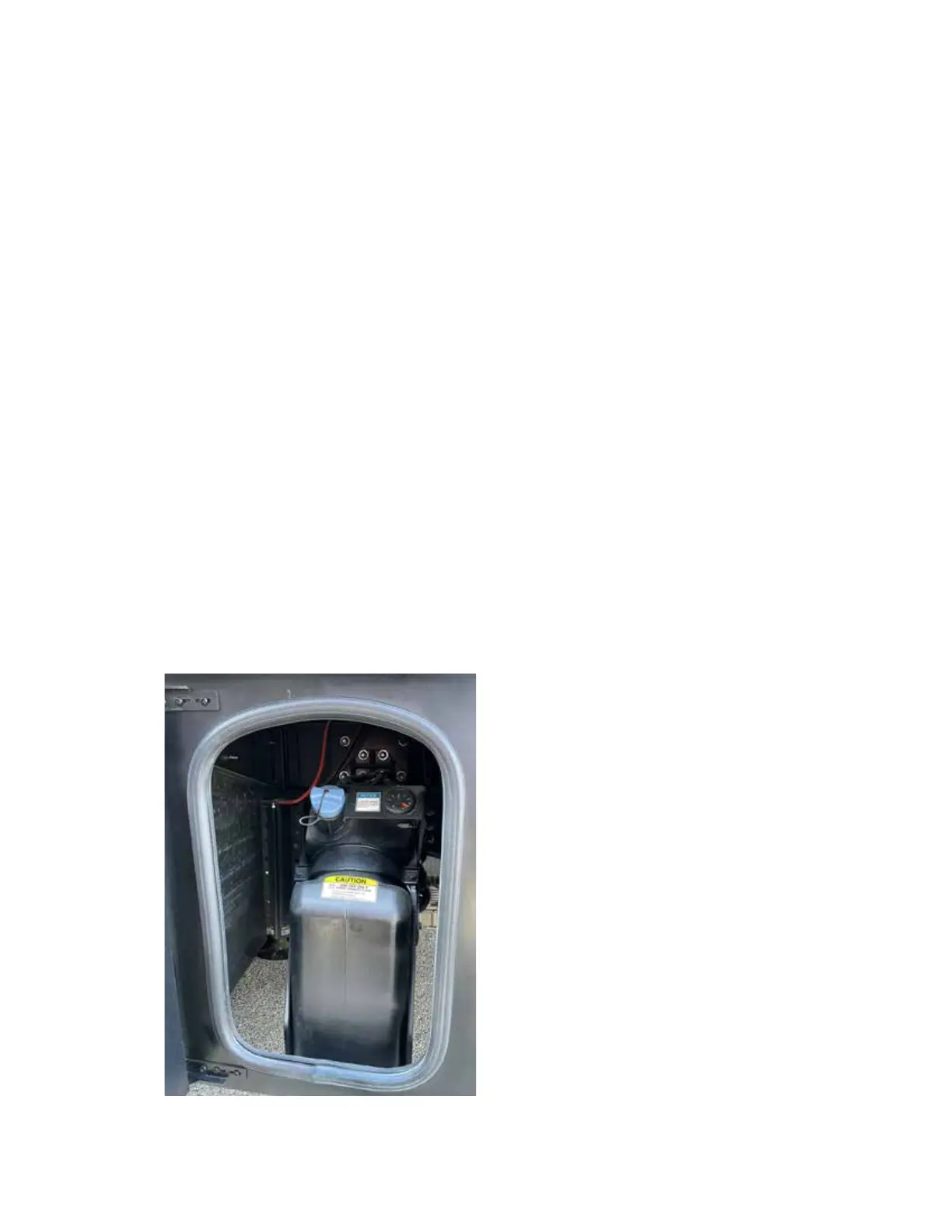
A DEF tank is usually installed in a driver's-side bay. A low
diesel exhaust uid (DEF) dash warning indicator illuminates
when the DEF tank is approximately 10% full. Fill the DEF
tank as soon as possible to avoid engine derate (decreased
engine power).
Another important component of the diesel emissions
control system is the Diesel Particulate Filter (DPF). is
device requires routine maintenance and regeneration. A
solid-illuminated dash lamp indicates a regeneration cycle
is required. Change to a more challenging duty cycle, such
as highway driving, to raise exhaust temperatures for at least
20 minutes, or perform a stationary regeneration. A blinking
lamp indicates that a stationary regeneration is required
immediately. An engine derate and shutdown will occur.
Typical DEF tank.
Along with emission system warnings, the Freightliner driv-
er's dash cluster includes many other important operating
indicators and warnings. Drivers and operators must become
familiar with these and other unique operational procedures
of diesel-powered vehicles.
Refer to your Freightliner Owner's and Maintenance Manuals
or review information available through your Freightliner
24/7 App for detailed information regarding the emission
systems installed in your Freightliner chassis.
NOTE: DEF can be purchased in 2-3 gallon containers
or most truck stops will offer DEF from a pump. DEF
has a shelf-life. If purchased and carried in containers, be
sure to pay attention to expiration dates, usually printed
on the container.







 To Next Page