TIRES AND WHEELS
48
5
CUSTOMER CARE | 877.855.2867
e vehicle may include a Tire Pressure Monitoring System
(TPMS), but this is NOT a substitute for manually checking
tire pressure. See the chassis manufacturer’s owner’s manual
for additional information.
Tire Inflation Tips:
Always check tire ination pressures before and aer trips,
and at least once a month while storing the motorhome.
• Remember to allow the motorhome's tires cool before
taking a tire pressure reading.
• Have all luggage, equipment, uids (fuel, water, gas, etc.)
and accessories in the motorhome before weighing to
determine the total gross vehicle weight.
• Never exceed the vehicle load capacity found in the
Occupant and Cargo Carrying Capacity Label (see page
55) or the maximum load molded on the tire sidewall.
• Make sure to check the ination pressure of outer and
inner tires to ensure even load distribution.
• Adjust the ination pressure on all tires to match the
tire that is carrying the heaviest load.
• All tires on the same axle should have the same ination
pressure to support the heaviest load.
Inspect the Condition of Your Tires
It’s important to check every tire on the motorhome on a
regular basis. Rotate the tires completely and make sure there
are no nails or other objects penetrating any of the tires. If
a tire fault is found, do not drive the motorhome until the
tires are inspected by an authorized commercial tire dealer.
Immediately replace any tires if necessary.
Tire Inspection Tips:
• Check every tire for signs of sidewall cracking.
• Avoid using sidewall treatments or dressings, which
can actually accelerate cracking.
• Look for worn tires that can decrease traction, reduce
handling and are more susceptible to punctures.
• Replace tires before they reach the tread depth indicator.
• Tread depth indicators are located between the tread
grooves at locations marked on the sidewall with little
triangles.
Reference: Goodyear Tire and Rubber Company: Publication 00-00-
46437-11/14
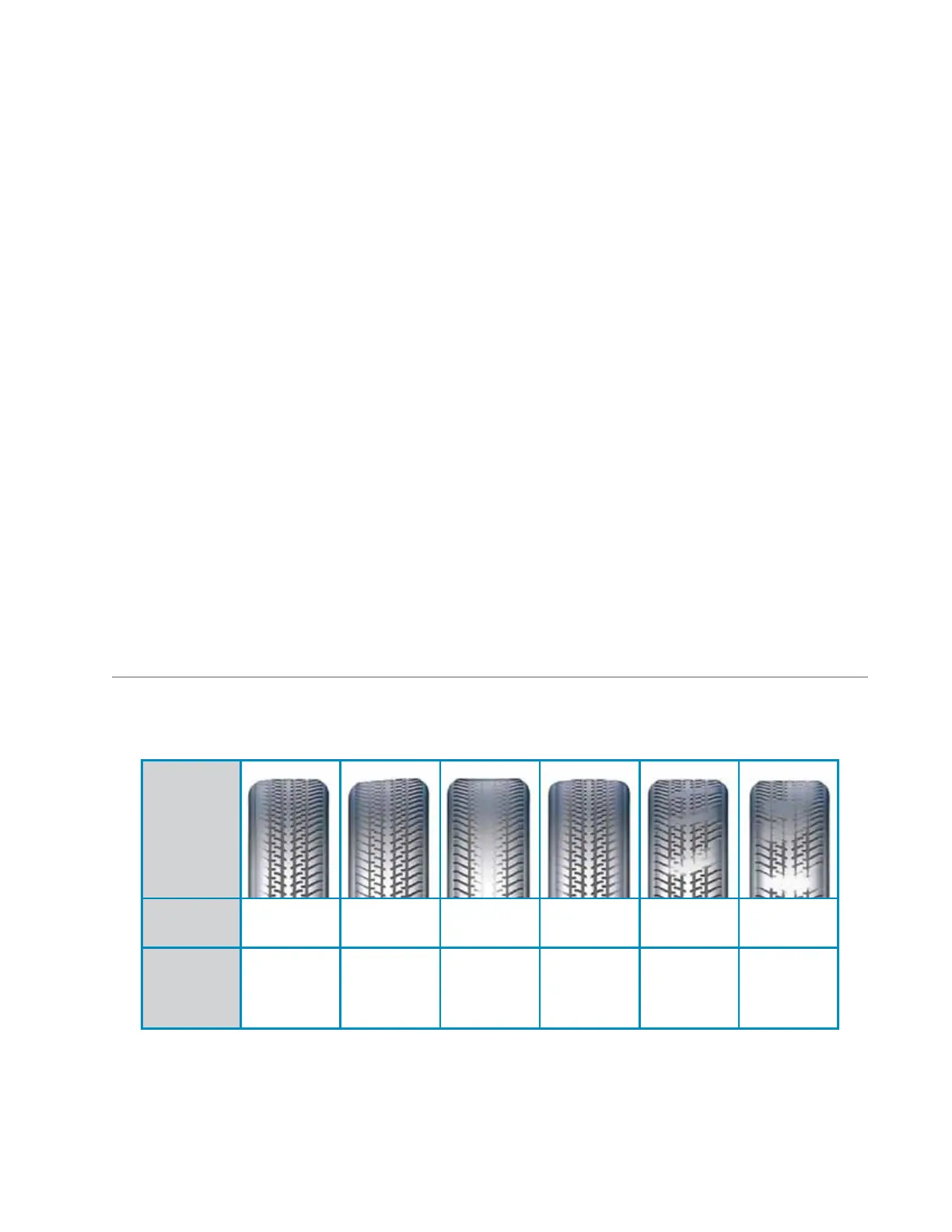
IF YOUR
FRONT
TIRES
LOOK
LIKE THIS:
TIRE
PATTERN
COMMON
CAUSE
TOE
CAMBER
CENTER
EDGE
CUPPING
VEHICLE
WHEEL
ALIGNMENT
VEHICLE
WHEEL
ALIGNMENT
TIRE
OVER
INFLATION
TIRE
UNDER
INFLATION
VEHICLE
WORN
SUSPENSION
PATCHY
TIRE
OUT OF
BALANCE
Common Tire Wear Patterns
NOTE: The use of tire traction devices (snow chains)
may either be prohibited or required in certain travel
regions and/or weather conditions. Always check with the
state's Department of Transportation for vehicle operat
-
ing guidelines and regulations.



 To Next Page