v = Number of similar draw-off points per similar residential
unit
w
v
= Draw-off demand in Wh
(n · p · v · w
v
) must be calculated for each relevant draw-off point per
similar apartment.
With the aid of the calculated demand factor N, the tables on
pages 9 and 10 enable the selection of the required DHW cylinder at
the appropriate heating water flow temperature. For this, select a DHW
cylinder whose N
L
factor is at least equal to N.
The demand factor N is identical to the number of standard residential
units in the building project.
It does not necessarily correspond to the actual number of residential
units.
Example:
For a residential building project, design the DHW system on the basis
of demand factor N.
The numbers of similar residential units, the room factor and the equip-
ment level listed in table 5 have been taken from the building plans.
The occupancy factor p was determined using the room factor r and
table 1 on page 13.
The number of draw-off points to be used in the design was calculated
using table 2 on page 13 and table 3 on page 14.
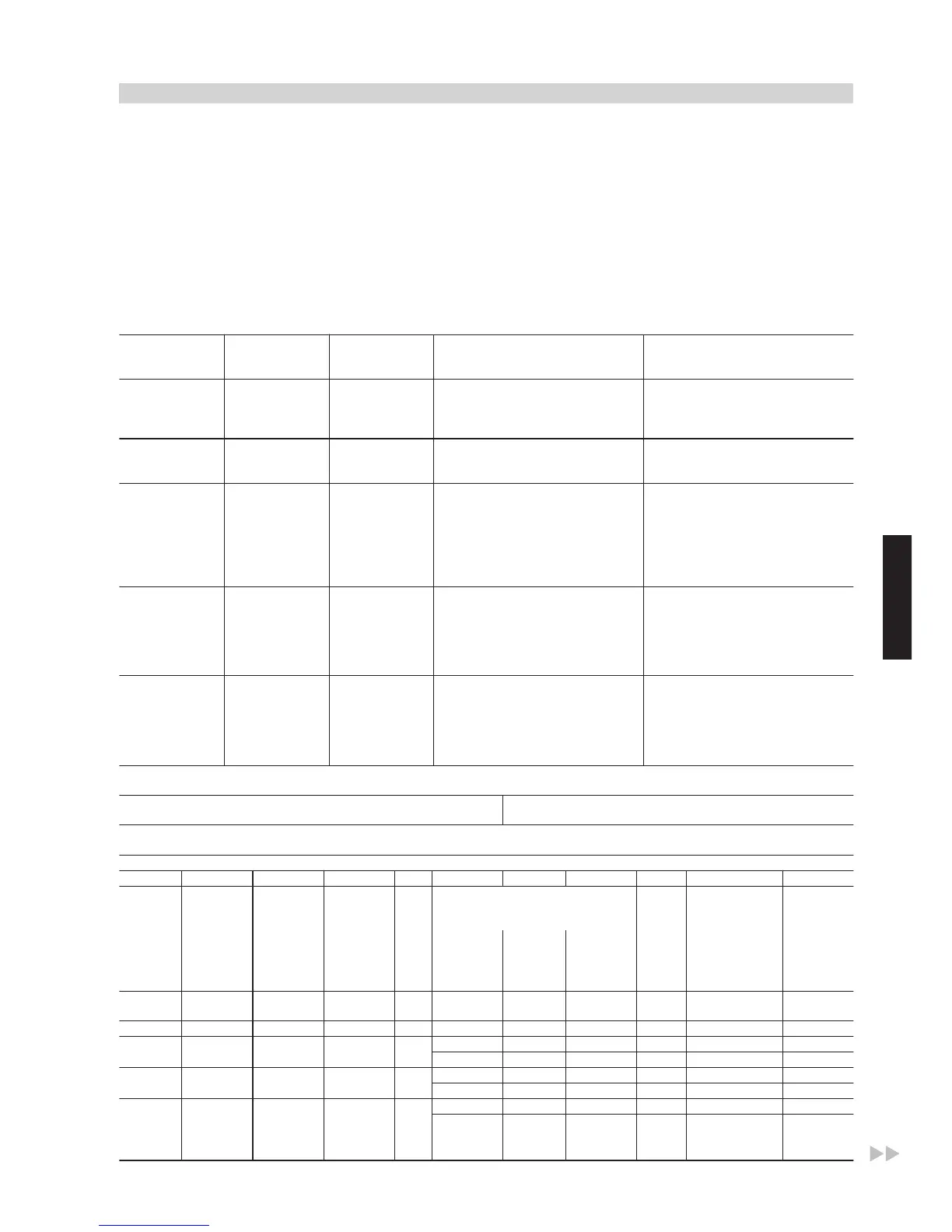
Table 5
No. of residential
units
n
Room factor
r
Occupancy fac-
tor
p
Amenities in the residential unit
Number, description
Apply for the demand calculation
No. of draw-off points, description
4 1.5 2.0 1 shower cubicle with standard shower
head
1 washbasin in the bathroom
1 sink in the kitchen
according to table 2 on page 13
1 shower cubicle (BRN)
10 3 2.7 1 bath 140 l
1 washbasin in the bathroom
1 sink in the kitchen
according to table 2 on page 13
1 bath (NB1)
2 4 3.5 1 shower cubicle with mixer tap and
deluxe shower head
1 shower cubicle with standard shower
head (in a physically separate loca-
tion)
1 washbasin in the bathroom
1 sink in the kitchen
according to table 3 on page 14
1 shower cubicle (BRL)
4 4 3.5 1 bath 160 l
1 shower cubicle with deluxe shower
head in a separate room
1 washbasin in the bathroom
1 bidet
1 sink in the kitchen
according to table 3 on page 14
1 bath (NB2)
1 shower cubicle (BRL)
5 5 4.3 1 bath 160 l
1 washbasin in the bathroom
1 bidet
1 bath 140 l, in the guest room
1 washbasin in the guest room
1 sink in the kitchen
according to table 3 on page 14
1 bath (NB2)
1 bath (NB1) with 50 % of the draw-off
demand w
v
1 washbasin (WT)
1 bidet (BD)
Form for calculating the heat demand for DHW heating in residential buildings
Calculating the demand of residential units with centralised supply
systems
Project no:
Sheet no:
Calculating the demand factor N for determining the required DHW cylinder size
Project
Occupancy factor p based on statistical values as per table 5, page 15
1 2 3 4 5 6 7 8 9 10 11
Sequential
number of
residential
unit
groups
Room fac-
tor
No. of resi-
dential
units
Occupancy
factor
No. of draw-off points to consider (per
residential unit)
Comments
r n p n · p No. of
draw-off
points
v
Initials Draw-off
demand
w
v
in Wh
v · w
v
in Wh
n · p · v · w
v
in Wh
1 1.5 4 2.0 8.0 1 NB1 5820 5820 46560 NB1 for
BRN
2 3.0 10 2.7 27.0 1 NB1 5820 5820 157140
3 4.0 2 3.5 7.0 1 BRL 7320 7320 51240
1 BRN 3660 3660 25620
4 4.0 4 3.5 4.0 1 NB2 6510 6510 91140
1 BRL 7320 7320 102480
5 5.0 5 4.3 21.5 1 NB2 6510 6510 139965
(0.5) NB1 5820 5820 62565 50 % w
v
acc.
to table 3 on
page 14
Sizing
(cont.)
DHW heating
VIESMANN
15
5414 646 GB
4







 To Next Page