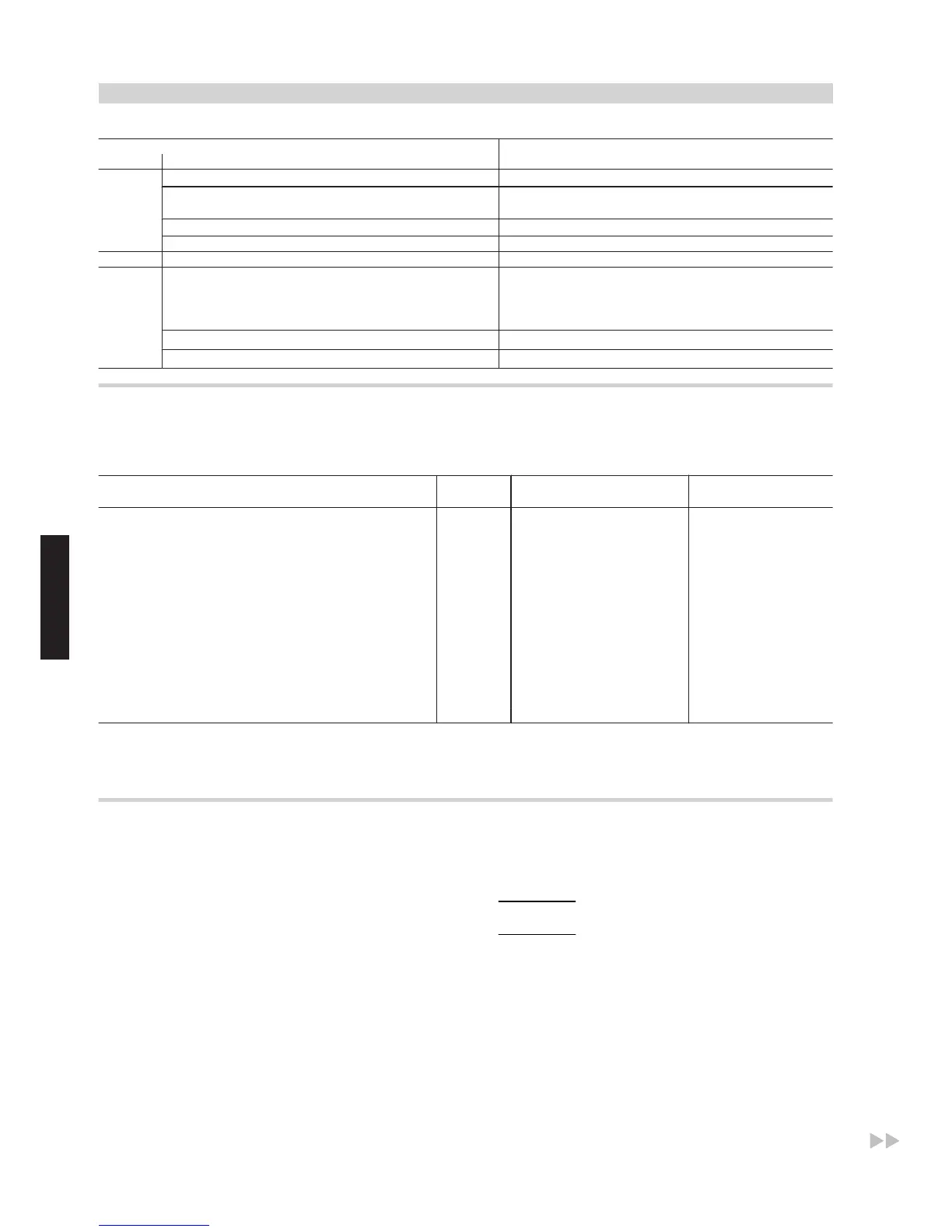
Table 3 – Accommodation with deluxe equipment level
Existing amenities per residential unit To be taken into account for calculating the demand
Room Equipment
Bathroom
Bath
*4
As per table 4, no. 2 to 4
Shower cubicle
*4
As existing, incl. any additional facilities according to table 4, no.
6 or 7, if arranged to permit simultaneous use
*5
Washbasin
*4
Not taken into account
Bidet Not taken into account
Kitchen 1 kitchen sink Not taken into account
Guest
room
Bath Per guest room: as existing, according to table 4, no. 1 to 4, with
50 % of the draw-off demand w
v
or
Shower cubicle
As existing, incl. possible additional equipment as per table 4,
no. 5 to 7, with 100 % of the draw-off demand w
v
Washbasin
At 100 % of the draw-off demand w
v
according to table 4
*6
Bidet
At 100 % of the draw-off demand w
v
according to table 4
*6
Calculating the applicable draw-off demand per draw-off point to be considered
The respective draw-off demand w
v
for the draw-off points included in
the calculation of the demand factor N can be taken from table 4.
Table 4 – Draw-off demand w
v
No. Sanitary equipment or draw-off point DIN code Draw-off volume per use or
available capacity in l
Draw-off demand w
v
per
use in Wh
1 Bath NB1 140 5820
2 Bath NB2 160 6510
3 Small bath and sit bath AP 120 4890
4 Large bath (1800 mm × 750 mm) GB 200 8720
5
Shower cubicle
*7
with mixer tap and economy shower
head
BRS
40
*8
1630
6
Shower cubicle
*7
with mixer tap and standard shower
head
*9
BRN
90
*8
3660
7
Shower cubicle
*7
with mixer tap and deluxe shower
head
*10
BRL
180
*8
7320
8 Washbasin WT 17 700
9 Bidet BD 20 810
10 Washbasin HT 9 350
11 Kitchen sink SP 30 1160
For baths with considerably varying available capacities, apply the
draw-off demand w
v
in accordance with formula w
v
= c × V × ΔT in Wh
and use it in the calculation (ΔT = 35 K).
Calculating the demand factor N
In order to establish the heat demand for DHW to all residential units,
it is first necessary to convert the data into the heat demand for DHW
of the standard residential unit.
The following characteristics of the standard residential unit are
agreed:
1. Room factor r = 4 rooms
2. Occupancy factor p = 3.5 people
3. Draw-off demand w
v
= 5820 Wh (for one bath)
The heat demand for DHW of the standard residential unit with 3.5
occupants × 5820 Wh = 20370 Wh corresponds to the demand factor
N = 1
N = total of the heat demand for DHW for all residential units to be
supplied with DHW, divided by the heat demand for DHW for the
standard residential unit
n = Number of similar residential units
p = Occupancy factor per similar residential unit
*4
Size different from standard equipment level.
*5
If no bath is installed, a bath is assumed instead of a shower cubicle as with the standard specification (see table 4, no. 1) unless the draw-
off demand of the shower cubicle exceeds that of the bath (e.g. deluxe shower).
If several different shower cubicles are installed, at least one bath is assumed for the shower cubicle with the highest draw-off demand.
*6
If no bath or shower cubicle is assigned to the guest room.
*7
To be included in calculations only if the bath and shower cubicle are in separate rooms, i.e. if simultaneous use is possible.
*8
Corresponding to 6 minutes in use.
*9
Fitting flow rate class A to EN 200.
*10
Fitting flow rate class C to EN 200.
Sizing
(cont.)
14
VIESMANN
DHW heating
4
5414 646 GB






 To Next Page