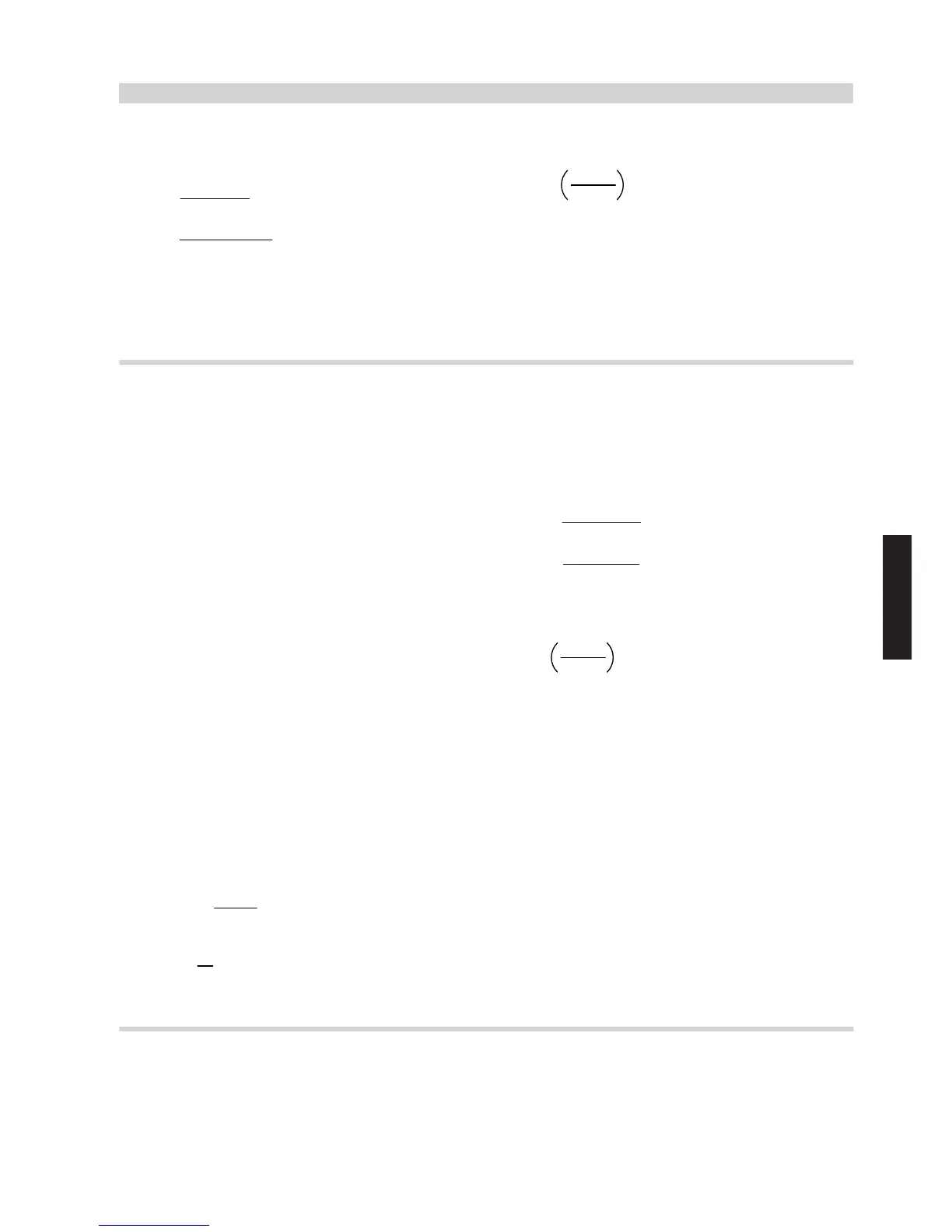
Z
A
= Heat-up time in h
To guarantee adequate heating of the building during winter too, this
heat volume must be added to the heat load. EnEV [Germany] permits
this supplement for the following reasons:
1. This is commercial utilisation.
2. There is no output limit when using a low temperature boiler.
Calculating the heat demand for DHW heating for sports halls
Observe DIN 18032-1, April 1989 "Sports grounds, sports halls" as a
guideline for the sizing, design and installation of the DHW system.
DHW is drawn-off in sports halls in short bursts.
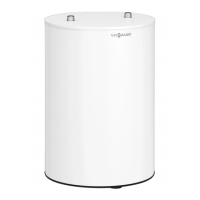
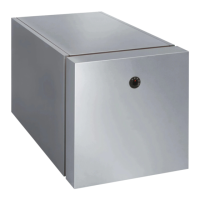
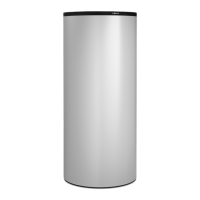
Therefore, when it comes to selecting suitable DHW cylinders, the
main criterion is the "Peak draw-off rate" (10-minute peak output).
The DHW heating system must be capable of ensuring the DHW deliv-
ery over the entire period of use (throughout the year).
The following values are assumed for sizing the DHW heating
system:
DHW draw-off temperature: max. 40 ºC
DHW consumption per person µ: 8 l/min
Shower duration per person t: 4 min
Heat-up time Z
A
: 50 min
People per heat-up time and training unit
n: min. 25 people
Cylinder storage temperature T
a
: 60 ºC
Example for a simple sports hall:
1. Calculating the required DHW volume:
m
MW
= t · µ · n
= 4 min/person · 8 l/min · 25 persons
= 800 l DHW volume at 40 ºC
Selected capacity: 700 l
(the selected capacity should roughly correspond to the required DHW
volume).
Peak output from the corresponding tables in the datasheets for the
relevant DHW cylinders.
Conversion to DHW outlet temperature of 40 ºC at
m
(40 ºC)
=
Peak output at a DHW outlet temperature of 40 ºC
m
(45 ºC)
= Peak output at a DHW outlet temperature of 45 ºC
(according to table in DHW cylinder datasheet)
T
a
= Cylinder storage temperature in ºC
T
e
= Cold water inlet temperature in ºC
Size the boiler and circulation pump for cylinder heating according to
the required heat-up output.
To guarantee adequate heating of the building during winter too, this
heat volume must be added to the heat load. EnEV [Germany] permits
this supplement for the following reasons:
1. This is commercial utilisation.
2. There is no output limit when using a low temperature boiler.
Calculating the heat demand for DHW heating in connection with district heating systems
DHW heating systems heated by district heating systems instead of
boilers cannot be sized according to the values contained in the DHW
cylinder tables because of different heating water flow and return tem-
peratures in winter and summer.
The following example gives one sizing option.
Sizing
(cont.)
DHW heating
VIESMANN
19
5414 646 GB
4






 To Next Page