16
3062547_201802
11 Informationonwatertreatment
TreatmentofheatingwaterinaccordancewithVDI2035:
Potable water may be used as lling and top-up water if the limits in table 1 are not
exceeded. Otherwise, the water must be treated using a desalinisation process.
If the water quality does not meet the required values, the warranty for components
on the water side becomes void.
The onlypermissiblewatertreatmentprocessisdesalination.
Thoroughly ush the system prior to commissioning. In order to keep oxygenation
as low as possible, it is recommended to ush the system using tap water and then
to use this water for the water treatment (position the dirt lter upstream of the ion
exchanger).
Heatingwateradditivessuchasantifreezeorinhibitorsarenot
permitted,sincetheycandamagetheheatingwaterheatexchanger.
Alkalisingadditivesmaybeusedbyawatertreatmentspecialistto
stabilisethepHvalue.
In order to prevent corrosion damage to the aluminium heating water heat exchanger,
the pH value of the heating water must be between 6.5 and 9.0.
Inmixedinstallations,apHvalueof8.2 to 9.0mustbemaintainedin
accordancewithVDI2035!
The pH value should be checked again 8-12 weeks after commissioning, as under certain
circumstances, chemical reactions may cause it to change. If it does not fall within this
range after 8-12 weeks, remedial measures must be taken.
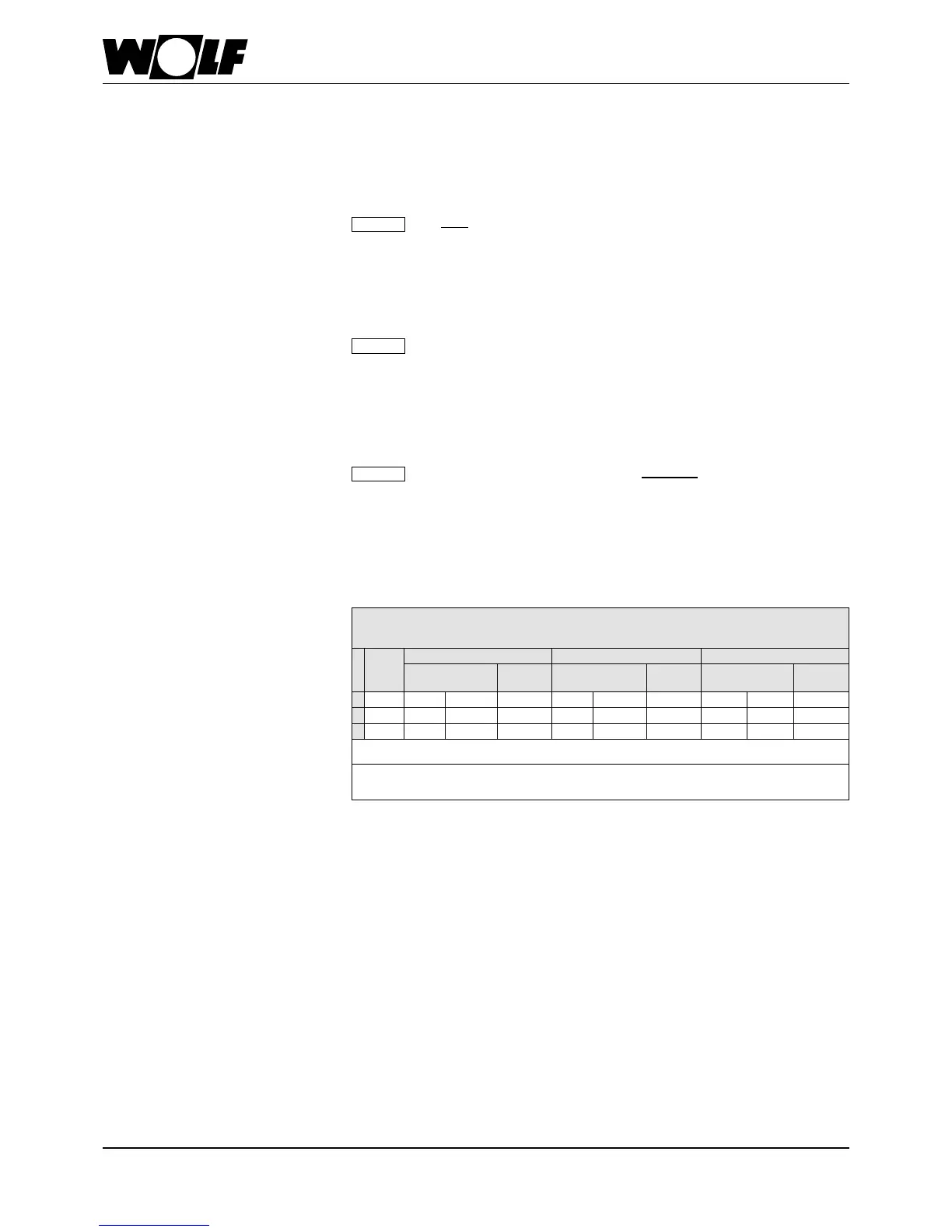
Heating water quality requirement relating to the entire heating system
LimitsinrelationtospecicsystemvolumeV
A
(V
A
=systemvolume/max.Ratedheatingoutput
1)
)
conversion,totalhardness:1mol/m³=5.6°dH=10°fH
Total
heating
output
V
A
≤ 20 l/kW V
A
> 20 l/kW and < 50 l/kW V
A
≥ 50 l/kW
Total hardness/
total alkaline earths
Conductivity
2)
at 25°C
Total hardness/
total alkaline earths
Conductivity
2)
at 25°C
Total hardness/
total alkaline earths
Conductivity
2)
at 25°C
[kW] [°dH] [mol/m³] C [µS/cm] [°dH] [mol/m³] C [µS/cm] [°dH] [mol/m³] C [µS/cm]
1 ≤ 50 ≤ 16,8 ≤ 3,0 < 800 ≤ 11,2 ≤ 2 < 800 ≤ 0,11
3)
≤ 0,02 < 800
2 50-200 ≤ 11,2 ≤ 2 < 100 ≤ 8,4 ≤ 1,5 < 100 ≤ 0,11
3)
≤ 0,02 < 100
The total amount of ll and top-up water over the life cycle of the boiler must not exceed three times the nominal volume of the
heating system.
1)
According to VDI 2035, in systems with multiple boilers, use the maximum rated heating output of the smallest heat source
2)
High salinity < 800 µS/cm Low salinity < 100 µS/cm
3)
< 0.11°dH recommended standard; permissible up to limit of < 1°dH
Table 1
Vent the system completely at maximum system temperature.
The commissioning parameters must be recorded in the system log. This system log
must be handed to the system operator following commissioning of the system. From
that point onward, the operator is responsible for maintaining and keeping the system
log. The system log is provided with the accompanying documents.
The water values, in particular the pH value, electrical conductivity and hardness, must
be measured annually and documented in the system log.
The total amount of ll water used over the life cycle of the boiler must not exceed three
times the system volume (oxygenation!). Where a system requires large volumes of
top-up water (e.g. more than 10 % of the system volume per year), the cause must be
sought immediately and the fault remedied.
Filling
Note
Note
Filling
Note
Electricalconductivityandwater
hardness
Commissioning
Top-upwater


 To Next Page