Owner’s Manual | PCAS XRX
STRENGTHS AND LIMITATIONS 31
Strengths and Limitations
Strengths
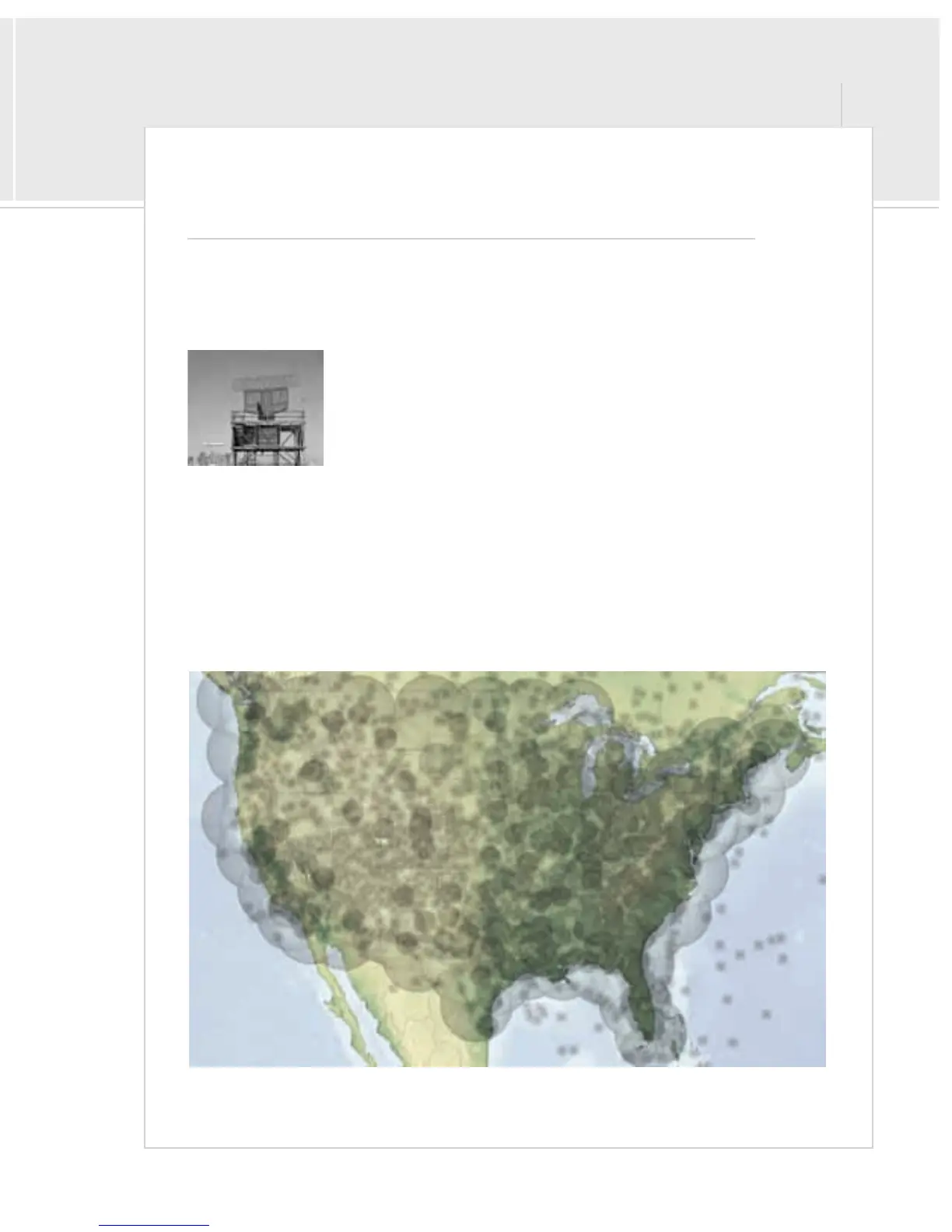
Ground RADAR and TCAS Network Coverage
XRX is a passive system, meaning it listens to replies from other aircraft. Other aircraft are
responding to interrogations. There are two types of interrogation networks: Ground
RADAR installations and TCAS- or other active system-equipped aircraft.
Ground RADAR installations provide ATC with aircraft data by interrogating outward from
the sweeping antenna, pictured here. The range of each installation depends on the type
of surrounding terrain and geography, but is usually 100-200 miles in diameter. Overhead,
systems that interrogate, or active systems, exist which make up an even better network of interrogation. Examples of
active systems are TCAS, Skywatch, and Ryan/Avidyne active systems. Because these systems are airborne, they are not
limited by geographical features and provide an excellent platform for interrogation. A passive system which does not
interrogate, such as MRX, only works if the interrogations are present. However, it is important to note that the
combined effect of both overlapping networks provides for a nearly 100% coverage in the United States. The illustra-
tion below demonostrates this when the coverage of terminal, enroute and military RADAR is combined with TCAS
interrogations from aircraft at any given moment.The same type of systems exist in countries abroad, especially the
same airborne TCAS-based systems. The most important thing to remember is that interrogations happen virtually
everywhere you may fly.


 To Next Page