Operation
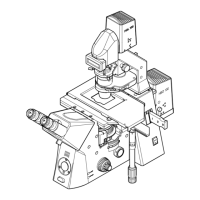
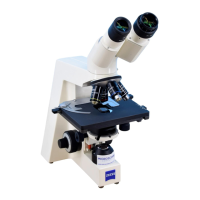
Carl Zeiss Transmitted-light phase contrast Axiostar plus
3-6 B 40-81 e 12/01
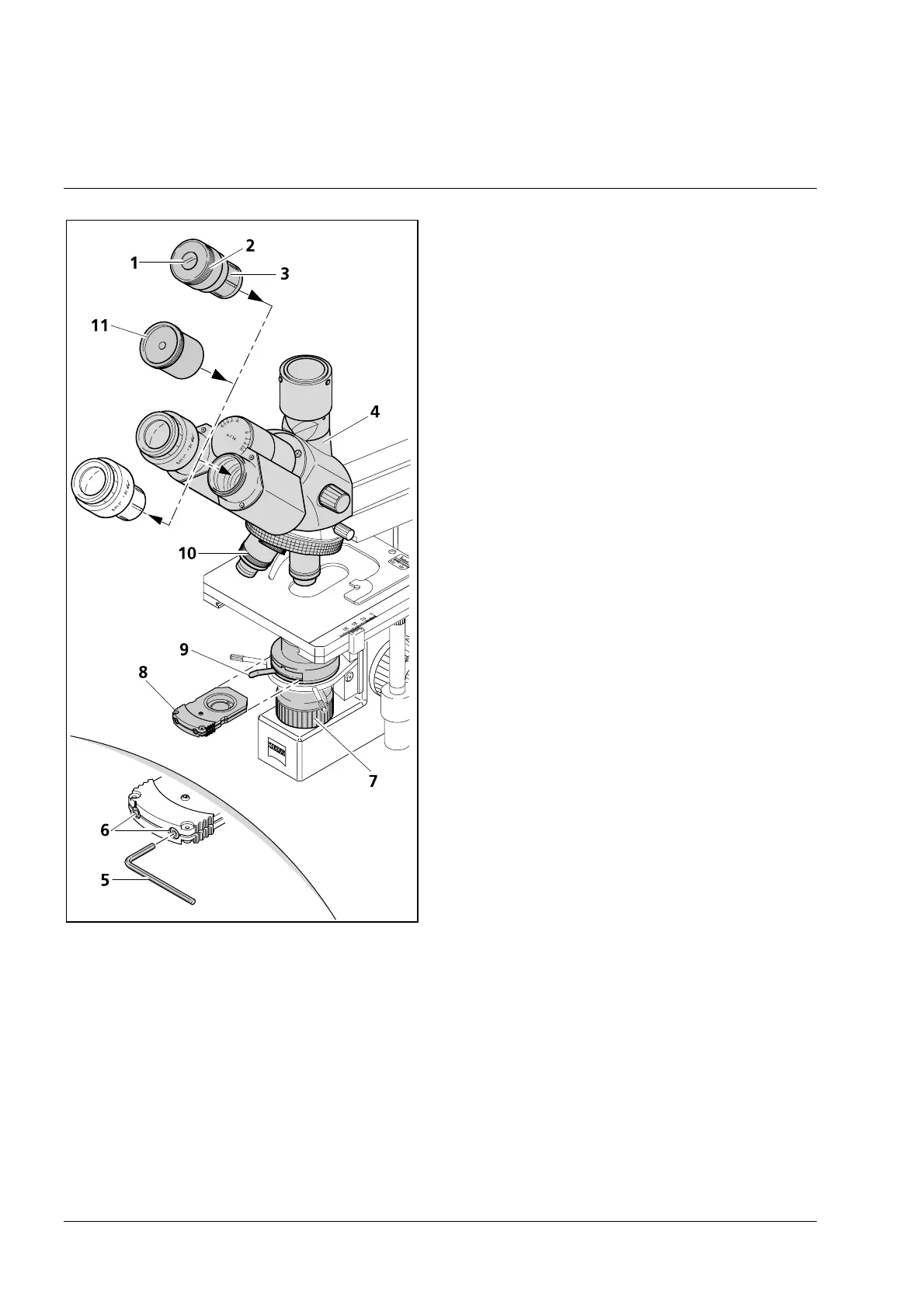
1Eyelens – auxiliary microscope
2 Knurled ring – auxiliary microscope
3 Auxiliary microscope
4 Binocular tube/phototube
5 Hexagonal key SW 2
6 Centering screws for annular diaphragm centering
7 Luminous field diaphragm
8 Slider for phase contrast
9 Lever for aperture diaphragm
10 Phase contrast objective
11 Diopter
Fig. 3-5 Setting transmitted-light phase contrast
3.3 Using transmitted-light phase
contrast
3.3.1 General principle
The phase contrast technique is ideal for
examinations of thin, unstained specimens, e.g.
culture cells.
The phase contrast technique uses the optical
modulators "phase stop and phase ring" and
the interference procedures during the
formation of the intermediate image to change
the small phase differences in intensity and
color differences which are visible to the human
eye.
☞
Optimum phase contrast requires a high level of
cleanliness! Therefore, clean the front lens of
the objective used, the visible condenser
surfaces, the upper cover slip surface and the
lower carrier plate surface of the specimen with
particular care and carefully remove grease.
3.3.2 Transmitted-light phase contrast
configuration
– Abbe condenser 0.9/1.25 and slider for
phase contrast, e.g. Ph 2.
– When using the Abbe condenser with 5-
position turret, set the relevant phase stop
position (Ph1, Ph2 or Ph3) via the turret
disk.
– Phase contrast objectives with phase rings
Ph 1, Ph 2 or Ph 3 for different average
numeric apertures which can also be used
in brightfield without any restriction.
– The name of the phase stop on the slider
for phase contrast must correspond to the
relevant name on the objective, e.g. Ph 1.
Artisan Scientific - Quality Instrumentation ... Guaranteed | (888) 88-SOURCE | www.artisan-scientific.com



 To Next Page