AUTOMATIC
21
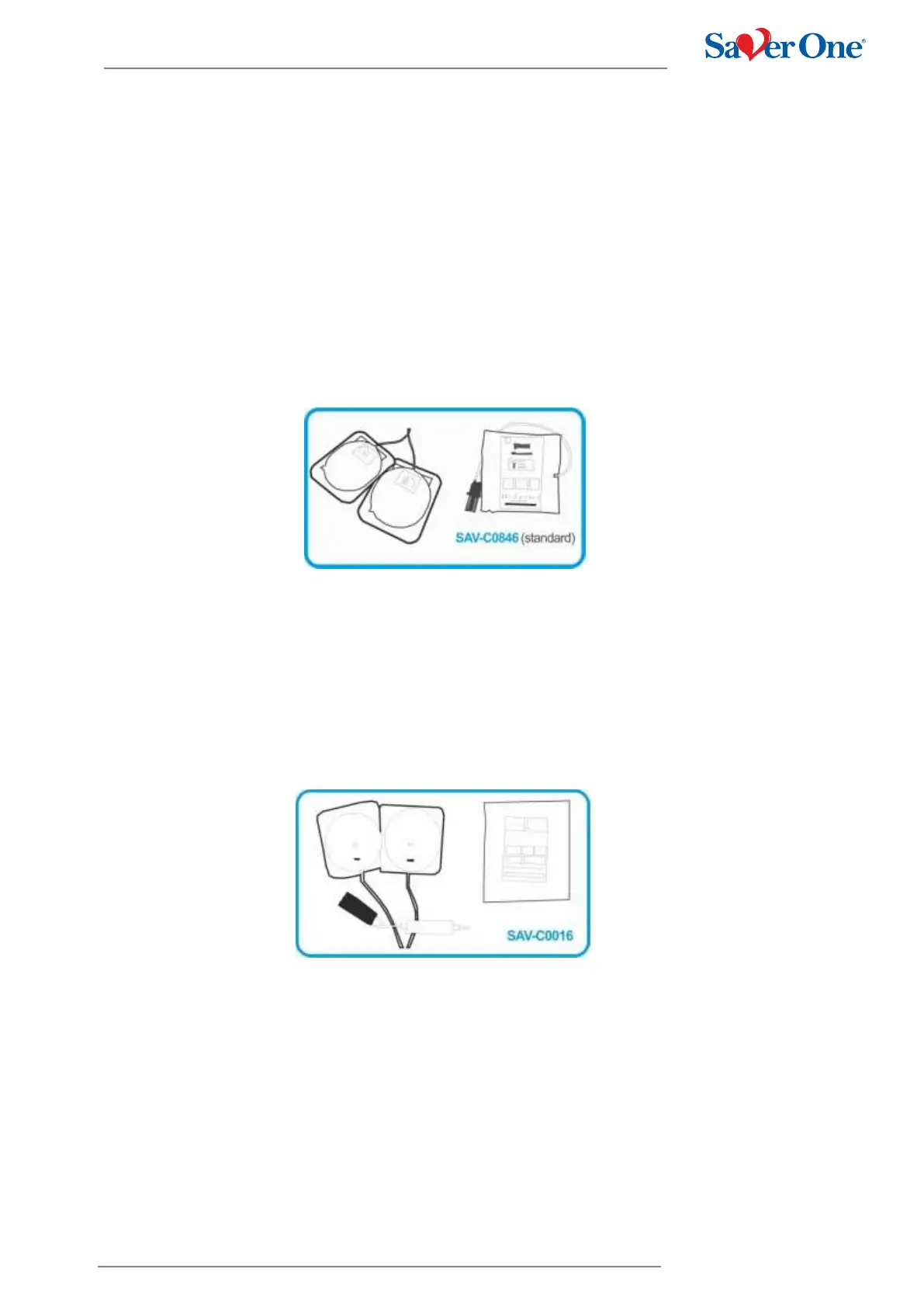
5.3 Defibrillation PADs for Adults SAV-C0846
The Saver One allows the use of two different defibrillation PADs depending on the patient to be treated:
Defibrillation PADs for Adults model SAV-C0846
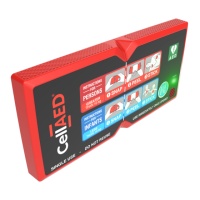
Defibrillation PADs for Children model SAV-C0016
5.3.1 Defibrillation PADs for Adults SAV-C0846
The SAV-C0846 defibrillation PADs are pre-gelled disposable types.
They must be used on adult patients (age> 8 years or weight> 25Kg). Defibrillation PADs are supplied in a single
sealed package with the expiration date (typically 30 months). On the expiry date the PADs must be replaced even if not
used.
The SAV-C0846 Pads are characterized by the presence of the cable and the PAD connector outside the sealed
package. This solution has been adopted in order to maximally speed up the positioning of the Pads avoiding the need
to insert the connector during the phases of the rescue.
The SAV-C0846 PADs are polarized type, that is, the positioning of the electrodes must not be reversed.
For more information on positioning the defibrillation PADs, refer to the relevant paragraph.
5.3.2 PADs for Children SAV-C0016
The SAV-C0016 defibrillation PADs are pre-gelled disposable types.
They must only be used on children patients (age <8 years or weight <25Kg). The defibrillation PADs are supplied in
a single sealed package with the expiration date (typically 30 months). On the expiry date the PADs must be replaced
even if not used.
The cable, connector and PAD adapter are inside the sealed package.
The PADs SAV-C0016 allow to deliver shocks on paediatric patients with a maximum energy level of 50J as prescribed
by the international guidelines ERC/AHA 2017. The PADs SAV-C0016 are polarized type, that is, the positioning of
the electrodes must not be reversed.
For more information on positioning the defibrillation PADs, refer to the relevant paragraph.


 To Next Page