vi
WARNING
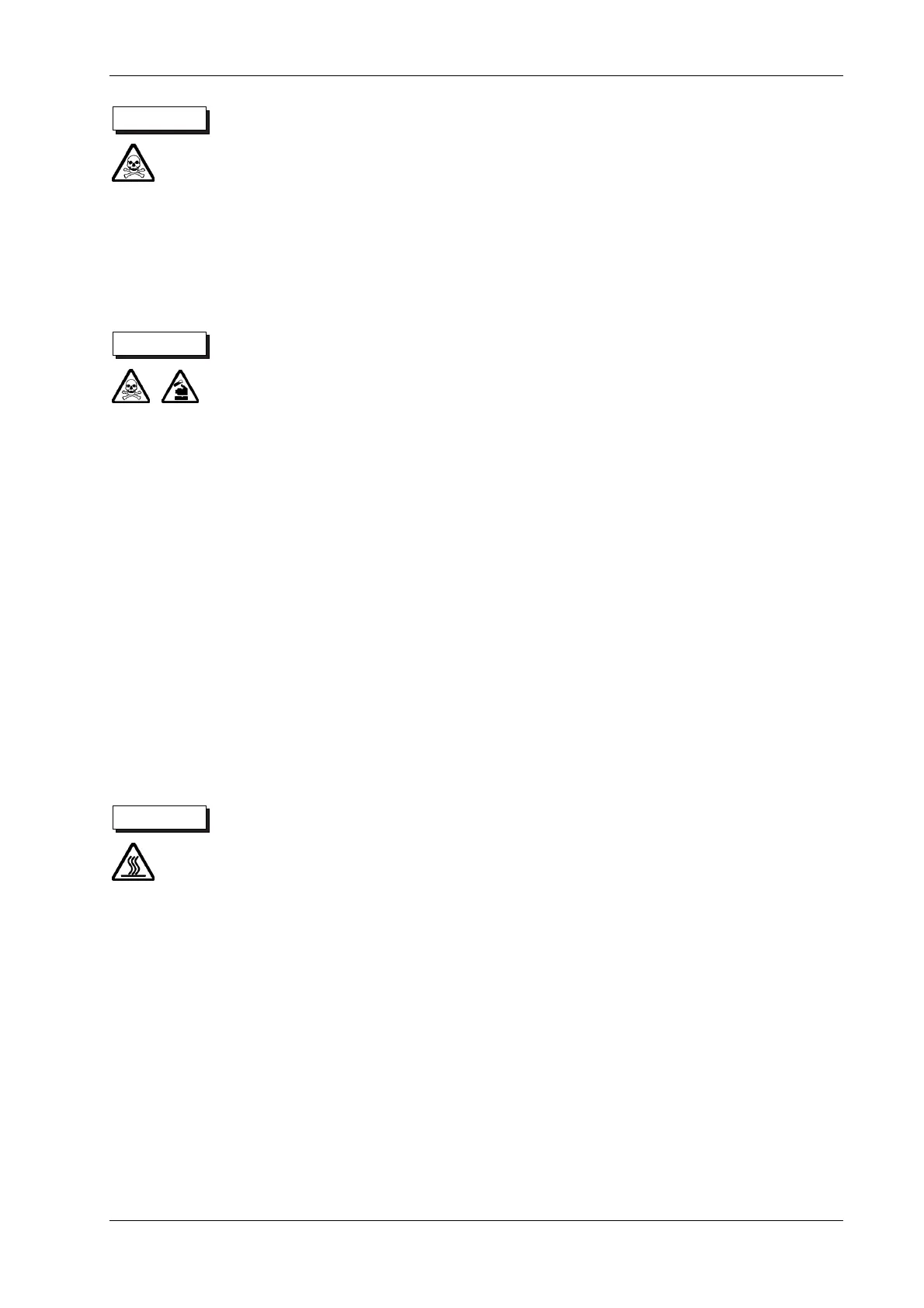
Beryllium copper
Some mechanical components within this instrument are manufactured from beryllium copper.
This is an alloy with a beryllium content of approximately 5%. It represents no risk in normal use.
The material should not be machined, welded or subjected to any process where heat is involved.
It must be disposed of as “special waste”.
It must NOT be disposed of by incineration.
WARNING
Nickel metal hydride
A Nickel Metal Hydride (Ni-MH) battery pack is used in this equipment. Do not attempt to open,
disassemble or mutilate the battery pack. The battery pack does not contain any user serviceable
components and cannot be repaired. Under abnormal conditions, the battery pack can explode,
leak or catch fire if exposed to high temperatures/fire, or if it is opened or disassembled. Do not
short circuit the battery pack terminals.
This battery pack contains an absorbed CORROSIVE potassium hydroxide electrolyte which can
cause burns to the eyes and skin, and nickel hydroxide which is HARMFUL if inhaled or if it
comes into contact with the skin, resulting in possible sensitization of the affected area. In all
cases, rinse the affected area with plenty of water and seek medical advice. Use protective gloves
when handling a damaged battery.
If the battery has leaked or vented, it must be replaced immediately. Replace only with an identical
battery from the same manufacturer or with a type recommended by Aeroflex. Remove the
instrument power lead before removing the battery pack.
The battery pack contains a smart charge management system and must only be charged using the
charging facilities in the equipment, or by using an approved battery charger.
European legislation (EC Directive 91/689/EEC) classifies Ni-MH batteries as hazardous waste
due to the nickel content. Collect spent batteries separately for disposal, do not mix with other
waste streams. Contact your local battery supplier for up-to-date information on the collection,
disposal or recycling procedures for your country.
WARNING
Hot Surfaces
Take care when touching the RF Input Type N connector after the application of high levels of
continuous power. If 50 W is exceeded for a prolonged period, the temperature of the connector
can become excessive.


 To Next Page