Rockwell Automation Publication 825-UM004D-EN-P - November 2012 99
Configuring Protection & Logic Functions Chapter 6
Input I/O
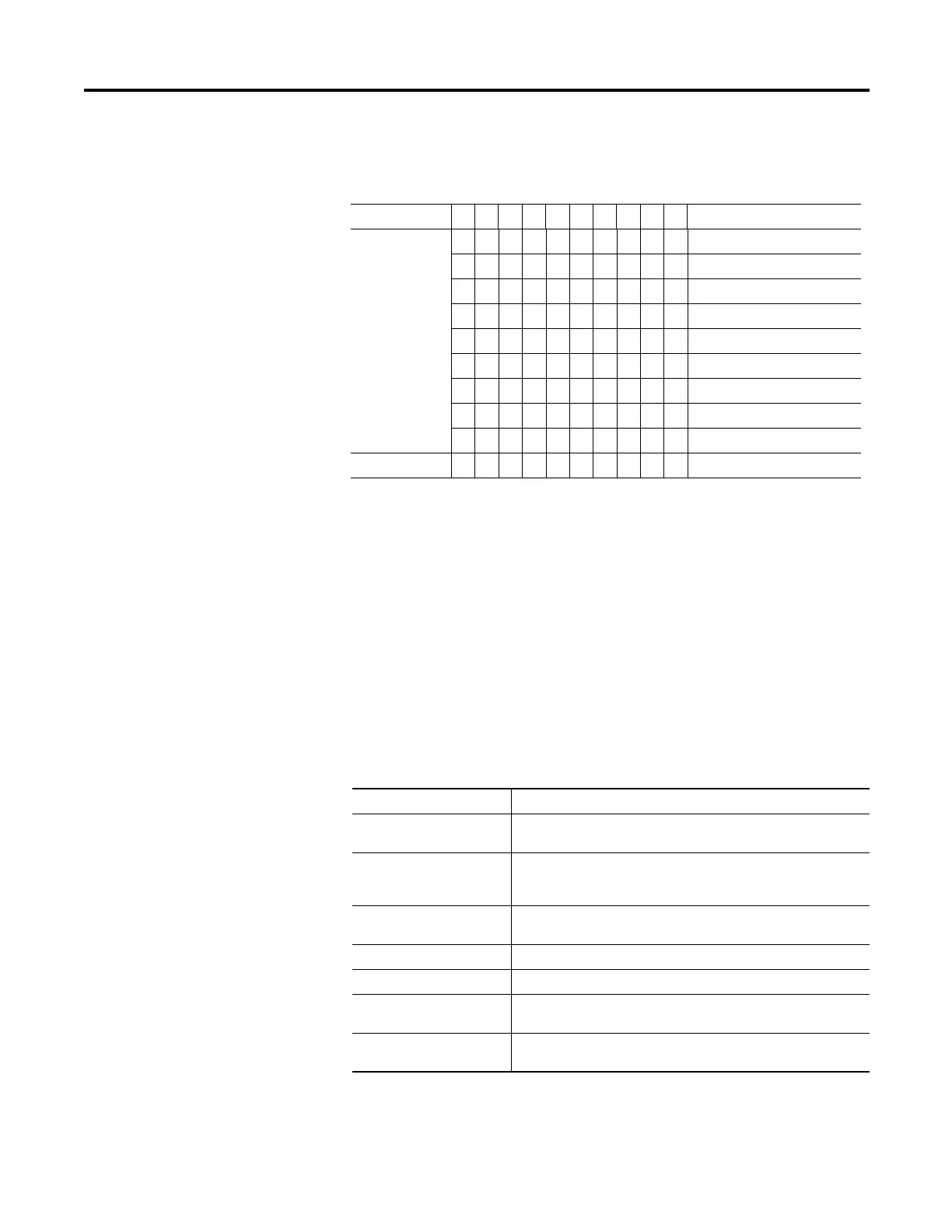
The 825-P provides the ability to assign a control function to each control input.
Table 44 shows the available control functions and the method of assigning them.
When a control input is asserted, the 825-P performs the control action assigned
to the input. The control action of each of the available functions is described
below:
Table 44 - Input Assignments
Setting Prompt 0123456701Description
IN# X Emergency Start
X Disable Settings
XTrip Reset
XTimer 1
XTimer 2
XSpeed Switch
X Block Protection
XSpeed 2
X Breaker/Contactor Auxiliary
X Remote Trip
NOTE: The 825-P allows one control function to an input and one input to a control function (see
Table 5).
NOTE: In addition to setting an Input Assignment, you must connect a control contact to the input
(see Figure 16 for a typical connection diagram).
Table 45 - Control Actions
Function Control Action
Emergency Start Overrides all active start inhibits, clears the % TCU to zero and immediately
initiates a motor start.
Disable Settings Disables all settings changes from the front panel, serial port, and DeviceNet
network; when this input is asserted, you can view the settings but you cannot
change them. Disables the Test/Reset push button function.
Trip Reset Resets the Trip output and front-panel Trip LED, provided there is no trip condition
present (including start inhibit lockouts).
TIMER1 (Timer 1 Input) Provides input to Timer1 Function (see Figure 33 for more details.
TIMER2 (Timer 2 Input) Provides input to Timer2 Function (see Figure 33 for more details).
Speed Switch Provides input to Speed Switch Protection Function. See Speed Switch (Stalling
During Start) on page82 for more details.
Block Protection Inhibits selected protection functions when the input is asserted. See Table 37 for
more details.


 To Next Page
 Loading...